A Complete Guide to Bipolar Treatment: Evidence-Based Approaches That Work

If you’re living with bipolar disorder, a steadier mood is possible. The right bipolar treatment—from medications and therapy to newer options like TMS—can help you manage symptoms and find real stability.
Bipolar treatment can feel overwhelming at first—especially if you’ve just been diagnosed, are coming out of a rough episode, or are realizing your current plan isn’t quite working. If you’re here, you’re probably looking for clarity, maybe some reassurance, and a better sense of what actually helps—not just in theory, but in real life.
Bipolar disorder isn’t just “mood swings.” It involves cycles of mania or hypomania (periods of elevated or irritable mood and energy) and depression (low mood, low energy, loss of interest). Treatment is designed to stabilize those shifts and prevent future episodes. For most people, that means thinking long-term to find steady and sustainable support.
The good news is there are more effective bipolar disorder treatments than ever before. And if you’ve felt stuck or discouraged, know this: finding the right approach often takes trial, adjustment, and adaptation, but it is possible. Whether you’re exploring options for the first time, looking for better bipolar help, or trying to understand how medications, therapy, and newer treatments fit together, you’re not alone in this journey.
In this guide, we’ll walk you through what bipolar treatment actually looks like—from medications and therapy to lifestyle strategies and emerging options—so you can better understand your choices and feel more confident about what comes next.
What is bipolar disorder?
Bipolar disorder is a mental health condition marked by intense mood episodes that affect how you feel, think, and function. These episodes can last days to weeks and fall into two main categories:
- Manic or hypomanic episodes: unusually high energy, elevated or irritable mood
- Depressive episodes: deep sadness, low energy, or loss of interest in things you usually enjoy
Not all bipolar disorder looks the same—there are a few key types:
- Bipolar I: defined by at least one full manic episode (lasting a week or more), often with extreme energy, mood changes, and sometimes risky behavior. Depressive episodes may also occur.
- Bipolar II: involves at least one major depressive episode and one hypomanic episode (a milder, shorter version of mania). Hypomania can feel like being extra productive or “on,” but it’s still a noticeable shift from your baseline.
- Cyclothymic disorder: a milder but more chronic pattern of mood swings, with frequent ups and downs over at least two years.
People don’t always move neatly from “high” to “low.” Some experience a mood episode with mixed features, where symptoms of mania and depression show up at the same time.
The ways bipolar disorder shows up can vary, but there’s one crucial commonality: it can affect relationships, work, and daily life, and it’s linked to higher risks of self-harm and hospitalization. “The symptoms of acute manic, hypomanic, mixed, and depressive episodes can significantly impact safety, ability to care for self, and ability to maintain relationships and jobs,” says board-certified psychiatrist Erica J. Lee, MD.
This is why getting care is crucial. With the right diagnosis and treatment, many people manage symptoms well and live full, stable, and productive lives.
Healing happens through strong relationships
Compassionate, experienced mental health professionals focused on evidence-based care
.webp)



How is bipolar disorder treated?
Treating bipolar disorder is a multidimensional effort. Most people employ a combination of medication, therapy, and education to manage symptoms effectively. Care often involves a broader team, too—think therapists, psychiatrists, primary care providers, and sometimes case managers or pharmacists. This kind of collaborative approach has been shown to improve outcomes and help people stay more stable long-term.
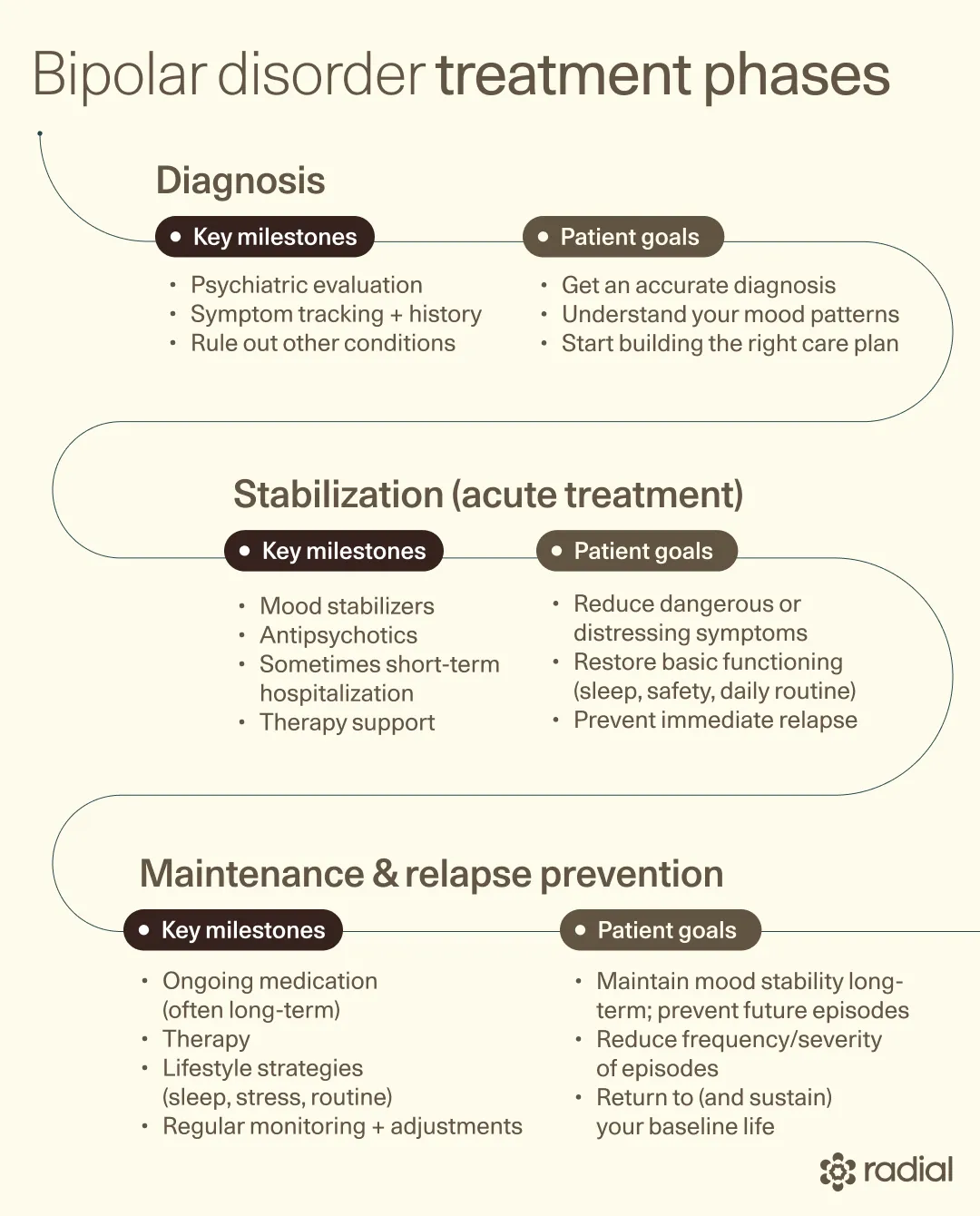
The goal isn’t just feeling “okay”—it’s to live the life that you want. Treatments (including bipolar I treatment and bipolar II disorder treatments) focus on helping you return to your baseline level of functioning—how you felt and functioned before symptoms took over. That usually happens in phases:
- Stabilize the mood (first priority): During manic or depressive episodes, the immediate goal is to get symptoms under control and reduce risks like impulsive behavior, self-harm, or suicidal thoughts.
- Prevent future episodes (long game): Once you feel stable, the focus shifts to staying that way. This often includes ongoing medication, plus therapy that builds skills around recognizing triggers, managing stress, and sticking with treatment.
With the right mix of support, many people with bipolar disorder manage symptoms, reduce relapses, and live stable, fulfilling lives.
Does bipolar treatment change over time?
Bipolar disorder isn’t static, and neither is its treatment. Care typically shifts depending on what phase you’re in.
Acute mania treatment
When mania hits, the goal is safety and stabilization—fast. A manic episode can show up in intense, sometimes dangerous ways, like:
- Risky or impulsive behavior (think: reckless driving, big spending sprees)
- Severe irritability, agitation, or aggression (which can lead to self-harm or hurting others)
- Psychotic symptoms, like delusions (grandiose or paranoid) or hallucinations
A manic episode is often treated as a medical emergency and may require hospitalization. The priority is to calm symptoms quickly and reduce risky behavior.
Treatment basics: mood stabilizers and/or antipsychotics to reduce mania and agitation and to help with sleep.
Acute bipolar depression treatment
During a depressive episode, the biggest concern is suicide and self-harm risk, which is highest in this phase. Other symptoms of depression can include:
- Loss of interest or pleasure in things you usually enjoy
- Noticeable changes in appetite or weight (up or down)
- Sleeping too little or too much
- Feeling restless or slowed down
- Low energy or constant fatigue
- Feelings of worthlessness or excessive guilt
- Trouble focusing or making decisions
Some people may need hospitalization for a depressive episode, others may not.
“Most patients with bipolar disorder have longer times where they are depressed than when they are hypomanic or manic,” says Dr. Lee.
Treatment basics:
- First-line options often include atypical antipsychotics (like quetiapine, olanzapine, or lurasidone)
- If you’re already on medication, your provider may adjust or optimize it to prevent a swing into mania
- Typical antidepressants should be used cautiously if at all, (and never by themselves) since they can trigger mood instability
Maintenance treatment
Once symptoms are under control, treatment shifts to maintenance mode—preventing future episodes and protecting your baseline functioning.
Treatment basics:
- Ongoing mood stabilizers and/or antipsychotics with medication/dosage adjustments as needed (often long-term)
- Regular symptom monitoring, including ongoing check-ins around suicidality
- Therapy, especially skills-based approaches, to help prevent relapse and improve day-to-day functioning
Because bipolar disorder is a chronic condition, most people need continuous care often for years, and sometimes for life. In other words, treatment is a dynamic, long-term strategy designed to keep you safe, stable, and functioning at your best.
Medications for bipolar disorder
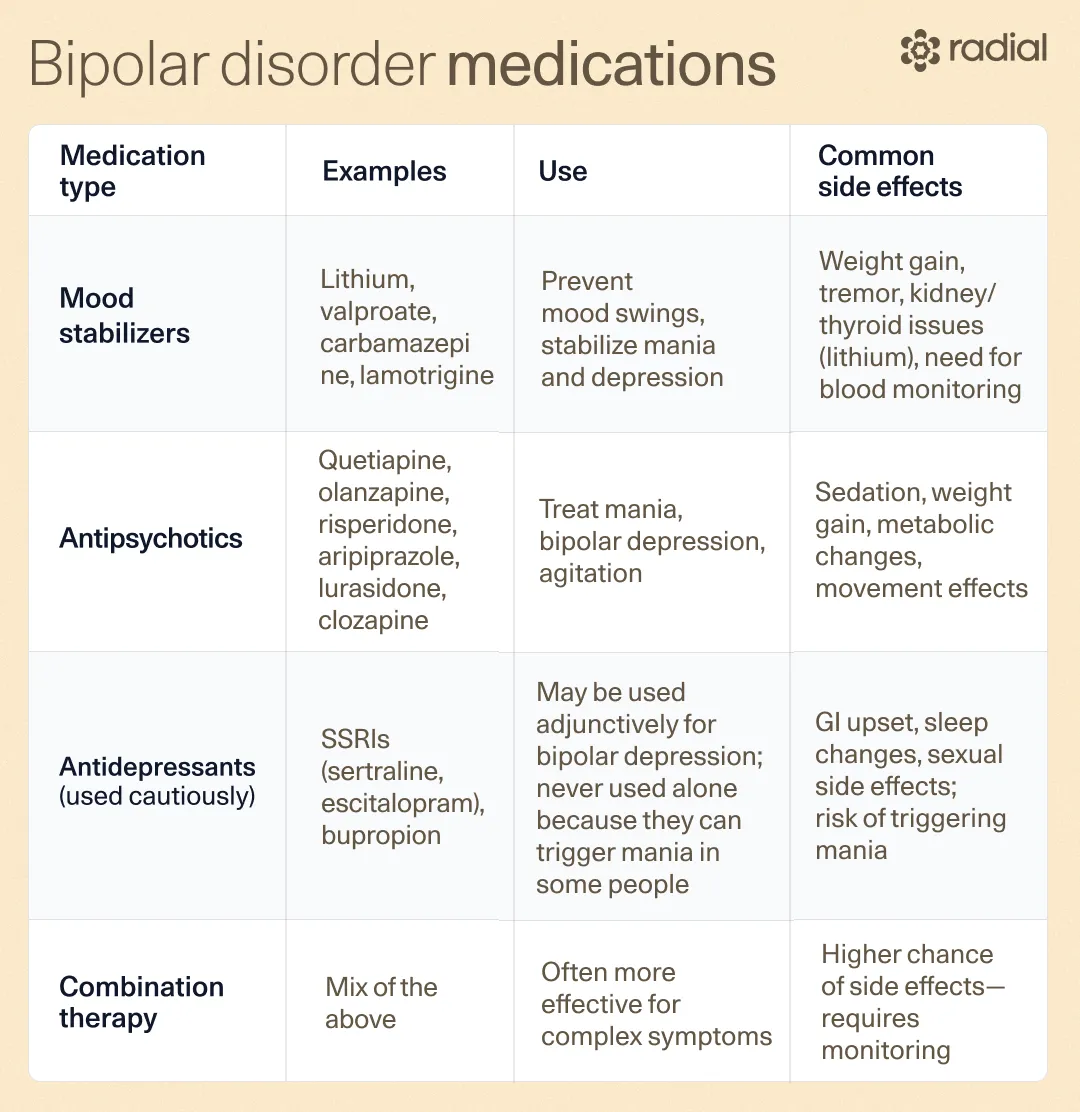
Medication is the backbone of treatment for bipolar disorder. Most people are treated with mood stabilizers, antipsychotics, or both, which help reduce the risk of future mood episodes. These meds tend to work especially well for mania, though depression can be trickier to treat.
Keep in mind: There’s no single “right” bipolar disorder medication, and finding the right fit can take time. “There are many medications available for bipolar disorder, and a psychiatrist will usually trial multiple kinds to stabilize bipolar disorder symptoms while minimizing side effects,”
Bipolar treatment is highly individual. Many people need to try a few options (or combinations) before landing on what works best for their symptoms and side-effect tolerance. Let’s take a look at the most common bipolar medications.
Mood stabilizers
Mood stabilizers are a first-line treatment for bipolar disorder. While the exact mechanism isn’t fully understood, some—like lithium—help calm brain cells’ excitability.
- Common options: lithium, valproate, carbamazepine, lamotrigine
- Side notes:
- Lithium, valproate, and carbamazepine often require regular blood monitoring
- Possible side effects of lithium include weight gain, tremor, and potentially serious kidney issues
- Valproate can cause sedation and weight gain; it should never be used during pregnancy and avoided in people who could become pregnant.
Antipsychotics
Antipsychotics are also key players in bipolar disorder care. They may help by regulating signaling of neurotransmitters in the brain.
- Common options: olanzapine, quetiapine, aripiprazole, risperidone, lurasidone, clozapine
- Side notes:
- Weight gain and abnormal movements are common side effects
- Some require close monitoring and blood work due to potential risks
Antidepressants
Antidepressants are not used alone for bipolar disorder. If they are used for bipolar depression, they are usually added cautiously to a mood stabilizer or antipsychotic because they can trigger mania or hypomania in some people, and the evidence for routine adjunctive use is limited.
- Important: On their own, antidepressants may trigger mania or hypomania, which is why providers use them carefully.
- Common options: SSRIs (like escitalopram, sertraline, paroxetine) and bupropion
- Side effects: can include GI issues, sleep changes, anxiety, and sexual side effects with SSRIs.
Combination therapy
Many people do best on a combination of medications, including mood stabilizers, antipsychotics, and sometimes antidepressants.
- One study found that combination therapy was more effective than mood stabilizers or antipsychotics alone, improving symptoms as early as the first week.
- It’s important to note: the same study noted a higher chance of side effects when multiple meds were used.
Combination therapy can be highly effective, but requires thoughtful monitoring.
Ketamine and esketamine
Originally an anesthetic, ketamine is now being explored for rapid relief of depression, including bipolar depression. Some highlights:
- Ketamine is being studied for bipolar depression, but current evidence is not strong enough to support routine use in standard care.
- Esketamine (Spravato) is FDA-approved for treatment-resistant depression and for depressive symptoms in adults with major depressive disorder with acute suicidal ideation or behavior—not for bipolar depression.
Therapy for bipolar disorder
Medication stabilizes the mood—therapy for bipolar disorder helps you live your life. Psychotherapy is a key part of bipolar treatment. When combined with medication, it can improve outcomes, reduce relapse risk, and boost overall well-being, often more than medication alone.
Quick reality check: therapy isn’t a standalone treatment for bipolar disorder. Here’s why: “bipolar disorder is a biologically-rooted mental illness that affects neurotransmitters, brain systems that control mood such as the limbic system (controlling instinct, drives, and basic emotions), the amygdala (the fear center), and the prefrontal cortex (controlling decision making, personality, and social interaction),” says Dr. Lee.
So, while therapy can be a powerful add-on that helps you manage symptoms, build skills, and stay steady over time, it can’t “cure” the condition. It is most helpful when used during the maintenance phase, to help learn triggers and build stability
Cognitive behavioral therapy (CBT)
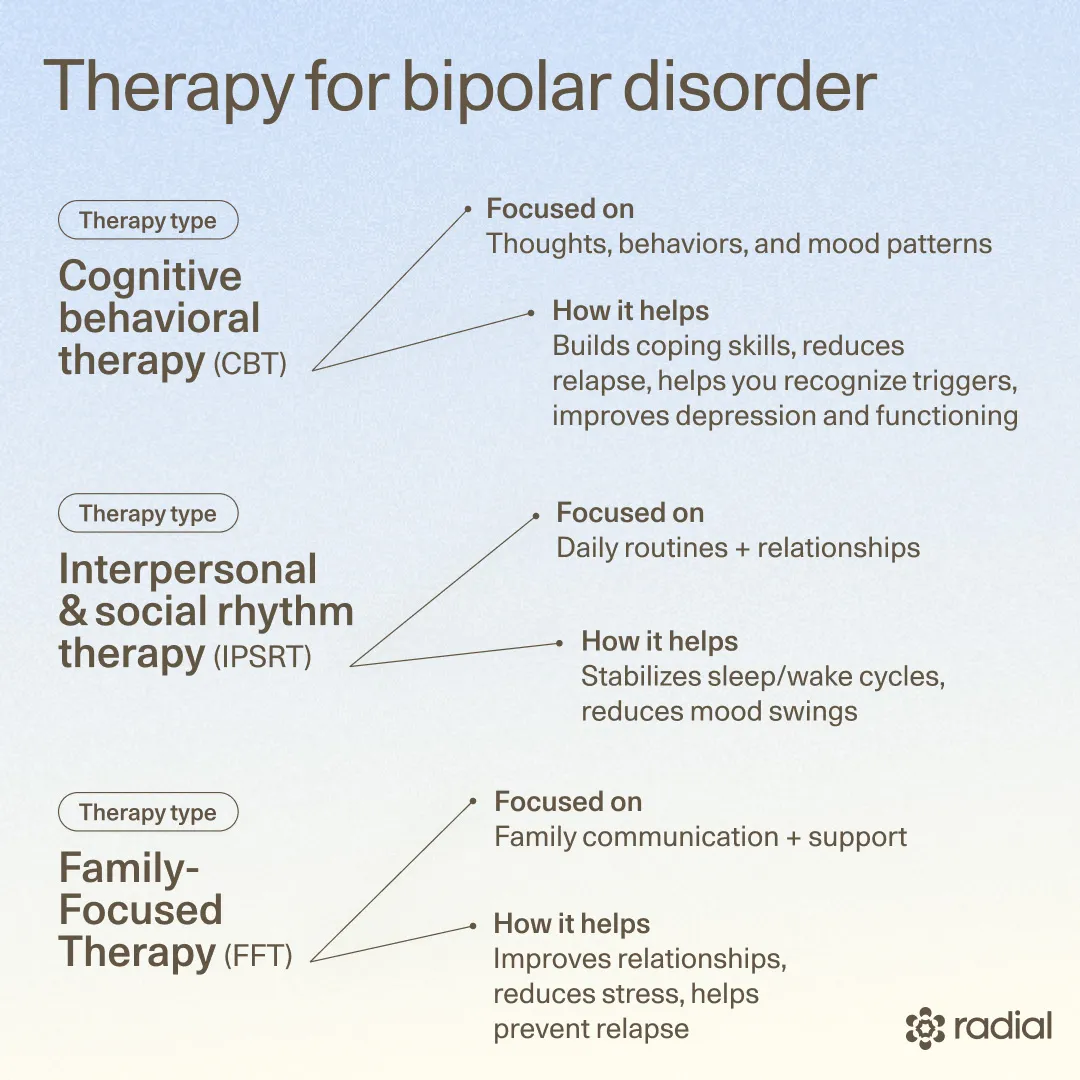
Cognitive behavioral therapy, or CBT, for bipolar disorder helps you spot and shift the thoughts and behaviors that fuel mood episodes. It’s based on a simple idea: your thoughts, feelings, and actions are all connected, and can either contribute to a stable mood or fuel the bipolar cycle.
In practice, CBT helps people with bipolar disorder:
- Recognize early warning signs (before things escalate)
- Build better coping and problem-solving skills
- Improve sleep, routines, and medication consistency
Strong evidence shows CBT can lower relapse rates, ease depression, reduce manic symptoms, and improve overall functioning.
Interpersonal and social rhythm therapy (IPSRT)
IPSRT focuses on stabilizing your daily rhythms—especially sleep and activity patterns—which play a huge role in mood regulation.
It helps you:
- Keep a consistent sleep-wake schedule
- Build steady daily routines
- Navigate relationship stress more effectively
Why it works: more stability in your day-to-day life equals fewer mood swings and better overall balance. Data shows IPSRT can lessen manic and depressive symptoms and enhance overall functioning in people with bipolar disorder.
Family-focused therapy (FFT)
FFT brings your family (or others close to you) into the treatment plan to reduce conflict and build a more supportive environment.
It focuses on:
- Improving communication
- Reducing stress at home
- Teaching loved ones how to recognize and respond to mood changes
Often used early on, FFT helps you create a shared game plan to prevent relapse and support long-term stability.
Brain stimulation treatments for bipolar disorder
When symptoms won’t budge, brain-based neuromodulation treatments can provide a new approach. They work by directly influencing brain activity.
Electroconvulsive therapy (ECT)
ECT delivers a brief, controlled electrical current to the brain while you’re under anesthesia, triggering a short seizure that helps reset brain signaling. Yes, it sounds intense, but it’s very effective.
“Electroconvulsive therapy (ECT) is one of the most effective treatments for severe manic or depressive symptoms, often considered for persistent depression, presence of psychosis, or high suicide risk,” says Dr. Lee. Studies show 60-80% response rates in medication-resistant bipolar depression, she adds.
Side effects to know:
- Temporary memory loss and learning difficulties are common
- Some people may experience longer-lasting memory gaps
- In some cases, ECT can trigger a manic episode when treating depression
ECT is highly effective, but typically reserved for more serious or urgent cases.
Transcranial magnetic stimulation (TMS)
TMS treatment uses targeted magnetic pulses (via a coil placed on your scalp) to stimulate brain regions involved in mood. It’s already FDA-cleared for depression, although not bipolar depression.Some guidelines suggest it as an adjunctive option for bipolar depression after partial or no response to medication, but the evidence base in bipolar depression is still limited.
One study found:
- Response and remission rates for bipolar depression are comparable to standard depression treatment (around 47% and 28%, respectively)
- It’s safe and generally well tolerated
Side effects to know about:
- Common but usually mild: headache or scalp discomfort
- Extremely low risk of seizures (less than .1%)
- The risk of TMS to trigger mania appears low
Emerging treatments
If you’re not getting relief—or can’t tolerate typical meds—there’s a growing wave of next-gen treatments being studied for bipolar disorder. Most are still early-stage, but they offer a glimpse at other possible options.
Transcranial focused ultrasound (FUS)
FUS is a noninvasive technique that uses focused ultrasound waves to precisely target deep brain areas involved in mood like the amygdala. Some highlights:
- Early research suggests it may safely modulate amygdala function in people with mood, anxiety, and trauma-related disorders.
- Still experimental, it’s not FDA-approved for bipolar disorder or widely available yet.
Overall, FUS is very promising, but still in the research phase.
Vagus nerve stimulation (VNS)
The vagus nerve helps regulate stress, and VNS gives it a gentle nudge. It often involves a small implanted device that sends electrical pulses to the vagus nerve. Implanted VNS for depression is different from gammaCore, a noninvasive vagus nerve stimulation take-home device that is cleared for certain headache disorders rather than depression.
Some highlights:
- Initially developed to treat epilepsy, VNS is also already approved for treatment-resistant depression.
- Implanted vagus nerve stimulation is FDA-approved for treatment-resistant depression, not specifically for bipolar depression, and evidence in bipolar depression remains limited.
Lifestyle strategies that support bipolar treatment
You can’t control everything about bipolar disorder, but your day-to-day routines? Those you can control, and doing so is powerful. Lifestyle choices can ease symptoms, support recovery, and improve quality of life, especially when you focus on multiple areas (not just one).
Prioritize sleep
Protect your sleep like it’s part of your treatment—because it is. Sleep disruption can trigger mood episodes in certain people, especially when routines shift (think: late nights, irregular schedules), says Dr. Lee.
What helps, per Dr. Lee:
- Keep a consistent sleep-wake schedule
- Get bright light during the day, and keep nights dark
- Limit substances that interfere with sleep
Limit substance use
Substance use is a major risk factor for bipolar disorder and is linked to more severe symptoms and poorer outcomes. Cutting back (and ideally quitting) can make a meaningful difference in stability. “In patients with bipolar disorder, I recommend minimizing substance use when possible, including nicotine, alcohol, and marijuana,” says Dr. Lee.
Need some help quitting? You have options:
Lean on social support
Supportive relationships can act as a buffer against mood episodes. “Mood episodes often are destabilizing in patients’ lives and having stable, healthy relationships of all kinds can help,” says Dr. Lee. Having an empathetic ear or a shoulder to lean on can make coping with bipolar disorder a little more manageable.
Plus, there’s science to back it up. Here’s what the data says about social support:
- It can improve relapse rates, functioning, and outcomes in people with bipolar disorder
- It enhances life satisfaction and may mediate depressive symptoms
- It helps spot early warning signs and reduce rumination that can lead to a mood episode
- It keeps you connected to routines and care
- It may be protective against suicide risk
Follow a mood-supporting diet
Food fuels your brain, not just your body. What you eat can influence inflammation, brain function, and mood stability. No specific diet has been proven to treat bipolar disorder. A generally heart-healthy eating pattern may support overall health, but ketogenic diets should be described as experimental rather than established bipolar treatment.
- Mediterranean or plant-based diets: anti-inflammatory, brain-supportive
- Low-glycemic eating: steadier blood sugar, fewer mood swings
- Ketogenic diet: may support brain energy and signaling
What to limit:
- Ultra-processed foods, sugary drinks, and heavy saturated fats (the classic Western diet)—they’re linked to inflammation and mood instability
Move your body
For people with bipolar disorder, a physically active lifestyle can improve depression, functioning, and overall well-being. In fact, those who do regular physical activity may be less likely to develop the condition.
Aim for consistent, moderate exercise, says Dr. Lee. For example, in one study, participants who did 30 minutes of cardio, plus strength training three times a week, experienced a reduction in bipolar depression symptoms.
And watch extremes—very intense bursts of exercise may trigger mania in some people, says Dr. Lee.
Manage stress
Stress is a trigger—it can set off mood episodes—so managing it is non-negotiable. Building a plan to cope with chronic stress can help stabilize mood and make you more emotionally resilient.
What helps, per Dr. Lee:
- Regular movement
- Mindfulness or relaxation practices
- Therapy
- Built-in downtime
- Consistent sleep routines
Relief within reach
Care covered by your insurance
Radial provides advanced mental health treatment, covered by the insurance you already use.








When bipolar treatment isn’t working
Hitting a wall with treatment can feel frustrating (and honestly, exhausting). But bipolar care is rarely one-and-done. If something’s not working, it’s usually a clue—not a dead end—and figuring out why can help you and your provider get things back on track.
There’s usually a reason behind stalled progress, and most are fixable. Here are some of the most common culprits:
- Medication mismatch: There’s no universal “right” med. Finding the right combo often takes trial, error, and tweaks over time, says Dr. Lee.
- Not taking meds consistently: This is more common than you’d think. Some data estimates nearly half of adults with bipolar disorder struggle with it. Reasons range from side effects and cost to doubt about the diagnosis—or simply feeling better and stopping (which can backfire, since bipolar is chronic).
- Misdiagnosis or delayed diagnosis: Bipolar disorder is often mistaken for depression or other disorders like borderline personality disorder, sometimes for years. Treatment based on the wrong diagnosis—like antidepressants alone—can actually worsen symptoms, especially mania.
- Lifestyle factors: Inconsistent sleep, substance use, diet, and activity levels all matter. Poor habits can undermine even the best treatment plan.
What this means for you: if treatment isn’t working, don’t quit—get curious. With the right adjustments, most people can find a plan that actually helps.
When to seek professional help
Bipolar disorder can have long calm stretches, but it’s still a chronic condition, and early support makes a real difference. Knowing the warning signs can help you step in before things escalate.
Watch for signs of mania:
- Feeling unusually euphoric, “high,” or wired
- Irritability or a short fuse
- Racing thoughts or talking much faster than usual
- Needing little sleep but still feeling energized
- Risky behavior (spending sprees, reckless sex, overdoing substances)
Watch for signs of depression:
- Persistent sadness, emptiness, hopelessness, or worthlessness
- Withdrawing from people or isolating
- Low energy or fatigue
- Sleeping too much
- Changes in appetite
- Losing interest in things you usually enjoy
- Thoughts of death or suicide
If you’re noticing these signs, it’s time to loop in a professional. A therapist or psychiatrist can help you make sense of symptoms and adjust your treatment plan. If you don’t have a provider, start with your primary care doctor, your insurance directory, or a trusted referral.
Finding the right fit matters, so don’t be afraid to ask questions. When choosing a provider, consider asking:
- Do you specialize in bipolar disorder?
- What’s your therapy style?
- Do you provide teen bipolar disorder treatment?
- How do you stay up to date on bipolar care?
- What’s your approach to medication?
- Will you coordinate with my other providers?
The gist: bipolar disorder is complex—and often long-lasting—but you don’t have to manage it solo. The right support can make it far more manageable and a lot less overwhelming.
The bottom line
With the right combination of medication, therapy, and daily habits, many people with bipolar disorder are able to stabilize their mood, reduce episodes, and live full, meaningful lives.
Some phases of your treatment journey will be harder than others and that doesn’t mean you’re failing. It means your treatment may need adjusting. That’s part of the process.
Most importantly, bipolar disorder isn’t something you have to navigate alone. If you’re ready to take the next step, Radial can help. They connect you with licensed clinicians—virtually or in person—who use fast-acting, evidence-based treatments and work with you to build a plan tailored to your needs.
Stability is possible. The right support can help you get there.
Key takeaways
- Bipolar disorder is chronic but treatable. Most people need ongoing care to stay stable and prevent relapse.
- Medication is the foundation of bipolar treatment, but many non-medication treatments like ECT and TMS can sometimes help when medication fails. Mood stabilizers and/or antipsychotics first-line treatments, often combined with therapy and lifestyle changes.
- Treatment is highly individualized. Finding the right combo can take time and may evolve as your needs change.
- Lifestyle matters more than you think. Sleep, stress, substance use, and daily routines can all impact mood stability.
- If treatment isn’t working, adjust—don’t give up. There’s almost always more bipolar disorder treatment options to explore.
Frequently asked questions (FAQs)
How long does bipolar disorder treatment typically last?
Bipolar disorder is a chronic condition, so treatment isn’t just about getting through one episode—it’s about preventing the next one. Most people need ongoing (maintenance) treatment for years, and often indefinitely. That typically includes medication, therapy and lifestyle strategies (particularly abstaining from substance use) to stay stable.
What does untreated bipolar lead to?
Without proper care, bipolar disorder is linked to serious disruptions in daily life, including strained relationships, repeated hospitalizations, and high risk of substance use and suicidal behavior. That’s why early and consistent treatment is critical for safety and quality of life.
Can bipolar disorder be treated without medication?
For most people, medication is a necessary part of treatment. Some people may spend periods off medication, but bipolar disorder is unpredictable, and symptoms often return when medication is stopped. The course of bipolar illness is highly variable—some people have just a few episodes in a lifetime, while others have several in a single year.
Here’s the bigger issue: Not taking medication—or taking it inconsistently—is one of the most common reasons symptoms come back.
So while some people may carefully reduce or pause medication during stable periods (with a psychiatrist’s guidance), most are advised to stay on medication long-term to prevent relapse, says Dr. Lee.
Editorial Standards
At Radial, we believe better health starts with trusted information. Our mission is to empower readers with accurate, accessible, and compassionate content rooted in evidence-based research and reviewed by qualified medical professionals. We’re committed to ensuring the quality and trustworthiness of our content and editorial process–and providing information that is up-to-date, accurate, and relies on evidence-based research and peer-reviewed journals. Learn more about our editorial process.
Let's connect
Get started with finding the right treatment for you or someone you care about
Get startedExplore more posts