Is TMS safe? A Deep Dive Into Transcranial Magnetic Stimulation Side Effects

TMS is considered a safe, well-tolerated treatment for depression, OCD, and certain other mental health conditions, but it isn’t risk-free. TMS side effects — such as scalp discomfort, fatigue, and headaches — are usually mild, temporary, and improve as treatment continues. Serious complications are uncommon, and careful screening before treatment begins lowers the risk.
If you're thinking about transcranial magnetic stimulation (TMS), you may be wondering: Is TMS dangerous? Can it cause brain damage? What about the people online who say it made them worse? Those are fair questions, especially when treatment involves your brain.
“TMS is incredibly safe, much safer than any medications on the market,” says Aron Tendler, MD, a psychiatrist in West Palm Beach, Florida, “And the side effects of TMS are usually temporary.” While safe doesn't mean risk-free, most negative side effects are mild, serious complications are rare, and providers screen carefully for risks before treatment begins to manage that risk.
Still, the idea of using magnetic pulses to stimulate areas of the brain can feel intimidating. Ari Trette remembers feeling some pre-treatment jitters before starting TMS for depression and OCD. Today, people often ask her about what TMS feels like and what side effects to expect.
“Lots of people ask about pain during the treatment,” says Trette, “The initial feeling is hard to describe, as it is slightly painful but feels more like being poked. After a few minutes, you barely notice it, and it just feels like tapping.”
But the discomfort was temporary, and Trette says the treatment ultimately helped her return to activities she loved like school, painting, and embroidery. “After TMS, I returned to my love of art and academics, and found a new passion for rock climbing,” she says.
Ahead, we'll take an honest look at the most common side effects of TMS, explain the rare but serious risks providers screen for, and compare TMS to other depression treatments so you'll know what to expect.
If you're new to TMS, start with our complete guide to TMS therapy for an overview of how it works, what it treats, and what a typical session is like.
Healing happens through strong relationships
Compassionate, experienced mental health professionals focused on evidence-based care




Is TMS dangerous? The honest answer
Since TMS therapy uses magnetic pulses to influence activity in the brain, it's natural to wonder about the possible risks and side effects before you start treatment.
The honest answer is that TMS is considered one of the best-tolerated treatments in psychiatry. Unlike medications, it doesn't circulate through the body, so it doesn’t produce the same kind of systemic side effects. And unlike electro-convulsive therapy (ECT), it doesn't require anesthesia or cause memory loss. Side effects like scalp discomfort or headaches are usually mild and improve during or after treatment.
You may have seen online stories about TMS causing brain damage or people saying that TMS ruined their lives. These experiences shouldn't be dismissed, but it’s important to remember that a personal story on its own can't show how often something happens or whether TMS caused it. It's worth asking whether such experiences reflect the treatment itself or if they are linked to a temporary adjustment period, an underlying condition, or expectations that didn't align with outcomes. Weighing that context along with the real risks can help you make a more informed decision along with your provider.
That said, there are some rare but serious side effects that can happen, and providers screen carefully to manage that risk. Seizures are one of the most well-known — and one of the most misunderstood.
“One of the biggest misconceptions is that TMS is the kind of treatment that causes seizures,” says Colleen Hanlon, PhD, vice president of medical affairs at BrainsWay. “The seizure risk with TMS is extremely low — lower than the risk associated with antidepressants like SSRIs and SNRIs, and lower than the risk with medications like bupropion,” she continues. She also notes the risk is lower than situations like extended sleep deprivation or alcohol withdrawal.
Common side effects of TMS
Most people do well with TMS, but side effects like headaches and scalp discomfort can be uncomfortable during the first few sessions. For many people, these effects become less noticeable as treatment continues.
“TMS is like a gym for your brain. There might be a little soreness at first, but with consistent sessions, people build improvements that last long after treatment ends,” says Dr. Hanlon.
The potential negative side effects are usually mild and don't typically last long as sessions continue. The most common are:
- Headaches: According to Brain Stimulation, about 35% of people experience headaches, which typically last a few hours after treatment and become less frequent as sessions continue. Over-the-counter pain relievers may help if your provider says they're appropriate.
- Discomfort at the treatment site: The same study says that nearly 30% of people have discomfort where the coil is placed. This is usually most noticeable during early sessions and gradually gets better as treatment continues.
- A tingling sensation: Cureus notes that some people feel a tingling or poking sensation on the scalp during the magnetic pulses. It generally fades shortly after treatment.
- Mild pain: Temporary pain in their neck, forehead, or jaw can happen during treatment, and usually resolves shortly after a session.
- TMS dip: A small number of people experience a temporary period where symptoms of depression or anxiety worsen, sometimes called a "TMS dip." Many notice that their symptoms start to improve after this adjustment period. However, if symptoms worsen significantly or include unusual changes in behavior or suicidal thoughts, you should notify your provider immediately rather than assuming this is a normal part of treatment.
Does TMS make you tired?
Yes, some people feel fatigued after TMS, particularly in the early stages of treatment immediately after a session. Why it happens isn't always clear. The stimulation, adjusting to a new treatment, or symptoms of the underlying condition all might play a role.
When fatigue does happen, it's usually short-lived and improves as treatment progresses. But let your provider know if TMS makes you tired, if tiredness interferes with your daily activities, or if it doesn't seem to be getting better over time. They can help figure out what's causing it and whether anything about your treatment needs to be adjusted.
For more on TMS and fatigue, see our guide to why TMS can make you tired and what you can do about it.
Rare and serious risks of TMS
Severe adverse events from TMS are rare — and long-term ones even less so. Like other side effects, they usually improve with time.
- Dizziness: Occasionally, someone may feel dizzy during or right after a session.
- Toothaches: Some people report a short-term ache in their teeth immediately after a TMS session. This often goes away on its own and affects fewer than 3% of people, the same Brain Stimulation study notes.
- Brain fog: Rarely, some people report feelings of brain fog following TMS treatments. This is typically associated with fatigue and is temporary, according to research in World Journal of Psychiatry.
- Hearing changes: TMS produces a loud clicking sound, so hearing protection is used during treatment. Hearing-related adverse effects are uncommon, but people should tell their provider if they develop hearing changes, new tinnitus symptoms, or ear discomfort. Likewise, if patients have ringing in their ears prior to TMS treatment, this should be mentioned to their provider.
- Hypomania/mania: In rare cases, TMS has been associated with hypomanic or manic symptoms, particularly in people with bipolar disorder. A study published in Biological Psychiatry Global Open Science found that these effects were uncommon. Ongoing assessment by your provider will be conducted to facilitate prompt intervention if symptoms of hypomania/mania should occur.
One of TMS’ most serious side effects is also one of its rarest: seizures. The current best estimate suggests that there are about 7 seizures per 100,000 treatment sessions, says a review in Current Opinion in Psychology. Estimates vary by the treatment protocol and patient population, with most happening among people with known seizure risk factors.
In the unlikely event that TMS results in a seizure, it usually happens during or immediately after the treatment in the safety of the office with trained staff and established safety procedures.
Does TMS have long-term side effects?
No, current evidence does not show that memory loss or brain damage are long-term side effects of TMS. While some people experience temporary brain fog or fatigue after a session, these effects are not the same as longer-lasting memory problems.
It's also important to distinguish the effects of TMS from ECT. Because ECT involves intentionally inducing a seizure, it can cause temporary (but in some cases longer-lasting) memory problems. TMS hasn't been shown to cause that same effect. In fact, research in Experimental Neurobiology suggests that TMS may even help protect memory.
We dig further into the evidence in our guide to TMS's effects on memory.
How TMS side effects compare to other treatments
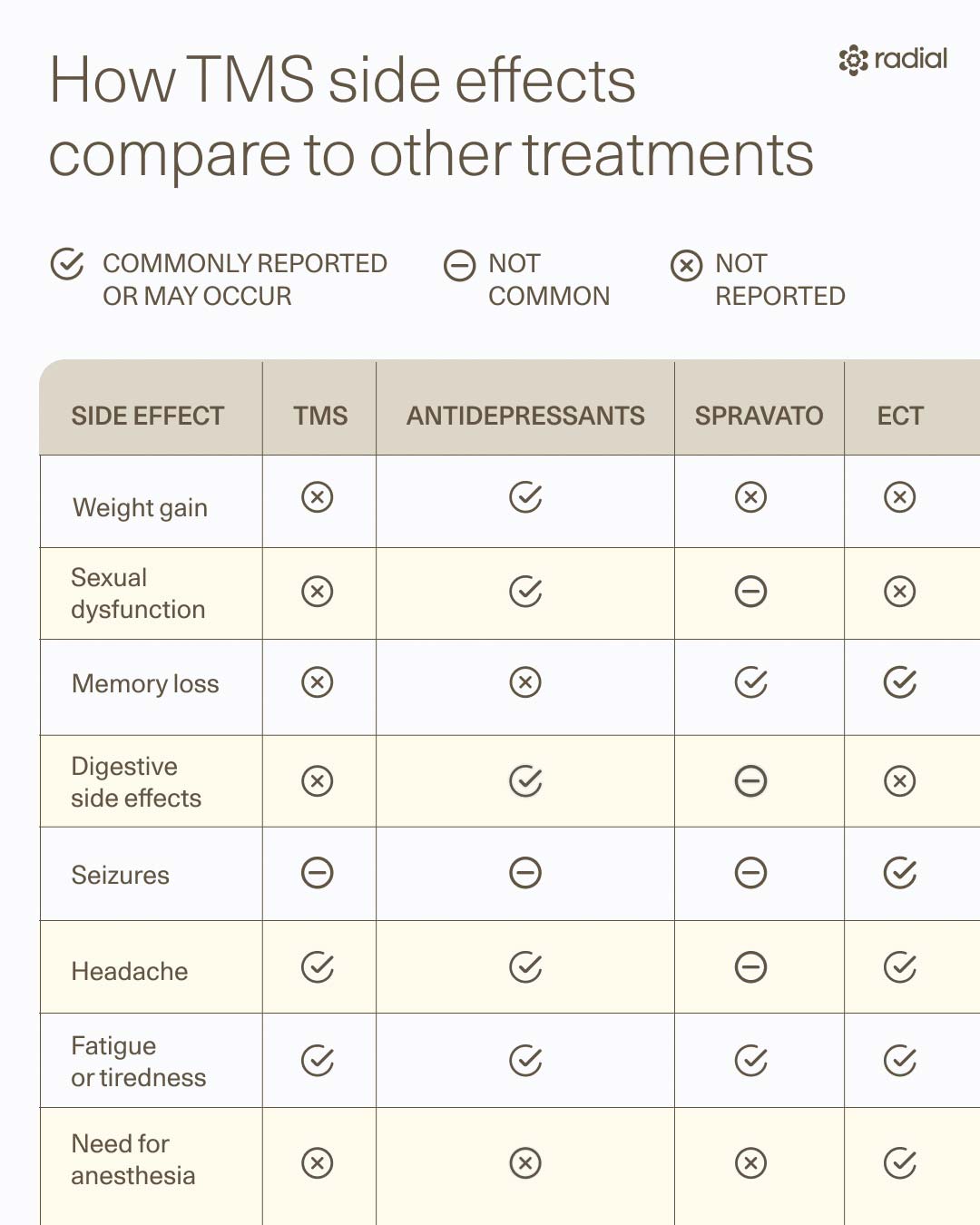
Every treatment for depression comes with its own benefits and potential risks. Looking at how TMS compares to other popular depression treatments can help put some of these into perspective and show you where TMS has advantages as well as its own risks.
TMS side effects vs. antidepressants
Antidepressants can cause a range of side effects. A 2020 study published in Materia Socio-Medica suggests that the most commonly reported include gastrointestinal symptoms, sleep changes, sweating, dry mouth, weight changes, headaches, and sexual side effects.
Part of the appeal of TMS for some people is that it avoids many of the systemic side effects associated with medication. In a 2025 study published in Medicina, researchers interviewed patients on what they liked about TMS, and they overwhelmingly mentioned how few side effects TMS had compared to antidepressants. Psychiatrists also refer patients to TMS when antidepressants don’t work, in situations where a person hasn't responded enough to one or more antidepressant treatments. TMS and antidepressants may also be used together in some cases, depending on the person's needs.
The study’s participants pointed out another big TMS benefit: it’s not a medication that has to be taken for a long time. One interviewee reflected, “Being at a fairly young age, I did not want to start a conventional treatment, a medication that would require to be continued for many years. I wanted something that can be applied in the short term.”
TMS vs. ECT
TMS and electroconvulsive therapy (ECT) are both brain stimulation treatments used to treat depression, but they differ significantly in how they work and their side effects. ECT requires anesthesia and induces seizures, causing confusion, headaches, muscle soreness, and memory loss. TMS is non-invasive and requires no anesthesia or seizures.
If you're trying to decide which might be right for you, our guide to TMS vs. ECT looks at the differences, their risks and side effects, and what to expect.
TMS vs. Spravato
Spravato works differently from TMS and has its own side effects — most notably short-term dissociation, nausea, and blood-pressure changes that require in-clinic monitoring after each dose.
If you're weighing the two, we compare how TMS and Spravato stack up on side effects, timing, and what each treatment involves.
How to make TMS side effects easier (and when to call your provider)
A few simple strategies can make sessions more comfortable. Tendler recommends taking ibuprofen or acetaminophen before a session. “This will reduce the pain and the expectation of pain, which in its own right makes the pain worse.” Talk to your doctor before taking any medication so you can be sure that it's appropriate for you.
Dr. Hanlon compares it to settling into a gym routine. At first muscles ache, but you feel physically healthier with time. “In the first few sessions you might feel mild scalp discomfort or a light headache. These sensations usually fade quickly as your brain adjusts,” says Dr. Hanlon, “Then, just like the real gym, the magic isn’t in the first workout, it’s in the consistency. People start noticing deeper sleep, steadier energy, clearer thinking, and a gradual lifting of symptoms.”
You’re also not alone in managing any side effects. TMS is administered by trained technicians under the supervision of a psychiatrist, or other prescribing clinician. Your team will work with you to make sure sessions are as comfortable as possible before, during, and after sessions.
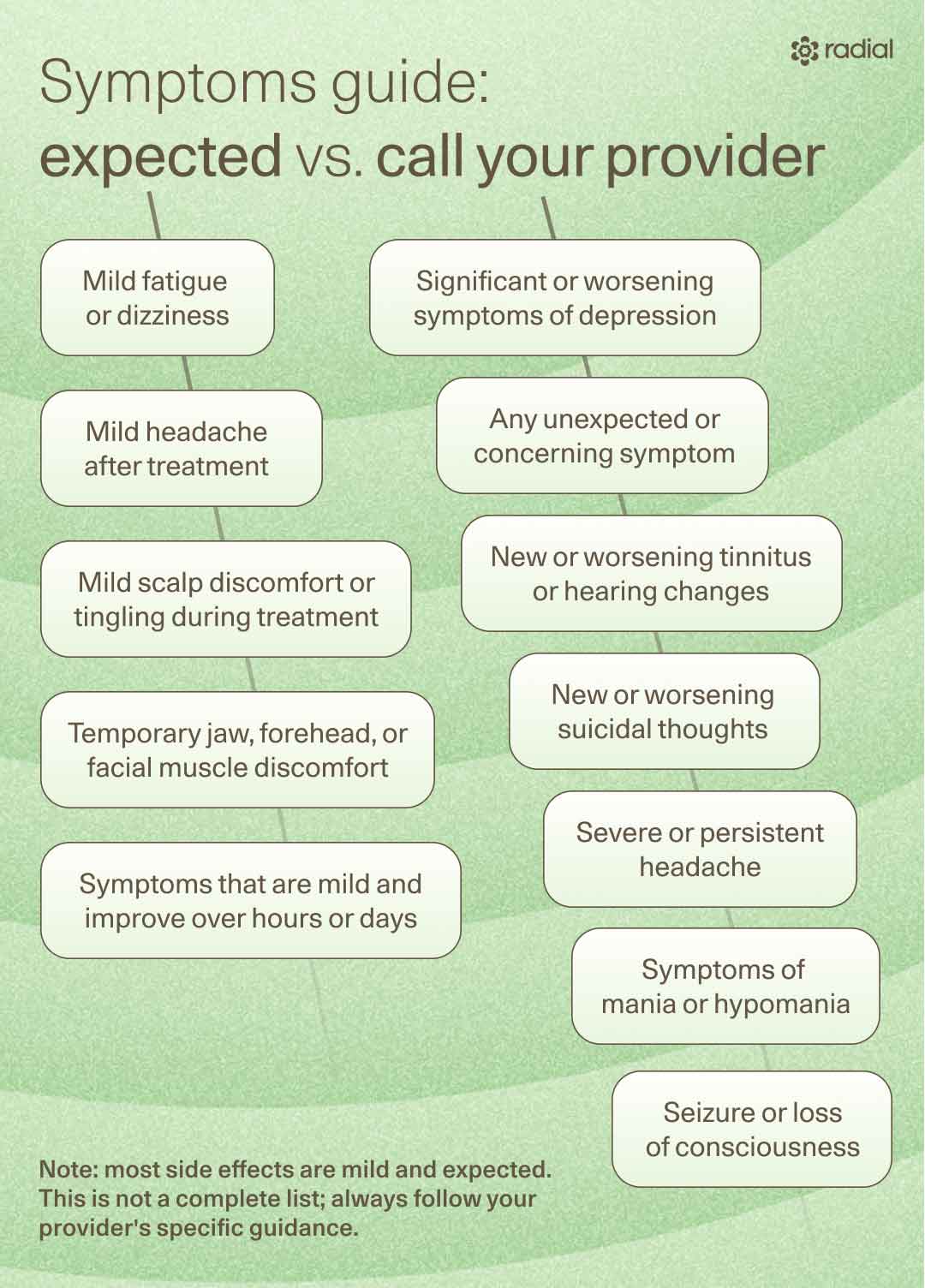
Mild scalp soreness, a headache, or feeling tired after treatment are common, and they often improve on their own. If you experience anything that feels more serious or significant, such as suicidal thoughts, changes in mood or behavior that could suggest mania, hearing changes, or a seizure, contact your provider right away. These symptoms are uncommon, but they should be evaluated as soon as possible.
If you're receiving TMS at Radial, you can always reach out to your care team with questions or concerns about your treatment or side effects.
Who should (and shouldn't) get TMS
Since TMS has relatively few risks, it can be an appealing option for people who need or prefer to avoid antidepressants, including those who are pregnant or postpartum, have certain medical conditions, or experience significant side effects from medications.
That said, it isn't right for everyone. TMS contraindications are split into absolute (meaning you definitely can’t do TMS) and relative (which means it can be considered with careful evaluation, risk-benefit discussion, and protocol adjustment).
The only absolute contraindications to TMS are ferromagnetic or electronic implants in or near the head that could move, heat, or malfunction in a magnetic field, such as cochlear implants, aneurysm clips, deep brain stimulators, or metal plates close to the coil, Frontiers in Psychiatry notes.
Other factors — including a history of epilepsy or seizures, traumatic brain injury, implanted cardiac devices, or medications that lower seizure threshold — are relative contraindications.
If you're wondering if TMS is an option for you, learn more about the factors your provider considers when determining if it's a good option in our article on who is a good candidate for TMS.
Relief within reach
Care covered by your insurance
Radial provides advanced mental health treatment, covered by the insurance you already use.








The bottom line
TMS side effects are usually mild, temporary, and tolerated well, but it's not completely risk-free. However, careful screening can reduce the chances of rare risks. Knowing more about both the benefits and risks of TMS can help you have a meaningful conversation about whether it's right for you.
If you're interested in learning more, reach out to Radial to explore your treatment options.
Key takeaways
- TMS is an FDA-cleared, non-invasive treatment for conditions including major depressive disorder and OCD, with fewer side effects than treatments like antidepressants and ECT.
- Most TMS side effects, like headaches, scalp discomfort, tingling, and mild pain, are temporary and improve as treatment continues.
- TMS isn't risk-free. It's not recommended for people with certain metal implants (like cochlear implants or metal plates) or a history of seizures, and providers screen for these and other risk factors before treatment.
- Talk with your provider about your medical history, potential risks and benefits, and whether TMS is a good fit for you.
Frequently asked questions
Can TMS make tinnitus worse?
Without ear protection, the TMS machine's clicking noises can cause hearing issues, such as worsened tinnitus. This risk is low, especially at a clinic like Radial where we use hearing protection and trained technicians and a psychiatrist oversees treatment. That said, even with hearing protection, people with tinnitus can experience worsening of their baseline symptoms. It's important to have a thorough evaluation prior to starting TMS and to notify your TMS clinician if any symptoms arise.
Does TMS hurt / is it painful?
Before undergoing TMS, many people ask, “does TMS therapy hurt?” While Cureus reports that some people experience mild pain or a tingling sensation during or right after treatment, it disappears quickly and is less common as sessions progress.
Can TMS cause nausea?
Nausea isn't considered a common side effect of TMS, but some people may experience it. If you develop nausea during treatment, let your provider know so they can recommend ways to minimize and manage it.
Deep dive recommendations
- The Frontier Psychiatrists. What Are the Side Effects of Transcranial Magnetic Stimulation (TMS) Treatment?
- Metabolic Mind Podcast. The Truth About Treatment-Resistant Depression: Part Two (TMS and Psychedelics).
- Psychiatry Research. Safety and efficacy of Deep TMS for adolescent depression based on large real-world data analysis.
Editorial Standards
At Radial, we believe better health starts with trusted information. Our mission is to empower readers with accurate, accessible, and compassionate content rooted in evidence-based research and reviewed by qualified medical professionals. We’re committed to ensuring the quality and trustworthiness of our content and editorial process–and providing information that is up-to-date, accurate, and relies on evidence-based research and peer-reviewed journals. Learn more about our editorial process.
Let's connect
Get started with finding the right treatment for you or someone you care about
Get startedExplore more posts