Why Am I So Angry? Understanding Triggers and Underlying Emotions

Constantly wondering why am I so angry even when nothing obvious is wrong? Your anger isn’t random or proof you’re broken; it’s a clue, and understanding what’s driving it is the first step toward feeling steadier and more in control.
If you’ve been quietly asking yourself, why am I so angry?—you’re probably not asking out of curiosity, but out of concern, and you’re likely not feeling great about it.
Maybe your fuse feels shorter than it used to. Maybe you’re constantly on edge. Maybe you’re exploding over small things and then sitting in guilt afterward, wondering, Who am I right now? Or maybe nothing dramatic is happening—you just feel simmering, persistent irritability that won’t let up.
When anger feels intense, frequent, or out of character, it can be unsettling. Especially if you don’t see yourself as an “angry person.”
Here’s the thing: anger is protective, not pathological. It’s informational, not moral. It doesn’t mean you’re bad, broken, or failing at adulthood. It usually means something in your system feels threatened, overwhelmed, unseen, or stretched too thin.
Chronic stress. Burnout. Big life transitions. Anxiety. Depression. Trauma. ADHD. Hormonal shifts. There are many common causes of anger, and not all of them are obvious on the surface.
By the end of this article, you’ll understand what anger actually is (biologically and emotionally), recognize patterns that drive a short temper, learn when self-management and healthy ways to release anger can help, and when anger management therapy or other support might be the right next step.
This isn’t about quick fixes or shame. It’s about clarity. And once you understand what your anger is trying to say, you can decide what to do with it.
What anger really is (and what it isn’t)
Anger gets a bad reputation, but it’s a normal human reaction. We feel it when something seems threatening, unfair, violating, or in the way of what we care about. “Anger is a core emotion and a pervasive human experience,” says board-certified psychiatrist Erica J. Lee, MD.
That’s because anger isn’t just emotional; it’s biological. When you perceive a threat, the amygdala (your brain’s alarm system) activates, while activity in the prefrontal cortex (the rational, think-it-through center) decreases.
In other words, the biological response to a threat is: act first, analyze later. That response is useful in moments of real danger. Anger is the “fight” in fight-or-flight—an adaptive system designed to protect you not just from physical harm, but from real (or perceived) threats to your dignity, boundaries, power, and sense of justice.
Of course, what triggers that alarm system can vary widely. “Anger can stem from many experiences,” says Dr. Lee. It can flare up over everyday frustrations like a traffic jam, or a breakup, or it can grow from deeper wounds like bullying, trauma, neglect, rejection, or discrimination.
Anger as a shield
Other times, anger acts as a protective shield. When feelings like shame, sadness, guilt, helplessness, or overwhelm feel too vulnerable, anger steps in. “Anger can be a secondary emotion,” says Dr. Lee, meaning it instinctively protects us from emotions that feel harder to tolerate.
Anger vs. aggression
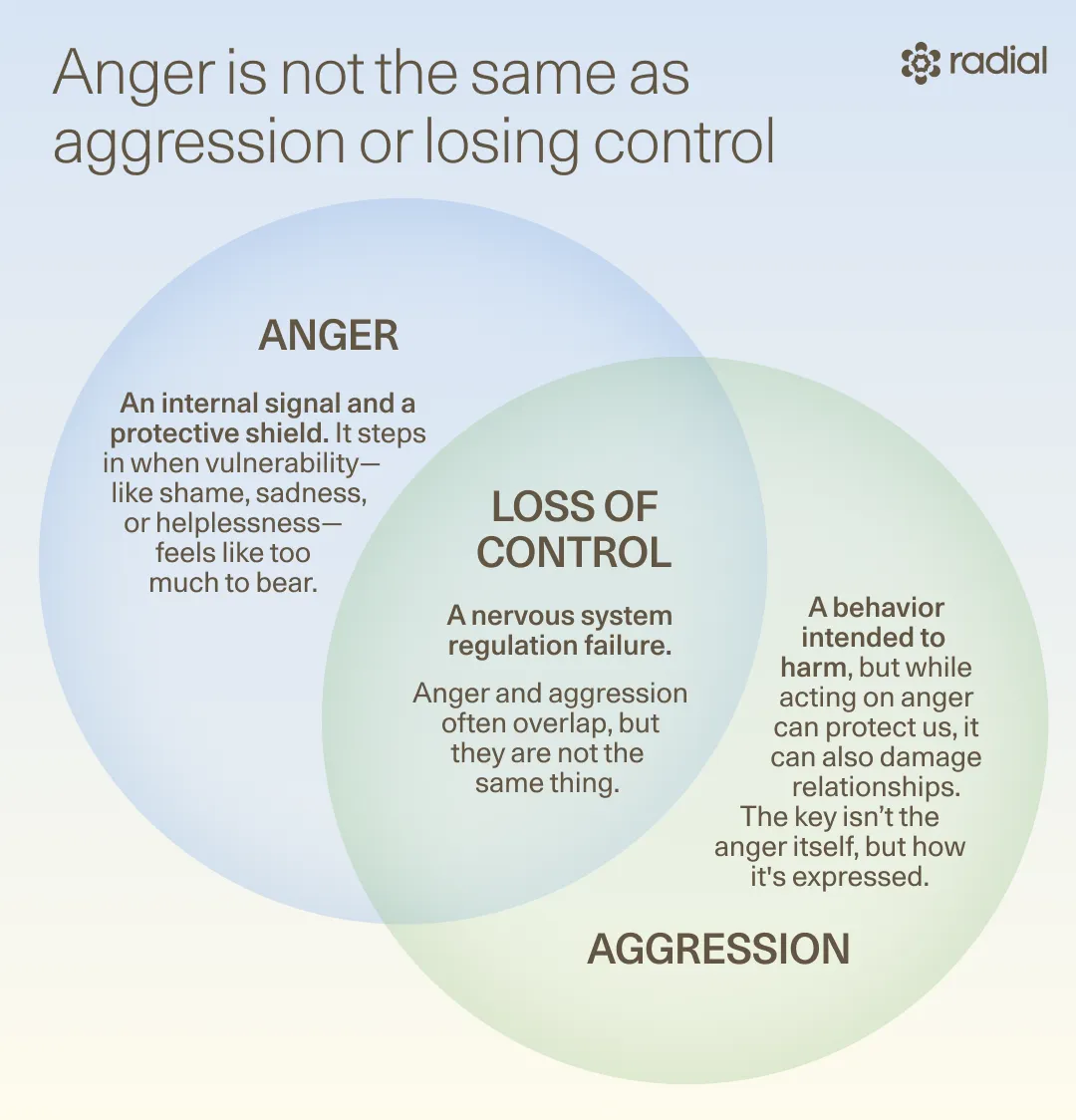
Often, people mistake the emotion of anger for the behaviors that may follow it. Feeling angry is not the same as acting aggressively. “When we are angry, the urge is to attack, confront, blame, or take control,” says Dr. Lee. That urge is the nervous system’s fight response, she says.
But an urge is not an action. Aggression is behavior intended to harm someone or something. Sometimes acting on anger protects us. Other times, it leads to regret and damaged relationships. The difference lies in how anger is expressed, not in the fact that it exists.
It’s also important not to confuse anger with being “out of control.” Anger alone doesn’t equal emotional dysregulation. Emotional dysregulation is the inability to manage emotions in a way that fits the situation and return to baseline afterward. When this happens, reactions can feel overwhelming or disproportionate. Long-term stress, bullying, abuse, or early trauma can alter the brain systems involved in emotion regulation—such as the orbitofrontal cortex and frontolimbic pathways—making it harder to steady intense emotions later in life.
All of this brings us to the bigger picture: the emotion of anger itself isn’t the problem. Feeling and expressing anger is normal, even healthy. It becomes cause for concern when it’s ever-present, harms relationships, turns into aggression, or feels uncontrollable.
“Like other core emotions, [anger] carries valuable information about our lives and who we are,” says Dr. Lee. If anger feels bigger than the moment, more frequent than you’d like, or harder to manage, it may be pointing to something underneath that deserves attention, not judgment.
How anger actually shows up
Anger is universal, but how it shows up? That’s personal. “Each person’s experience with anger is unique,” says Dr. Lee. We all feel angry at times. What differs is how we experience and express it. One person cries. Another raises their voice. “Some feel it strongly and others struggle to feel it at all,” she says.
None of these reactions are random. How we feel and express anger is shaped by a unique mix of biology and environment, including culture, says Dr. Lee. Certain people are simply wired to feel anger more quickly or intensely. “Some are born with nervous systems that are more sensitive and protective, setting off like a car alarm to any perceived slight,” she says.
The environment influences us as well. We learn how to “do” anger, often in our families. In some homes, emotions are loud and constant. In others, they’re barely tolerated. Add in our biological wiring, and by the time we reach adulthood, we’ve developed a kind of emotional blueprint, including how we handle anger.
Connect with our Clinicians



Given how unique everyone’s experience of anger is—like a fingerprint—it’s no surprise anger comes in many shades, “ranging from annoyance to rage to resentment,” says Dr. Lee. Most experts group anger styles into two broad categories: externalized (anger-out) and internalized (anger-in).
- Externalized anger is directed outward. It can range from explosive—think yelling or aggressive behavior—to assertive, which is actually the healthiest version. Assertive anger means clearly stating what’s wrong and what you need, without attacking or disrespecting anyone.
- Internalized anger goes the opposite direction. Instead of confronting the issue, the anger gets turned inward. People may suppress it, ruminate on it, or pretend it’s not there at all. Think of this as anger “locked up.” But locked up doesn’t mean gone. Over time, suppressed anger can show up as chronic stress, high blood pressure, depression, or a constant undercurrent of tension.
And sometimes, unexpressed anger leaks out sideways:
- Passive-aggressive behavior (saying you’re “fine” but backhandedly showing anger through sabotage and other indirect ways)
- Chronic irritability (a steady hum of cynicism or hostility; irritability is the mood while anger is the engine)
Anger can also be displaced. That’s when frustration aimed at one person or situation gets redirected to a safer target. For example, snapping at your partner after a brutal day at work instead of confronting your boss may feel safer, but it doesn’t solve the real issue.
While some people lean toward a particular anger style, most of us shift depending on the situation. Often, passive or indirect anger shows up in environments where expressing it openly feels risky or unsafe.
Anger isn’t one-size-fits-all. It’s shaped by our biology, our upbringing, and our environment. Understanding your personal pattern is the first step toward expressing anger in healthier, more effective ways.
The most common causes of chronic anger
Chronic anger is “rarely just ‘a short fuse,’” says Dr. Lee. It’s usually a layered emotional experience with real biological underpinnings—shaped by a sensitized nervous system, repeated negative or invalidating experiences, cultural and moral pressures, and coping patterns that either suppress anger or amplify it, she says. In other words, when anger or irritability becomes constant, there’s almost always more going on beneath the surface.
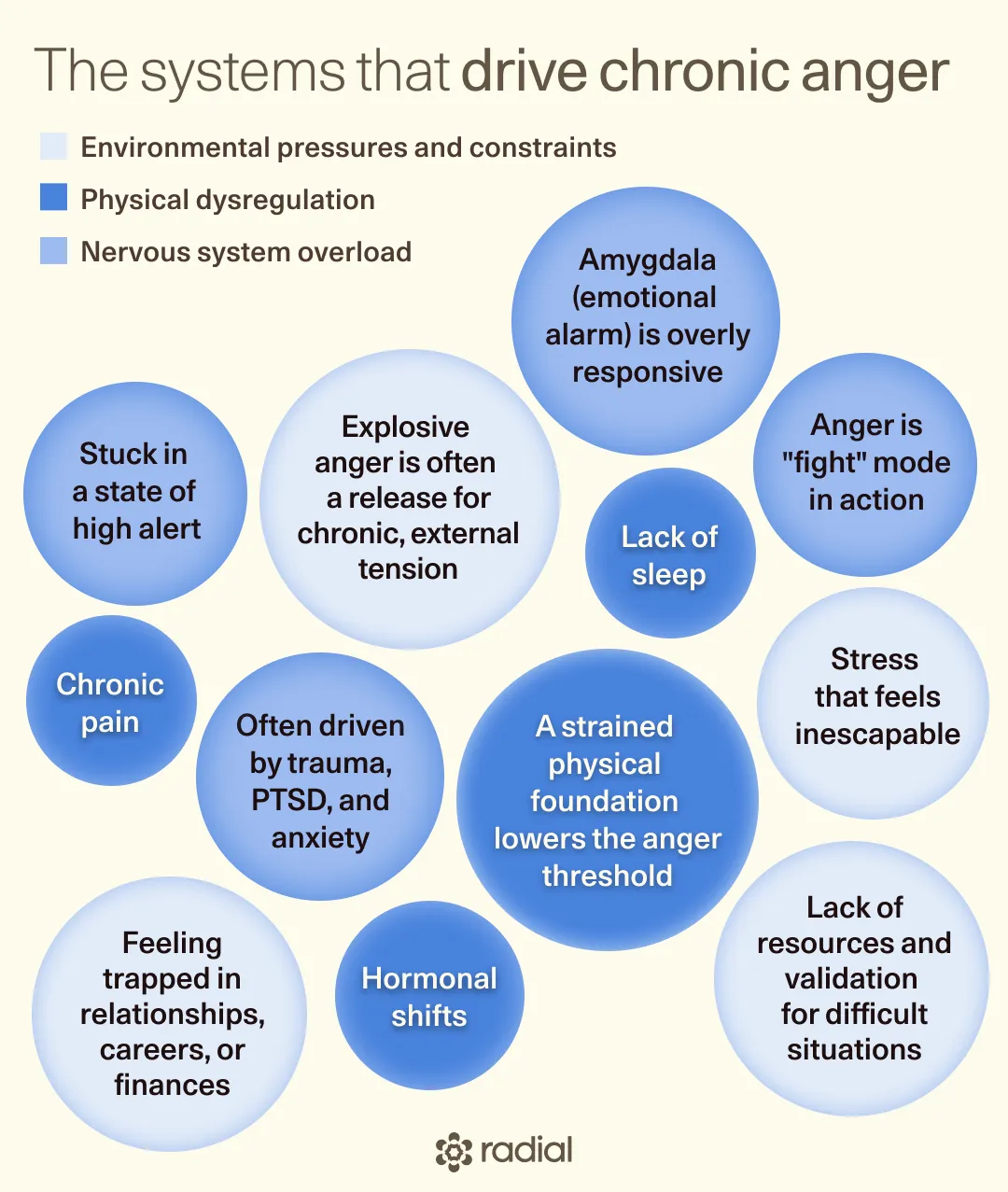
Nervous system overload
If you find yourself quick to anger often, your nervous system might be stuck in fight-or-flight, even when there’s no real danger. This state is called hyperarousal.
In hyperarousal, the sympathetic nervous system doesn’t power down. Your body stays on high alert, scanning for threats. In this mode, your systems are primed to detect and escape danger.
In the brain, a perceived threat ramps up activity in core threat circuitry, including the amygdala, hypothalamus, and periaqueductal gray. When that system becomes overly responsive, the risk of anger increases.
Hyperarousal commonly shows up in conditions like post-traumatic stress disorder (PTSD). Traumatic experiences—especially repeated or childhood trauma—"can lead to dysregulation of the hypothalamic-pituitary-adrenal (HPA) axis,” a neuroendocrine system central for stress management, says Dr. Lee. When that stress system is disrupted, two things tend to happen: heightened sensitivity to both real and perceived threats, and a longer time to return to baseline after getting activated, she explains. In other words, when you have PTSD, anger ignites faster and lingers longer.
Research also shows that PTSD is associated with elevated amygdala responsiveness. And that matters because the amygdala is the brain’s emotional alarm system. It’s primarily responsible for emotional responses—especially anxiety, fear, and rage—and plays a central role in scanning for danger. When it detects a potential threat, it sets off the body’s “fight or flight” response. So if the amygdala becomes overly reactive, the alarm goes off more easily and more loudly.
Anger and rage are so common in PTSD that they’re considered part of the disorder’s clinical picture—not personality flaws, not moral failures, but nervous system adaptations to overwhelming stress. In fact, anger is strongly associated with several anxiety disorders, including generalized anxiety disorder (GAD), panic disorder, and obsessive-compulsive disorder (OCD), too.
Physical dysregulation
Your physical health is the foundation everything else sits on, including your emotions. When something’s out of balance physiologically, it can show up as irritability, a short fuse, or anger. Hormones, sleep, and pain all shape your reactivity.
If you’re angry all the time or feel extreme anger over little things, it may be worth asking: What’s happening in my body right now?
Some examples of physical conditions that can affect your experience of anger:
Hormones
Since hormones can influence the brain, hormonal shifts can affect how we feel and react. This is especially relevant for people assigned female at birth.
Menstrual cycle: “The menstrual cycle can influence anger,” says Dr. Lee. During the luteal phase—when progesterone rises and then drops sharply, and estrogen falls before menstruation—"the body can become more vulnerable to stress, physical illness, and rumination,” she says. Translation: your resilience dips, and irritability can spike.
Postpartum: After birth, estrogen and progesterone plunge. Those rapid changes affect neurotransmitters like serotonin and dopamine—key mood regulators. When those chemicals are out of whack, postpartum depression, anxiety, and mood instability can develop.
Perimenopause and menopause: During this transition, estrogen declines. Since estrogen receptors are widely distributed in brain regions that regulate mood and cognition, drops in estrogen can affect emotional stability. Estrogen also influences serotonin and noradrenaline transmission, both linked to mood regulation. In fact, up to 70% of women report psychogenic symptoms during perimenopause and menopause, including irritability, anger, anxiety, and tension.
Sleep
Sleep is non-negotiable. Most adults need around 7 to 8 hours to function optimally. Fall short, and your emotional regulation takes a hit.
Research links sleep debt to more intense negative emotions, anger in particular. Poor sleep doesn’t just make you tired; it makes your brain less able to regulate itself.
Here’s what may be happening under the hood:
- When you’re sleep deprived, communication weakens between the amygdala (your emotional alarm system) and the ventral anterior cingulate cortex (vACC), which helps regulate emotional responses. The result? Heightened reactions to negative stimuli.
- Sleep debt also reduces the medial prefrontal cortex’s ability to calm the amygdala, leading to emotional instability.
- Prolonged REM sleep deprivation is linked to functional changes in multiple brain regions and altered receptor activity, both associated with mood changes, including anger.
This may help explain why some data show insomnia is associated with higher trait anger and lower anger control in adolescents. As Dr. Lee puts it, insomnia “stresses the nervous system and makes the threshold for fight or flight easier to reach.”
Sleep deprivation is also closely tied to postpartum rage—an intense, often uncontrollable anger that can follow childbirth. In qualitative research, new mothers consistently identify lack of sleep as the number-one unmet physical need that leaves them on edge and prone to explosive anger.
Pain
Anyone who’s stubbed a toe knows pain can make you snap. Now imagine living with an unthinkable level of discomfort every day.
Chronic pain doesn’t just tax the body—it strains the nervous system. Like sleep deprivation, it lowers the threshold for fight-or-flight activation, says Dr. Lee. When your system is constantly bracing, irritability makes sense.
Research links anger—and how it’s regulated—to the presence and severity of nociplastic pain, a type of pain driven by altered pain processing rather than clear tissue damage. These conditions are associated with activation in brain regions involved in emotional experience and regulation, including the rostral anterior cingulate cortex, medial prefrontal cortex, and amygdala.
In other words, some types of pain and emotion share neural real estate. When one is inflamed, the other often is too.
Environmental pressures and constraints
When life feels like a pressure cooker, anger is often the steam release. Constant pressure, limited choices, and chronic stress can leave you feeling boxed in, and eventually, that tension has to go somewhere. For many people, it shows up as explosive or unpredictable anger.
“Some may feel trapped in their relationships, their careers, and with their finances, not only feeling angry about these parts of their lives and themselves but having nowhere to release the feeling or find validation for it,” says Dr. Lee. When stress feels inescapable, anger often becomes the emotional language of feeling stuck.
Postpartum rage is a clear example of what happens when pressure meets depletion. New parenthood can bring profound joy, but it can also pile on relentless demands, especially when resources are scarce. Postpartum mood and anxiety disorders are closely tied to socioeconomic stress, and research shows anger is strongly linked to financial hardship. For new mothers in lower-income households, financial pressures often stack up fast:
- Limited access to healthcare and postpartum support
- Little or no paid maternity leave, forcing an early return to work
- Childcare that’s difficult to find, afford, or align with work schedules
Together, these pressures raise stress levels, increase vulnerability to mood disorders, and can make frustration or rage more likely.
When anger stops being a signal and starts being a loop
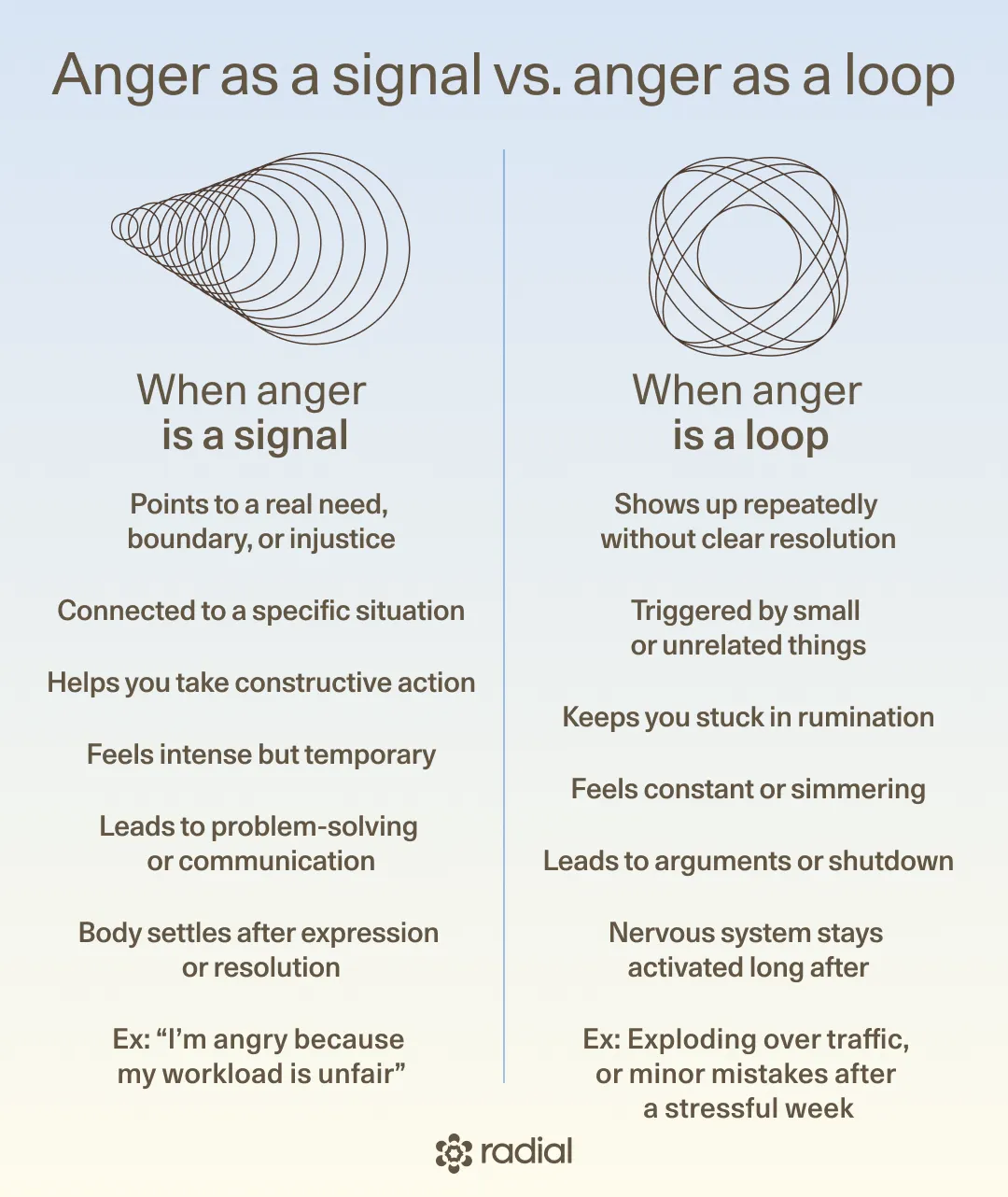
Anger is part of being human. It shows up, delivers information, and—ideally—moves along. The real question isn’t Do I get angry? It’s: Is my anger working for me?
When anger is mild, occasional, and fades relatively quickly—when you can express it assertively without aggression—it’s usually doing its job. It highlights a boundary, a frustration, or an unmet need. It’s an alarm letting us know something has violated our belief system, a barrier to living our life’s meaning and purpose. It can motivate problem-solving. In those cases, anger is a signal, not a crisis. And anger can be seen as a helpful guide, keeping our decisions on track with our long-term goals.
But when it sticks around, something else is going on. Concern grows when anger becomes frequent, intense, or hard to shake (sometimes called trait anger). If you’re recycling the same coping strategies with diminishing returns, constantly “managing” yourself, or noticing more verbal or physical aggression, that deserves attention.
Why generic advice and “anger management” often fall short
In theory, anger management sounds straightforward: identify your triggers, challenge unhelpful thoughts, practice relaxation, and learn better communication. Many programs include education about anger, behavior analysis, coping strategies, and tools for self-control.
And sometimes, it works. Research shows anger management programs can reduce anger and improve problem-solving and communication skills in certain groups like school-aged adolescents.
But here’s the catch: not all anger lives in the thinking brain. Traditional anger management often relies on conscious, deliberate thinking: pause, reframe, choose differently. That can be helpful, but research suggests this approach may fall short for people who experience prolonged or intense emotional arousal. When someone is chronically stuck in “threat mode,” insight alone doesn’t always move the needle—especially when we react before we have a chance to think
In one study, men who reported less success in an anger management program were described as emotionally “stuck.” They struggled to shift their interpretation of perceived threats and had difficulty following through on practice exercises. Researchers concluded that for some, deeper developmental issues may block lasting change.
In another study of a 20-hour anger management program for offenders, participants improved their knowledge about anger, but exhibited little change in actual anger levels or expression compared to controls. In other words: knowing about anger isn’t the same as transforming it.
All of this suggests that anger management, like anger itself, isn’t neat or universal. What helps one person may barely scratch the surface for another. For those who live in a near-constant state of perceived threat, more targeted, trauma-informed, or nervous-system-focused approaches may be necessary, not just education and cognitive strategies.
Which is why generic advice can feel frustrating at best and invalidating at worst. Sometimes anger management messaging—explicitly or subtly—communicates that anger itself is the problem. “Generic approaches can often suggest that we should ‘chill out and calm down’ and not feel angry,” says Dr. Lee. But anger isn’t a glitch in the system. It’s a messenger.
Because anger feels uncomfortable and carries a negative social stigma, many people try to eliminate it entirely. That’s neither realistic nor healthy. Suppressed anger doesn’t disappear—it leaks. It can show up as passive-aggressive behavior, chronic irritability, strained relationships, or even physical health consequences.
And if you keep stuffing it down? Eventually, it bursts. As Dr. Lee puts it, “Anger is an emotion that is valid, and approaches that judge or invalidate its presence often lead us to shove the emotion away, only to feel it more intensely at a later time and be more likely to lose control.” Put a dam on anger long enough, and it will overflow.
A note on injustice and shame
The pressure to eliminate anger is embedded on a collective level, too. “Modern society struggles with fear of anger itself as opposed to the loss of control of anger,” says Dr. Lee. And that fear doesn’t land evenly. Certain identities, backgrounds, and socioeconomic groups are policed more harshly for expressing anger, making it acceptable in some contexts and dangerous in others, she adds.
When the goal becomes social harmony at all costs, necessary anger—especially in the face of injustice—can be silenced, causing real harm, says Dr. Lee. On a personal level, the message is just as painful: that feeling angry makes you unacceptable, unworthy, or unlovable, she adds. Shame often becomes layered on top of the original emotion. And shame doesn’t resolve anger. It buries it deeper.
The real work isn’t about erasing anger. It’s about understanding it, regulating it, and deciding how to use its energy wisely.
Relief within reach
Care covered by your insurance
Radial provides advanced mental health treatment, covered by the insurance you already use.








What actually helps when anger feels unmanageable
When anger starts running the show, it can feel scary and hopeless. But here’s the good news: intense anger is workable—not by crushing it nor ignoring it, but by understanding and regulating it.
First, stop trying to control your anger. Control implies force, suppression, and white-knuckling. What actually helps is regulation.
Regulation means learning how to let anger move through you without letting it hijack you. It’s about widening the gap between feeling and reacting. It’s building the capacity to stay steady enough to choose your response.
And here’s the part people often skip: you can’t regulate what you refuse to feel. “In order to approach any negative consequences of anger, the anger must be felt first so we can better understand why we are feeling this way,” says Dr. Lee. “By doing so, we acknowledge ourselves and our vulnerabilities, which is often necessary before we can approach any problem solving around how intensely we feel the anger and how to make wise judgments about how we act on it.” In other words: feeling it isn’t the failure. It’s the starting point.
For some, therapy—like cognitive behavioral therapy (CBT) for anger—can be a useful tool to address anger head-on. It can help unpack what’s underneath the anger (hurt, fear, shame, overwhelm), identify patterns that keep it looping, and strengthen skills that support emotional steadiness. They also create space to practice responding differently, without judgment, but with accountability.
Sometimes anger is part of a bigger clinical picture like trauma, mood disorders, ADHD, or other psychiatric conditions, says Dr. Lee. In those cases, additional psychiatric support may be appropriate. Medication or other treatments can lower the intensity enough to make therapy and skill-building more effective.
Address the root cause, not just the symptoms
When anger feels chronic, explosive, or tied to deeper wounds, surface-level fixes usually aren’t enough. The real shift happens when care targets the root of the anger, not just the outburst.
But what that looks like depends on what’s underneath. “As anger issues stem from a variety of life experiences in addition to psychiatric diagnoses, support can look different depending on the root cause of this symptom,” says Dr. Lee.
Effective anger support is tailored to your nervous system, your history, and your patterns. No single solution works for everyone. Often, the most effective care addresses both your revved-up nervous system and your resulting thoughts, interpretations, and coping habits.
Still, “no treatment eliminates the feeling of anger altogether,” Dr. Lee says. The aim isn’t to never feel angry again—it’s to feel anger in a way that’s healthy, tolerable, and aligned with your values. Doing so protects your relationships and your health instead of sabotaging them.
Below are evidence-based approaches that can help you build that kind of regulation.
Movement
When you experience anger, your sympathetic nervous system kicks in—your heart rate rises, muscles tense, and energy surges. That physical charge is part of what makes anger feel so intense.
One way to regulate that charge? Movement. Exercise—especially the kind that feels enjoyable to you—can help discharge the tension and excess energy that builds up with strong anger, says Dr. Lee. When your body feels pressurized, sometimes it simply needs somewhere safe to send that energy.
Research backs this up across different groups:
- In children and adolescents, physical activity reduces aggression and hostility.
- In college-age men with elevated trait anger, acute exercise reduces angry mood (though it may not lower the intensity of anger itself).
- Among nurses, regular exercisers reported lower state anger and better anger control.
- In college students, physical activity is linked to less aggression and depression and more life satisfaction and meaning.
So yes, movement can help. But—and this is important—not all movement works the same way. A meta-analysis found that the type of exercise matters. Jogging and stair climbing sometimes increased anger, while ball sports (like soccer or volleyball), group physical education activities, and mixed aerobic exercise decreased it.
Why? Anger already ramps up physiological arousal. High-intensity exercise may amplify that arousal in some people, keeping the nervous system revved instead of calming it down.
The takeaway: experiment. Notice how your body responds. For some, a brisk run clears the air. For others, it pours gasoline on the fire.
One more important note: there’s evidence that heavy physical exertion combined with acute anger may increase short-term heart risk in vulnerable individuals. A large international study found that intense exertion or emotional upset (including anger) in the hour before a first heart attack was reported in about 1 in 7 cases. Both can trigger sympathetic activation—raising heart rate and blood pressure—which may strain the cardiovascular system.
If you plan to use vigorous exercise as part of anger management, it’s wise to check in with your healthcare provider to make sure your heart health is stable.
Talk therapy
Because anger is a core emotional experience, evidence-informed psychotherapy is often central to treatment, says Dr. Lee.
One well-studied approach is cognitive behavioral therapy (CBT) for anger. CBT helps people identify and shift dysfunctional beliefs and thought patterns that fuel maladaptive behaviors. It’s practical, skills-based, and problem-focused.
Research suggests CBT can help across ages and populations:
- In adult male offenders, CBT-based anger management reduced general recidivism by 23% and violent recidivism by 28%.
- In children, studies show CBT reduces aggression, lowers physiological arousal in provocative situations, and improves self-control, problem-solving, and social skills.
That said, anger and aggression are often symptoms of deeper issues. “Aggression and loss of control can stem from different psychiatric conditions including trauma, mood and depression, ADHD, and substance use, each of which has different treatments,” says Dr. Lee. Addressing them may require broader therapeutic approaches, she adds.
Other options include, per Dr. Lee:
- Dialectical behavior therapy (DBT): DBT builds skills in emotion regulation, distress tolerance, and interpersonal effectiveness.
- Acceptance and commitment therapy (ACT): Teaches acceptance of difficult thoughts and feelings while helping you act in line with your values.
- Psychodynamic therapy: Explores how unconscious patterns and past experiences shape current reactions.
- Somatic therapies: Focus on bodily awareness, helping you feel safe in your body while processing emotions and memories.
- Mentalization-Based Therapy (MBT): MBT helps you better understand how your thoughts and emotions drive your behavior and relationships (recent research suggests it may reduce aggression and improve emotional regulation, especially in male adolescents with depression).
Arousal decreasing strategies
When anger spikes, your body shifts into fight-or-flight: pounding heart, tight chest, clenched jaw. At higher intensities, anger can feel like “tension, pressure, and increased energy in the whole body,” says Dr. Lee. Helping the body regulate and release this energy when it’s super intense—and needs a place to go—can be useful, she says.
Arousal-decreasing strategies do exactly what the name suggests: they lower heart rate and blood pressure. The idea is simple: calm the body, and the brain follows. When you deliberately relax your muscles and slow your breathing, you signal to your central and autonomic nervous systems that it’s safe to power down. That shift can lead to a steadier mood and less intense anger.
Relaxation also builds awareness. The more tuned in you are to your internal cues, the earlier you can catch anger rising and choose a better response. Over time, that awareness strengthens your ability to handle stress and develop healthier, more effective coping strategies.
A large international meta-analysis found that arousal-decreasing practices like meditation, mindfulness, yoga, progressive muscle relaxation, and diaphragmatic breathing significantly reduced anger across genders, ages, cultures, and settings. These approaches worked for one-off anger and chronic anger alike, in both clinical and non-clinical populations.
Interestingly, relaxation practices that included a cognitive component—such as mindfulness-based cognitive therapy, cognitive-relaxation therapy, and loving-kindness meditation—were even more effective than relaxation alone. Calming the body and reshaping thought patterns appears especially powerful.
Quick reset: cold water. If your anger feels volcanic, you may need something immediate. Dr. Lee suggests cold water immersion—dunking your face in cold water for about 30 seconds or pressing a cold object to your body. This can help “discharge” intense energy. Some research also links cold-water exposure (like cold baths) to improved mood and increased feelings of alertness and inspiration, possibly through changes in brain connectivity in areas tied to attention, emotion, and self-regulation.
Additional support
If you’ve tried breathing exercises, workouts, and therapy—and you still feel like a shaken soda can—there are other options. Let’s review them.
Medication
Anger itself isn’t a diagnosis, and medication isn’t usually the first stop. But when anger is a symptom of something deeper, or tied to an underlying condition, medication can be a helpful piece of the puzzle
Important nuance: there’s no FDA-approved medication specifically for “anger.” But many medications are used off-label to target irritability, rage, and aggression. The right choice depends on why the anger is happening.
Here’s how different classes may help:
- Antidepressants can reduce rage by treating underlying mood disorders like major depressive disorder, anxiety disorders, or borderline personality disorder—conditions where emotional dysregulation is central.
- Antipsychotics influence neurotransmitters like serotonin and dopamine, which regulate mood and impulse control. They’re commonly used for agitation and aggression in bipolar disorder, schizophrenia, and borderline personality disorder.
- Antiepileptic drugs (AEDs)/anticonvulsants enhance GABA and reduce glutamate activity, helping stabilize mood swings, irritability, and aggression.
- Beta-blockers blunt the physical surge of adrenaline and noradrenaline. By lowering heart rate, blood pressure, and tremors, they can reduce the bodily intensity that fuels rage.
- Benzodiazepines act quickly to reduce acute anxiety and agitation by enhancing GABA activity. They can help in emergencies, but are generally short-term tools due to risks like tolerance and dependence.
- Stimulants improve impulse control and frustration tolerance in ADHD by increasing dopamine and norepinephrine. They can reduce aggression in ADHD, but may worsen irritability in people without it.
Still, without addressing the root cause—through therapy or other interventions—medication alone rarely “fixes” anger long term.
Biofeedback
What if you could see your anger happening in real time? Biofeedback helps you do exactly that.
Using specialized equipment, biofeedback measures physiological signals—like muscle tension, heart rate, or skin conductance—and translates them into visual or auditory cues. In other words, it makes the invisible stress responses visible.
Why does that matter? Because once you can see your nervous system ramping up, you can learn to regulate it. The goal is to build awareness and voluntary control over processes that usually run on autopilot like muscle tightening or heart pounding. Some research shows biofeedback can help turn down the physiological arousal linked to anger and aggression.
Biofeedback works best with a trained professional who can guide the process and tailor it to your needs.
What to do next if this article resonates with you
If you’ve made it this far, something probably hit close to home. Maybe you saw yourself in the patterns. Maybe you felt a little called out. Maybe you just felt understood. So what’s next?
Start small. Think curious, not critical. You don’t need a dramatic overhaul. Just pause and ask yourself a few honest questions:
- Is my anger helping me or costing me?
- When does it show up most predictably?
- How much energy does it take to keep it contained?
This isn’t about judging yourself. It’s about noticing patterns. Awareness is data.
Let your answers guide your next step. If your reflections leave you thinking, Hmm. This might be bigger than I thought, that’s useful information.
According to Dr. Lee, anger may benefit from more targeted support when:
- Anger is one of the only emotions you feel.
- You feel angry most of the time and ruminate on it.
- You don’t feel in control of your anger.
- Your anger is hurting your relationships, work, or school life.
- It’s starting to shape how you see yourself.
You don’t have to fix everything today. But if you’re noticing signs of anger issues, that’s not something you have to muscle through alone. In fact, you’d be in good company. “Anger is one of the most common reasons for patients to seek psychiatric and psychotherapeutic care,” says Dr. Lee.
The bottom line
If you’ve been asking why am I so angry, take that question as a sign of self-awareness, not failure. Remember that the goal isn’t to erase anger. It’s to understand it and express it in healthy, constructive ways.
Needing help with anger isn’t a failure. It’s often a sign that your system has been carrying too much, for too long, and it’s time for better tools, not more self-blame. Small insight can lead to meaningful change—one step at a time.
Radial helps people access the latest fast-acting, evidence-based treatments. You can connect virtually or in person with a licensed clinician who will take the time to understand your concerns and build a treatment plan tailored to you.
You don’t have to tackle this by yourself. Understanding your anger is step one. Getting the right help can change what comes next.
Key takeaways
- Anger is information, not a personality flaw. It’s often protective and frequently a secondary emotion sitting on top of hurt, fear, shame, or overwhelm.
- Your nervous system plays a major role. Anger activates the body’s threat response, which is why it can feel fast, physical, and hard to rein in.
- Regulation beats suppression. The goal isn’t to eliminate anger, but to respond to it in ways that align with your values and protect your relationships.
- Chronic or explosive anger can signal something deeper. Depression, anxiety, trauma, ADHD, burnout, hormonal shifts, and other stressors commonly fuel persistent irritability or rage.
- Real support addresses root causes. Therapy, nervous-system-based tools, and—when appropriate—psychiatric care can reduce intensity and help you build sustainable emotional steadiness.
Frequently Asked Questions (FAQs)
How do I deal with anger in a healthy way?
Healthy anger management isn’t about control—it’s about regulation. Control implies suppressing your feelings. Regulation means learning how to let anger move through you without letting it hijack your behavior.
At a high level, that usually involves:
- Calming the body. Strategies that lower physiological arousal (like relaxation, breathwork, mindfulness, or other nervous-system-focused practices) can reduce the intensity.
- Channeling the energy. Physical movement can help discharge tension (though not all exercise works the same for everyone).
- Understanding the trigger. Therapy approaches like CBT, DBT, ACT, and others help unpack what’s underneath the anger and build stronger coping skills, says Dr. Lee.
- Getting additional support when needed. If anger is tied to trauma, ADHD, mood disorders, or other conditions, psychiatric care or medication may be a useful adjunct, says Dr. Lee.
Is anger a sign of depression or anxiety?
It can be. Anger by itself isn’t a mental health diagnosis. But it can be a symptom of underlying conditions, including major depressive disorder, anxiety disorders, ADHD, bipolar disorder, borderline personality disorder, and trauma-related disorders, among others.
When should I worry about my anger?
Here are some signs it may be time to look more closely at your anger, per Dr. Lee:
- You feel angry all the time.
- It’s getting harder to control.
- It’s affecting your relationships, work, or sense of self.
- Anger is one of the only emotions you feel.
Most importantly: you should worry when your anger is harming you or others. That’s an unmistakable signal you should get some support.
Deep dive recommendations
- Muir, O (Host). (2025). A breakthrough in violence prevention by treating violence like a disease [Audio podcast episode]. The Frontier Psychiatrist
https://podcasts.apple.com/us/podcast/a-breakthrough-in-violence-prevention-by-treating/id1577248149?i=100072742797 - Puder, D. (Host). (2024). 255: Disavowed anger and positive emotions with Paul Wachtel [Audio podcast episode]. In Psychiatry & Psychotherapy Podcast. https://podcasts.apple.com/us/podcast/255-disavowed-anger-and-positive-emotions-with/id1335892956?i=1000743862454
- Puder, D. (Host). (2024, February 23). 206: Mentalization based therapy (MBT), with Dr. Anthony W. Bateman and Dr. Peter Fonagy [Audio podcast episode]. In Psychiatry & Psychotherapy Podcast.
- https://podcasts.apple.com/us/podcast/206-mentalization-based-therapy-mbt-with-dr-anthony-w/id1335892956?i=1000646649394
- Puder, D. (Host). (2021). 123: Mass shootings: An interview with criminologists Drs. Jillian Peterson and James Densley, the argument for data-driven nuance, and steps for prevention [Audio podcast episode]. In Psychiatry & Psychotherapy Podcast.
- https://podcasts.apple.com/us/podcast/123-mass-shootings-an-interview-with-criminologists/id1335892956?i=1000534582138
- Murphy, Tim, and Loriann Oberlin. Overcoming Passive-Aggression, Revised Edition: How to Stop Hidden Anger from Spoiling Your Relationships, Career, and Happiness. Hachette UK, 2016.
Editorial Standards
At Radial, we believe better health starts with trusted information. Our mission is to empower readers with accurate, accessible, and compassionate content rooted in evidence-based research and reviewed by qualified medical professionals. We’re committed to ensuring the quality and trustworthiness of our content and editorial process–and providing information that is up-to-date, accurate, and relies on evidence-based research and peer-reviewed journals. Learn more about our editorial process.
Let's connect
Get started with finding the right treatment for you or someone you care about
Get startedExplore more posts