TMS for Depression: What It Is, How It Works, and What to Expect

When antidepressants haven't provided enough relief, TMS offers a different path forward. Rather than relying on medication, TMS uses targeted magnetic pulses to stimulate brain areas involved in mood regulation and promote healthier brain activity. And for many people with treatment-resistant depression, it offers hope after other treatments have fallen short.
If you've been living with depression for a while, chances are you've tried more than one approach to feel better. Maybe you've switched antidepressants, adjusted dosages, or made lifestyle changes, yet your symptoms still haven't improved enough. It's frustrating, exhausting, and can leave you wondering what options are left. Enter TMS for depression.
Transcranial magnetic stimulation (TMS) uses targeted magnetic pulses to stimulate areas of the brain involved in mood regulation, inducing a positive effect on brain activity.
While the idea of using magnetic pulses on the brain can sound intimidating at first, TMS is an FDA-cleared, noninvasive therapy backed by decades of research. It’s become an established option for many people with major depressive disorder — particularly when standard treatments haven't provided enough relief.
If you're wondering whether TMS therapy could be the right next step, here's what you need to know about how it works, who it's for, and what to expect.
Connect with our Clinicians


.webp)
What is TMS, and how does it work for depression?
TMS is a noninvasive, FDA-cleared treatment for treatment-resistant depression and obsessive-compulsive disorder (OCD). Unlike medication, which is taken orally and can cause side effects throughout the body, TMS uses a magnetic coil to deliver gentle magnetic pulses to specific brain circuits.
For depression, TMS typically targets the left dorsolateral prefrontal cortex — a region that helps regulate mood, motivation, decision-making, and emotions. In many people with depression, this area appears to be less active than usual, per research in the Journal of Affective Disorders. Repeated stimulation over several weeks may help improve functioning in these brain circuits, gradually easing depressive symptoms.
Researchers are beginning to see that TMS does more than stimulate a single brain region — it may also improve communication across brain networks and influence the neurotransmitters involved in mood, according to research in Medrxiv and the International Review of Psychiatry. Over time, those changes can translate into clearer thinking, more motivation, greater enjoyment of everyday life, and better day-to-day functioning.
TMS therapy for depression has evolved over the years, and several treatment protocols are now available. Each works a little differently, but they share the same goal: restoring healthier brain activity. Common options include:
- Standard repetitive TMS (rTMS): In the originally FDA-cleared approach, patients receive one 20- to 40-minute session three to five days a week for about six weeks, followed by a short tapering period. At Radial, most patients receive two sessions per day, shortening the overall treatment course to about three to four weeks.
- Intermittent theta burst stimulation (iTBS): This newer protocol delivers stimulation in shorter bursts, reducing treatment time to just three to ten minutes per session while following a similar six-week schedule.
- Accelerated TMS: This approach compresses treatment into multiple sessions per day over about five to 10 days. Accelerated protocols include SAINT and SWIFT.
Who is a good candidate for TMS as a depression treatment?
TMS may be a good option for people with moderate to severe depression that hasn't improved enough with medication, says Steve Harvey, MD, Midwest regional medical director at Radial.
While only a clinician can determine whether you're a candidate for TMS, other signs the treatment may be worth asking about include:
- You haven't found enough relief with therapy, medication, or both
- You can't tolerate the side effects of antidepressants
- You want a noninvasive treatment that can be used alone or alongside medication and therapy.
- You can commit to treatment five days a week for several weeks.
Who may not be a good candidate for TMS?
TMS is safe for many people, but it isn't the right choice for everyone. TMS may not be recommended if you:
- Have certain non-removable metal implants or medical devices in or near the head, like cochlear implants, aneurysm clips, or deep brain stimulators. Because TMS uses powerful magnetic fields, these devices can interfere with treatment or create safety concerns.
- Have an active substance use disorder
- Have other neurological or psychiatric conditions that could affect the safety or effectiveness of TMS for depression. Your provider will discuss these with you during your evaluation.
If TMS isn't the right fit, it doesn't mean you've run out of options. Your clinician can recommend other evidence-based treatments based on your symptoms, medical history, and treatment goals.

What does TMS treatment for depression involve?
A typical course of TMS depression treatment starts with an evaluation, followed by outpatient treatment sessions most days for several weeks. You'll stay awake throughout each session, and because the treatment doesn't require anesthesia or sedation, you can return to your normal routine afterward. Here’s what to expect every step of the way.
Before treatment starts
Your provider will review your symptoms, medical history, medications, and previous depression treatments to determine whether TMS is a good fit. They'll also screen for any conditions or implanted medical devices that could make treatment unsafe.
Your first appointment
Your first visit is usually a little longer because your provider will take time to customize your treatment. They'll use a few gentle test pulses to identify the right location and stimulation level to maximize the potential benefits of TMS.
During a typical TMS session
Once treatment begins, each appointment is fairly straightforward. You'll sit in a comfortable chair while a magnetic coil rests against your scalp. During treatment, you may:
- Hear rapid clicking sounds (you'll wear ear protection)
- Feel a tapping sensation where the pulses are delivered
- Stay awake the entire time
Once your session is finished, there's no recovery time. Most people simply get themselves home on their own and go about the rest of their day as usual.
Treatment schedule and time commitment
Most people receive TMS three to five days a week for three to six weeks with tapered sessions for another three weeks. Accelerated TMS is another option, and treatment lasts just 5- 10 days with multiple sessions completed per day. Depending on the protocol, each session lasts anywhere from 3 to 10 minutes. It can feel like a big commitment, but consistency matters. The effects build over time, so attending sessions as scheduled gives it the best chance to work.
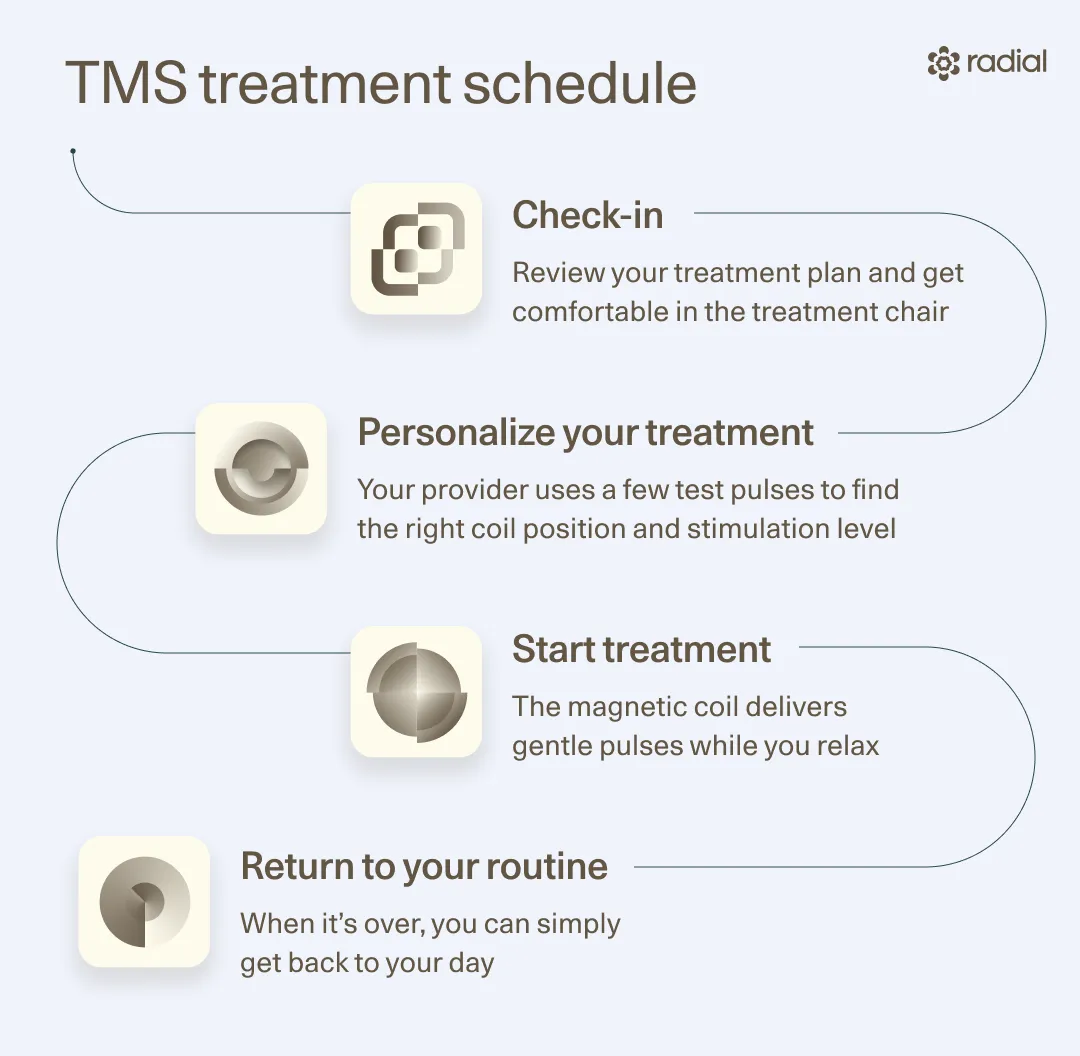
[GRAPHIC COPY]
- Check in: Review your treatment plan and get comfortable in the treatment chair.
- Personalize your treatment: Your provider uses a few test pulses to find the right coil position and stimulation level.
- Start treatment: The magnetic coil delivers gentle pulses while you relax.
- Return to your routine: When it's over, you can simply get back to your day.
How effective is TMS for depression?
TMS can be highly effective for treatment-resistant depression, but it doesn't work for everyone, as evidenced in online reviews of TMS. For many people, the goal is meaningful symptom relief that makes everyday life feel easier, not necessarily the complete disappearance of symptoms.
Studies such as the one in the Journal of Affective Disorders have found that about 58% to 83% of people with treatment-resistant depression respond to TMS, while roughly one-third achieve remission.
Here's what those terms mean in real life:
- Response: Your symptoms improve significantly (by at least 50%). You may have more energy, feel motivated to do things again, or find it easier to get through the day.
- Remission: Your symptoms improve enough that you no longer meet the criteria for depression.
According to research published in Nature, improvement is usually gradual. Some people notice subtle changes within the first few weeks, while others don't feel better until later in treatment. You might even start sleeping better, thinking more clearly, or feeling more engaged before your mood noticeably improves.
If TMS doesn't help, it doesn't mean you've failed. Your provider may recommend finishing the full treatment course, adjusting your treatment plan, or exploring other evidence-based options.
.webp)
What are the side effects and risks of TMS for depression?
TMS is generally well-tolerated, and most side effects are mild and temporary. The most common side effects of TMS include:
- Scalp discomfort or tenderness where the magnetic coil rests
- Headache, neck pain, or toothache during or after treatment
- Facial muscle twitching during stimulation
- Temporary lightheadedness
- Mild fatigue in some; in others feeling edgy or activated
- A temporary sense of worsening mood, around the first week of treatment, which is known as the "TMS dip"
Serious side effects are rare. The most significant potential side effect is seizure, but the risk is extremely low. Before treatment begins, your provider will review your medical history to make sure it's a safe option for you.
Many people also wonder whether TMS is similar to electroconvulsive therapy (ECT). While both are used to treat depression, they work very differently. Unlike ECT, TMS doesn't require anesthesia, doesn't intentionally induce a seizure, and isn't associated with the memory problems that can occur with ECT.
Another common concern is whether TMS will alter your personality. But don’t worry—there’s evidence to suggest it does not change who you are. In fact, as symptoms improve, you will likely feel more like yourself again, with more energy, motivation, and emotional engagement.
How does TMS compare to antidepressants and ECT?
TMS, antidepressants, and ECT are all evidence-based treatments for depression, but they're used in different situations. The best option for you ultimately depends on your symptoms, treatment history, and overall health.
For many people, though, TMS fits somewhere between antidepressants and ECT. It's often considered after medication hasn’t provided enough relief, says Harvey, but before more intensive treatments like ECT.
It's also important to remember that these treatments aren't always mutually exclusive. Many people continue taking antidepressants or participating in therapy while receiving TMS. Others may be candidates for alternative options, like Spravato. Your provider can help you decide which approach — or combination of approaches — is best for you.
Is TMS covered by insurance for depression?
In many cases, yes. Most insurance plans cover TMS for treatment-resistant depression, but coverage usually depends on meeting certain requirements, says Harvey.
"Almost all insurance plans cover TMS, but most of them require going through a preauthorization process that includes showing that you've already tried other treatments, and those other treatments didn't work," he explains.
Exactly what documentation is required varies based on your plan. But Radial's team can help check your TMS insurance coverage, navigate the approval process, and answer your questions along the way.
What should you ask before starting TMS for depression?
Choosing the right TMS provider is just as important as deciding whether TMS is right for you. According to Harvey, it's worth looking for someone who has extensive experience providing TMS and a strong background in psychiatry. He also recommends asking your psychiatrist, therapist, or another trusted healthcare provider for a referral if possible.
Before deciding whether to move forward with a particular provider, it can help to ask questions like:
- Am I a good candidate for TMS based on my diagnosis and treatment history?
- Which TMS protocol do you recommend for me, and why?
- How many sessions will I likely need?
- What results should I realistically expect?
- How will we measure whether treatment is working?
- What happens if I don't respond to treatment?
- Should I continue taking my antidepressants or attending therapy during TMS?
- What will my insurance require before approving treatment?
Relief within reach
Care covered by your insurance
Radial provides advanced mental health treatment, covered by the insurance you already use.








The bottom line
If standard depression treatments haven't helped as much as you'd hoped, it doesn't mean you've reached the end of the road. TMS is an FDA-cleared, noninvasive option that has helped many people with treatment-resistant depression find meaningful relief when other approaches have fallen short.
Whatever you decide, you don't have to figure it out on your own — a provider can help you understand your options and guide you toward the treatment that best fits your needs.
Key takeaways
- TMS is an FDA-cleared, noninvasive treatment that uses magnetic pulses to stimulate brain circuits involved in mood regulation.
- It's most often recommended for people with treatment-resistant depression whose symptoms haven't improved enough with antidepressants.
- Treatment typically involves brief outpatient sessions three to five days a week for three to six followed by three weeks of tapered sessions, with no anesthesia or recovery time required.
- About 58% to 83% of people with treatment-resistant depression experience meaningful improvement with TMS, though results and timelines vary from person to person.
- Talking to a qualified provider can help determine whether TMS is a safe and appropriate option based on your symptoms, treatment history, and goals.
Frequently asked questions (FAQs)
How many TMS sessions does it take to see results?
There's no single timeline. Some people start seeing TMS results within the first few weeks, while others don't feel a difference until later in treatment or just after it's done. Many people experience gradual improvements, so it's important to give the treatment time to take effect.
Is TMS painful?
Most people don't describe TMS as painful, though it can feel uncomfortable for some. During treatment, you'll likely feel a tapping sensation on your scalp and hear rapid clicking sounds. Mild scalp tenderness or headaches are common early on, but often become less noticeable over time.
Can TMS be used with antidepressants?
Yes. Many people continue taking antidepressants while receiving TMS, and the two treatments are often used together. Your provider will recommend the approach that's best for your situation.
Editorial Standards
At Radial, we believe better health starts with trusted information. Our mission is to empower readers with accurate, accessible, and compassionate content rooted in evidence-based research and reviewed by qualified medical professionals. We’re committed to ensuring the quality and trustworthiness of our content and editorial process–and providing information that is up-to-date, accurate, and relies on evidence-based research and peer-reviewed journals. Learn more about our editorial process.
Let's connect
Get started with finding the right treatment for you or someone you care about
Get startedExplore more posts