TMS for Anxiety: Does It Work? Evidence & What to Expect

If you've been living with anxiety that hasn't improved as much as you'd hoped, it's understandable to wonder whether another treatment could help. While TMS isn't the right fit for everyone with anxiety, it may be an option for some people—and understanding where the evidence is strongest can help you have a more informed conversation with your healthcare provider.
When anxiety has been running your life, it's natural to start looking beyond the treatments you've already tried. Maybe medication hasn't provided enough relief. Maybe therapy has helped, but you're still caught in a constant cycle of worry, physical tension, or panic. Or maybe you've heard about TMS for anxiety and are wondering whether it's something that could actually help.
The answer is more nuanced than a simple yes or no. While transcranial magnetic stimulation (TMS) is only FDA-cleared for depression and OCD, clinicians sometimes use it off-label for certain anxiety conditions. But whether or not it's the right fit for you depends on your specific anxiety disorder, symptoms, and treatment history.
In this guide, we'll cover what the research says about TMS for anxiety, who may benefit, what treatment involves, and how it compares with other options.
Connect with our Clinicians


.webp)
Is TMS FDA-approved for anxiety?
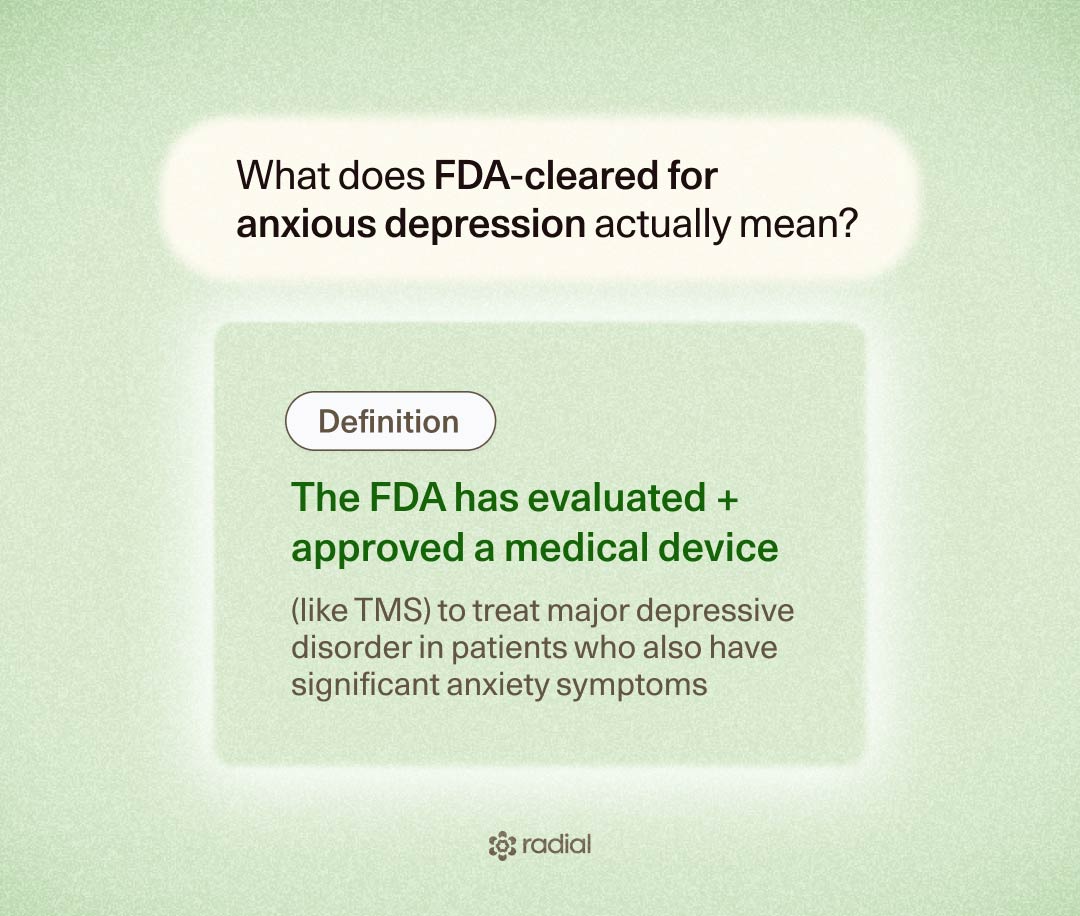
No, TMS isn't FDA-cleared for standalone anxiety conditions like generalized anxiety disorder (GAD), panic disorder, or social anxiety disorder. Instead, it’s FDA-cleared for major depressive disorder (MDD)—including a subtype called anxious depression—as well as obsessive-compulsive disorder (OCD).
In other words, TMS is more often used to treat depression or OCD that comes with anxiety, rather than for an anxiety disorder alone.
But that doesn't mean TMS is off the table if you have anxiety without depression or OCD. According to research published in Neuropsychiatric Disease and Treatment, in some cases clinicians use TMS off-label for anxiety, particularly when medication or therapy haven't provided enough relief. Whether it's a good fit depends on factors like your diagnosis, symptoms, and treatment history.
Generalized anxiety disorder (GAD)
If you have generalized anxiety disorder (GAD), there's reason to be optimistic. While TMS isn't yet considered a standard treatment for GAD, it's the standalone anxiety disorder with the strongest evidence so far.
Indeed, several reviews have found that people with GAD who received TMS experienced greater improvements in their anxiety symptoms than those who received a placebo treatment. For instance, a 2022 meta-analysis in the International Journal of Neuropsychopharmacology found that TMS significantly reduced anxiety symptoms.
Another 2022 review in the Annals of Clinical Psychiatry found that TMS consistently improved anxiety symptoms in people with GAD, regardless of the specific treatment protocol or whether participants also had other mental health conditions.
Notably, the same review didn't find similarly strong evidence for TMS for panic disorder, suggesting TMS may be particularly promising for GAD.
That said, there's still a lot researchers are working to understand. Many of the studies have been relatively small, and they've used different stimulation targets, treatment schedules, and TMS protocols. That makes it difficult to say exactly which approach works best or who is most likely to benefit.
Still, the research we do have suggests TMS may be a worthwhile option to discuss with your provider if medication, therapy, or both haven't given you the relief you were hoping for.
Social anxiety disorder and panic disorder
The effect of TMS for social anxiety disorder and panic disorder is a little less clear. While a handful of small studies have reported improvements in symptoms after TMS, the overall evidence isn't as strong or consistent as it is for GAD or anxious depression.
For instance, the 2022 review in the Annals of Clinical Psychiatry found that while TMS significantly improved symptoms in people with GAD, it didn't show the same benefit for panic disorder.
And when it comes to social anxiety disorder, the evidence is still in its early stages. In one small 2013 case report in Clinical Practice & Epidemiology in Mental Health, two people with severe social anxiety experienced improvements after rTMS.
While findings like these are encouraging, there haven't been enough large, high-quality studies to determine how consistently TMS works.
That doesn't necessarily mean TMS won't help someone with social anxiety or panic disorder. It simply means we don't have enough evidence yet to predict who is most likely to benefit or which treatment approach works best. As researchers continue studying TMS for different anxiety disorders, those answers will hopefully become available.
What about OCD and PTSD?
OCD and post-traumatic stress disorder (PTSD) are often grouped into conversations about anxiety, but they're a little different when it comes to TMS therapy.
The evidence for TMS for OCD is strong. In fact, TMS is FDA-cleared to treat OCD, and multiple clinical trials have found it can reduce obsessive thoughts and compulsive behaviors in people who haven't responded well to medication or therapy.
For instance, in a 2019 clinical trial in The American Journal of Psychiatry, 45.2% of people treated with deep TMS experienced a meaningful reduction in OCD symptoms, compared with 17.8% who received a placebo treatment.
The research on PTSD is promising, but it's still evolving. A 2025 meta-analysis in Neuropsychiatric Disease and Treatment found that TMS can effectively reduce PTSD symptoms. However, because the studies have been relatively small and used different treatment protocols, researchers are still working to determine who benefits most and which approach works best.
Why do anxiety symptoms often improve when treating depression?
Many of the strongest TMS studies for anxiety actually enrolled people with depression, not a primary anxiety disorder. That's because depression and anxiety often occur together and involve many of the same brain circuits that regulate mood and emotion.
For instance, a 2022 study in the Turkish Journal of Medical Sciences found that 63% of patients with depression and anxiety symptoms responded to treatment, and 42% reached remission.
That doesn't necessarily mean TMS directly treats an underlying anxiety disorder. Instead, anxiety may improve because the depression driving or amplifying those symptoms is getting better.
How does TMS work for anxiety?
Anxiety involves a network of brain regions that help you recognize threats, manage emotions, and decide when it's safe to relax. In people with anxiety, those circuits can become overactive or fall out of balance, making it harder to "turn off" fear and worry.
TMS is thought to help rebalance those networks. It uses gentle magnetic pulses to stimulate parts of the brain involved in mood, stress, and emotional regulation, with the goal of helping those circuits function more normally over time.
While researchers are still learning exactly how it works, studies suggest TMS changes activity in the prefrontal cortex—a brain region that helps regulate emotions—and strengthens its connections with deeper brain areas involved in processing fear and stress.
TMS protocols used for anxiety: What are the options?
There's no one-size-fits-all TMS treatment for anxiety. The protocol your provider recommends depends on your diagnosis, symptoms, and what the research supports.
Here's a look at the most common approaches:
Can TMS make anxiety worse? Side effects to know
Yes, it's possible that TMS can make anxiety worse. But if it happens, it's usually temporary. A small number of people report feeling more anxious during the early stages of treatment, but for most, those feelings improve as treatment continues.
There are a few reasons this can happen, including:
- The treatment experience itself: During the first few sessions, the loud clicking sound, tapping sensation on your scalp, and unfamiliar experience of TMS can feel activating or even panic-provoking for some people.
- Changes in brain activity: TMS is designed to change patterns of brain activity. As those changes begin, some people experience a temporary increase in anxiety, restlessness, or emotional ups and downs before symptoms start to improve.
- Other factors unrelated to TMS: Not every increase in anxiety is caused by treatment itself. Your provider will also consider things like stress, sleep, medication changes, and how your symptoms are changing over time to better understand what's driving the increase.
The important thing to remember is that a temporary spike in anxiety isn't the same as TMS making an anxiety disorder worse. In fact, studies generally find that anxiety symptoms stay the same or improve over the course of treatment, particularly in people with anxious depression and OCD.
If you notice your anxiety getting worse, don't try to push through it without saying anything. Let your treatment team know. They may recommend giving your brain a little more time to adapt, adjusting the stimulation settings, or making other changes to help you feel more comfortable. If your symptoms are severe or continue to worsen, they'll work with you to decide whether a different approach makes more sense.
Like any medical treatment, there are potential side effects. Possible TMS side effects include:
- Headache
- Scalp discomfort or tenderness
- Tingling or twitching of the facial muscles during treatment
- Lightheadedness
- Fatigue
- Seizures (in very rare cases)
How does TMS compare to other anxiety treatments?
TMS and anxiety don’t always go hand-in-hand. In fact, there's no single "best" treatment for anxiety. The right option depends on your diagnosis, symptom severity, treatment history, preferences, and overall health.
That said, here's how TMS generally compares with some of the most common approaches:
- TMS vs. medication for anxiety: Medication is usually the first treatment used for anxiety disorders because it has the strongest evidence. TMS is generally considered when medication, therapy, or both haven't provided enough relief—particularly if depression is also present, says Harvey. Because TMS targets the brain directly, it isn't associated with body-wide side effects like weight gain or sexual dysfunction. However, it does require regular office visits over several weeks, whereas medication is taken at home and often used long-term.
- TMS vs. therapy for anxiety: Therapy—especially cognitive behavioral therapy (CBT)—is very effective for anxiety. It helps people develop practical skills to manage anxious thoughts and behaviors. TMS works differently by targeting brain activity rather than teaching coping strategies. The two treatments aren't mutually exclusive, though: Many people receive TMS while continuing therapy.
- TMS vs. other neuromodulation options: Depending on your symptoms and diagnosis, your provider may also discuss treatments like Spravato (esketamine) or electroconvulsive therapy (ECT). Each has different benefits, risks, and evidence for anxiety-related conditions.
Who is a good candidate for TMS for anxiety?
The best way to know if you’re a good candidate for TMS is through a formal evaluation with a qualified provider. During that appointment, they'll look at your diagnosis, symptoms, treatment history, and overall health to determine whether TMS is likely to help.
Some of the factors they'll consider include:
- Your diagnosis: The evidence is strongest for TMS for anxiety and depression, along with anxiety and OCD. While research on TMS for generalized anxiety disorder, PTSD, social anxiety disorder, and panic disorder is growing, TMS is considered an off-label treatment for these conditions.
- Which treatments you’ve already tried: Your provider will ask whether you've tried therapy, medication, or both, how well they worked, and whether side effects or other factors made them difficult to continue.
- Co-occurring conditions: Because TMS is FDA-cleared for depression and OCD, people with either condition alongside anxiety may be more likely to benefit.
- Safety considerations: It’s unsafe to use the TMS metal coil if you have certain implanted metal or electronic devices (like a cochlear implant, aneurysm clips, or a deep brain stimulator). Your provider will also review your medical history to make sure TMS is safe for you.
- Your goals and preferences: Some people are looking for a non-medication option, while others want to add TMS to their current treatment plan. Your provider will help you weigh the pros and cons of every path.
What does a TMS treatment course look like for anxiety patients?
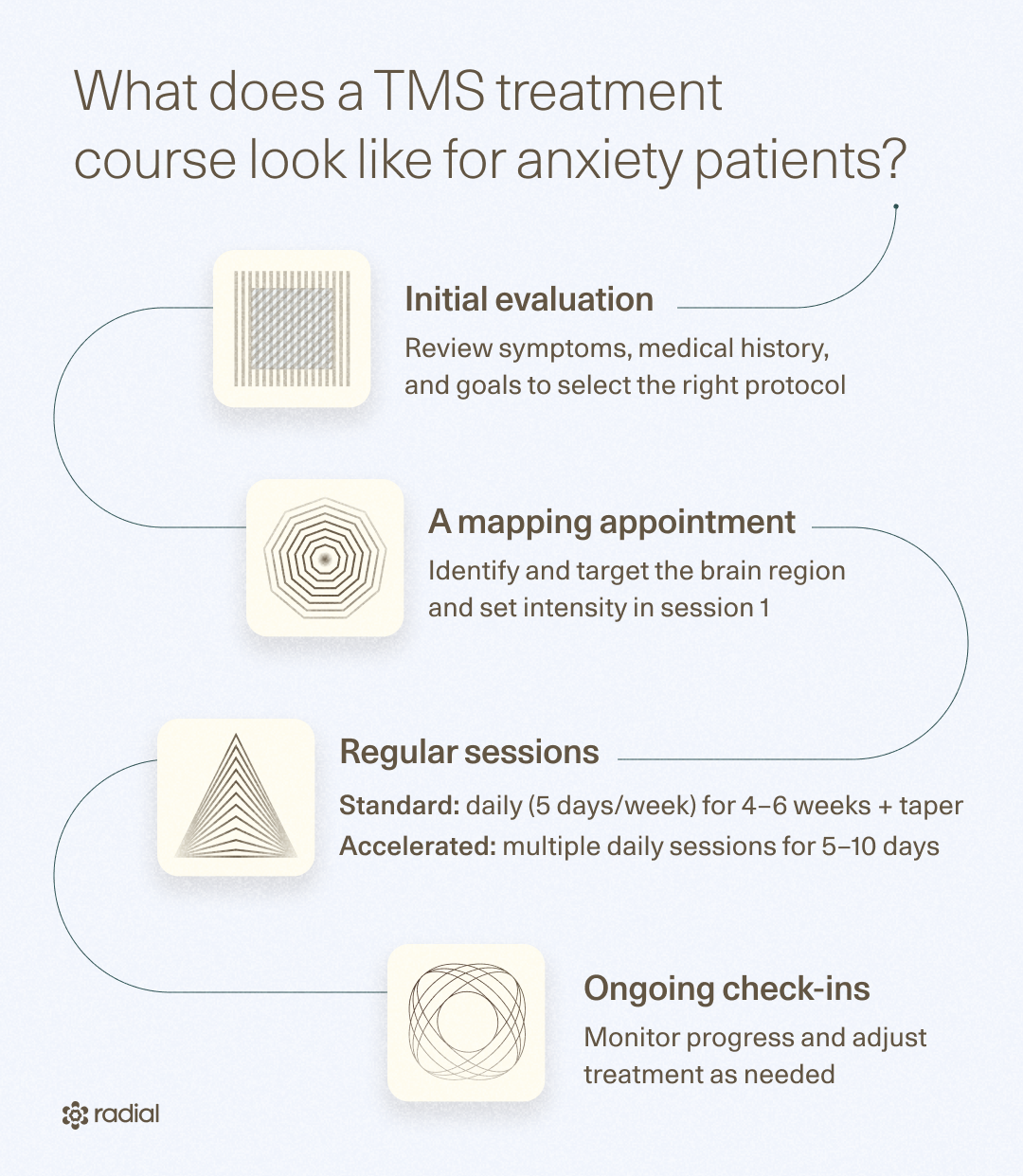
Most people receive TMS five days a week for several weeks, with each session lasting about 3 to 40 minutes, depending on the protocol. Some clinics also offer accelerated schedules with multiple sessions per day, which can shorten the overall treatment timeline to as little as five days. Your exact treatment plan will depend on your diagnosis, the type of TMS you're receiving, and your provider's recommendations.
A typical treatment course includes:
- An initial evaluation: Before treatment begins, you'll meet with a provider to review your symptoms, medical history, and treatment goals. If TMS is a good fit, they'll determine which protocol is right for you.
- A mapping appointment: During your first treatment, your provider will identify the area of your brain to target and fine-tune the stimulation intensity.
- Regular treatment sessions: Many people receive one session a day, five days a week, for about 4 to 6 weeks, followed by a short taper. Some clinics (like Radial) also offer accelerated TMS, which can shorten the overall treatment course to just 5-10 days with multiple sessions per day.
- Ongoing check-ins: Throughout treatment, your provider will monitor how you're feeling and make adjustments if needed.
Relief within reach
Care covered by your insurance
Radial provides advanced mental health treatment, covered by the insurance you already use.








The bottom line
Anxiety can feel overwhelming, but you don't have to settle for a treatment plan that isn't working. TMS isn't a first-line treatment for most anxiety disorders, but for the right person, it may offer another path forward. A conversation with a qualified provider can help you understand whether TMS—or another treatment—is the best next step for your symptoms.
Key Takeaways
- TMS isn't yet FDA-cleared for any standalone anxiety disorders, but research suggests it may help ease anxiety in some people.
- The strongest evidence is for anxiety that occurs alongside depression or OCD, while studies of generalized anxiety disorder, PTSD, social anxiety, and panic disorder are still emerging.
- If medication or therapy haven't provided enough relief, a TMS evaluation can help determine whether it's an appropriate next step.
Frequently asked questions (FAQs)
Can TMS treat anxiety without depression?
Possibly. While TMS has the strongest evidence for anxious depression, research also suggests it may help some people with generalized anxiety disorder, PTSD, and social anxiety disorder. However, these uses are considered off-label, and more research is needed to determine who is most likely to benefit.
Is TMS covered by insurance for anxiety?
TMS insurance coverage depends on your diagnosis, insurance plan, and whether prior authorization is approved.
In general, TMS is more likely to be covered for FDA-cleared conditions like major depressive disorder or OCD. Coverage for generalized anxiety disorder, PTSD, social anxiety disorder, and panic disorder is less common because they're considered off-label uses. Your provider can verify your benefits and help you get prior authorization if needed.
Why isn't TMS FDA-approved for anxiety if some studies show benefit?
FDA approval requires strong evidence from multiple high-quality clinical trials showing that a treatment is both safe and effective for a specific condition. While research on TMS therapy for anxiety is encouraging, especially for anxious depression, larger studies are still needed before most anxiety disorders can be considered for FDA approval.
Editorial Standards
At Radial, we believe better health starts with trusted information. Our mission is to empower readers with accurate, accessible, and compassionate content rooted in evidence-based research and reviewed by qualified medical professionals. We’re committed to ensuring the quality and trustworthiness of our content and editorial process–and providing information that is up-to-date, accurate, and relies on evidence-based research and peer-reviewed journals. Learn more about our editorial process.
Let's connect
Get started with finding the right treatment for you or someone you care about
Get startedExplore more posts