Yes, TMS Therapy Is Legit. Here's the Science Behind It

If you’ve ever wondered “is TMS therapy legit,” you’ve probably read a few anecdotes online or felt confused about exactly how it works. The short answer is that yes, TMS is a legitimate, FDA-cleared therapy that is often covered by insurance and can help people with depression, OCD, and some other conditions, but it’s important to understand what it can and cannot do.
While transcranial magnetic stimulation (TMS) isn’t new, it’s still novel enough that many people aren’t sure what to make of it. Online, you’ll find hopeful success stories as well as disappointing experiences. When you consider the fact that this treatment involves magnetic pulses directed at specific areas of the brain, it’s understandable that some skepticism leaves people wondering whether TMS can be used as a legitimate treatment.
That unfamiliarity can shape how people view TMS. As MaryEllen Eller, MD, the Southeast Regional Medical Director at Radial, explains, “For many people, Transcranial Magnetic Stimulation (TMS) sounds like some weird sci-fi treatment, or worse, a different version of ‘shock’ therapy.” While the science behind it might sound complicated, she notes that “you don't have to understand all the science to benefit from the treatment.”
In this article, we’ll look at what the evidence shows about TMS, why individual experiences can sometimes vary, and how to separate common misconceptions from the facts when deciding if it might be the right option for you.
Healing happens through strong relationships
Compassionate, experienced mental health professionals focused on evidence-based care
.webp)
.png)


So, is TMS therapy legit?
Yes, TMS therapy is a legitimate medical treatment that has been studied in clinical trials and cleared long ago by the U.S. Food and Drug Administration for several conditions, including major depressive disorder and obsessive-compulsive disorder (OCD). It’s offered in hospitals, medical research centers, and psychiatric clinics for people whose depression symptoms haven’t improved enough with one or more medications. It's also covered by many health insurance plans, including Medicare.
That doesn’t mean that TMS works for everyone. Or that every single claim you see online is accurate. Just like other medical treatments, TMS has limitations and risks. Some people respond really well, while others don’t get quite the same results. But the treatment itself is well-established and evidence-based, says the American Psychiatric Association.
What does FDA clearance for TMS actually mean?
FDA clearance means that a TMS device has been reviewed by the U.S. Food and Drug Administration and authorized for specific medical uses, the FDA explains. That’s why you’ll see devices described as FDA-cleared instead of FDA-approved, since they are medical devices and not medications. Both of these distinctions involve FDA review before products can be marketed, but they have differing regulatory pathways.
The first TMS device was cleared in 2008 to treat major depressive disorder in adults who had not responded to at least one antidepressant, per Brain Stimulation. Since then, the FDA has cleared other TMS devices for additional uses, including for obsessive-compulsive disorder in 2018, smoking cessation in 2020, anxious depression in 2020, and depression in adolescents and young people ages15 to 21 in 2024.
It’s important to note that FDA clearance only applies to specific devices for specific conditions. That means not every TMS machine is cleared for every condition, so it’s worth asking a provider which kind of device they use and whether or not treatment would be beneficial for you based on your medical and psychiatric diagnoses.
What does clinical research say?
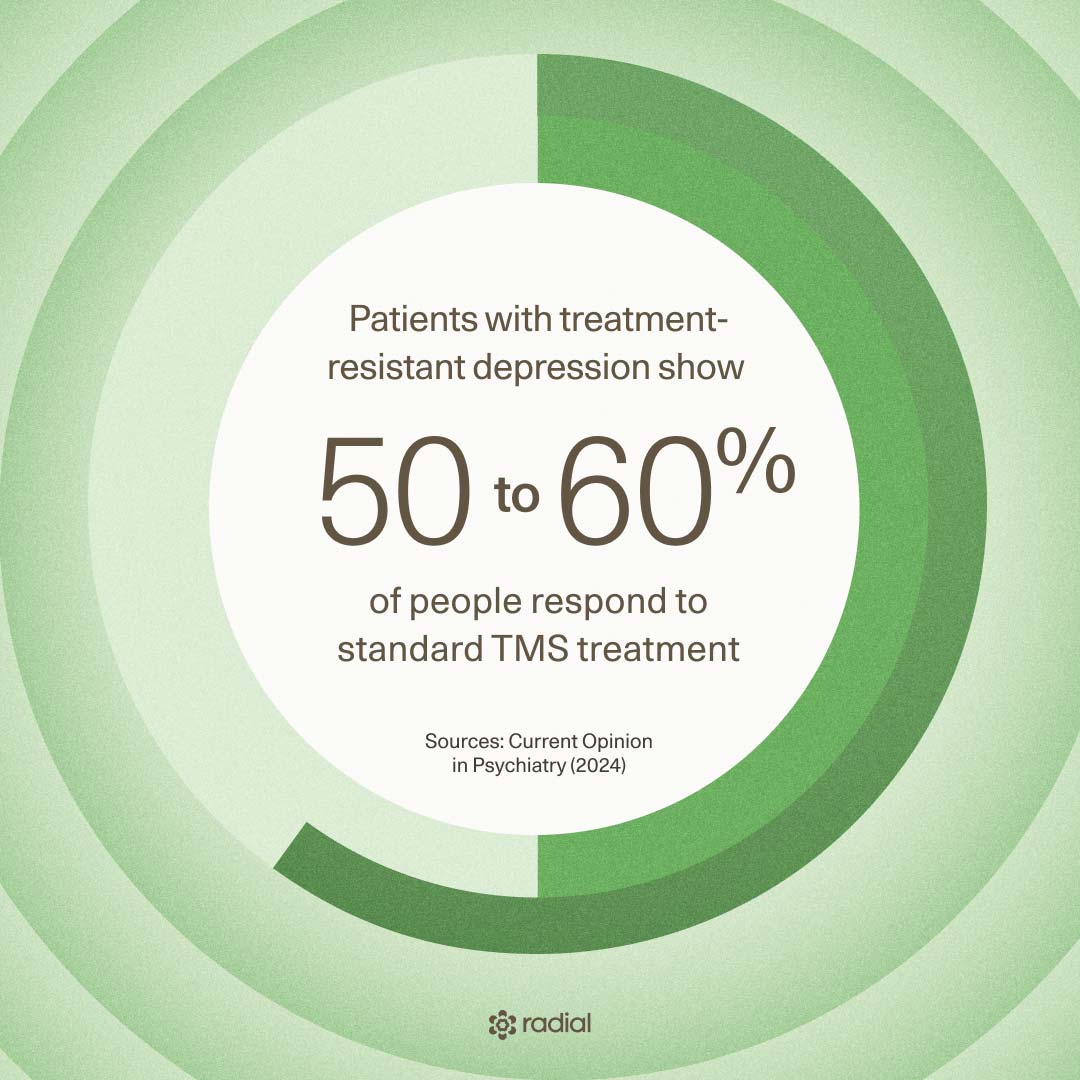
Research consistently shows that TMS can help people who have depression, particularly those who haven’t seen enough improvement after taking antidepressant medications. A study in Current Opinion in Psychiatry says that around 50% to 60% of people respond to standard TMS treatment, with even higher response and remission rates for some accelerated protocols (86% and 78%, respectively), according to research in The American Journal of Psychiatry.
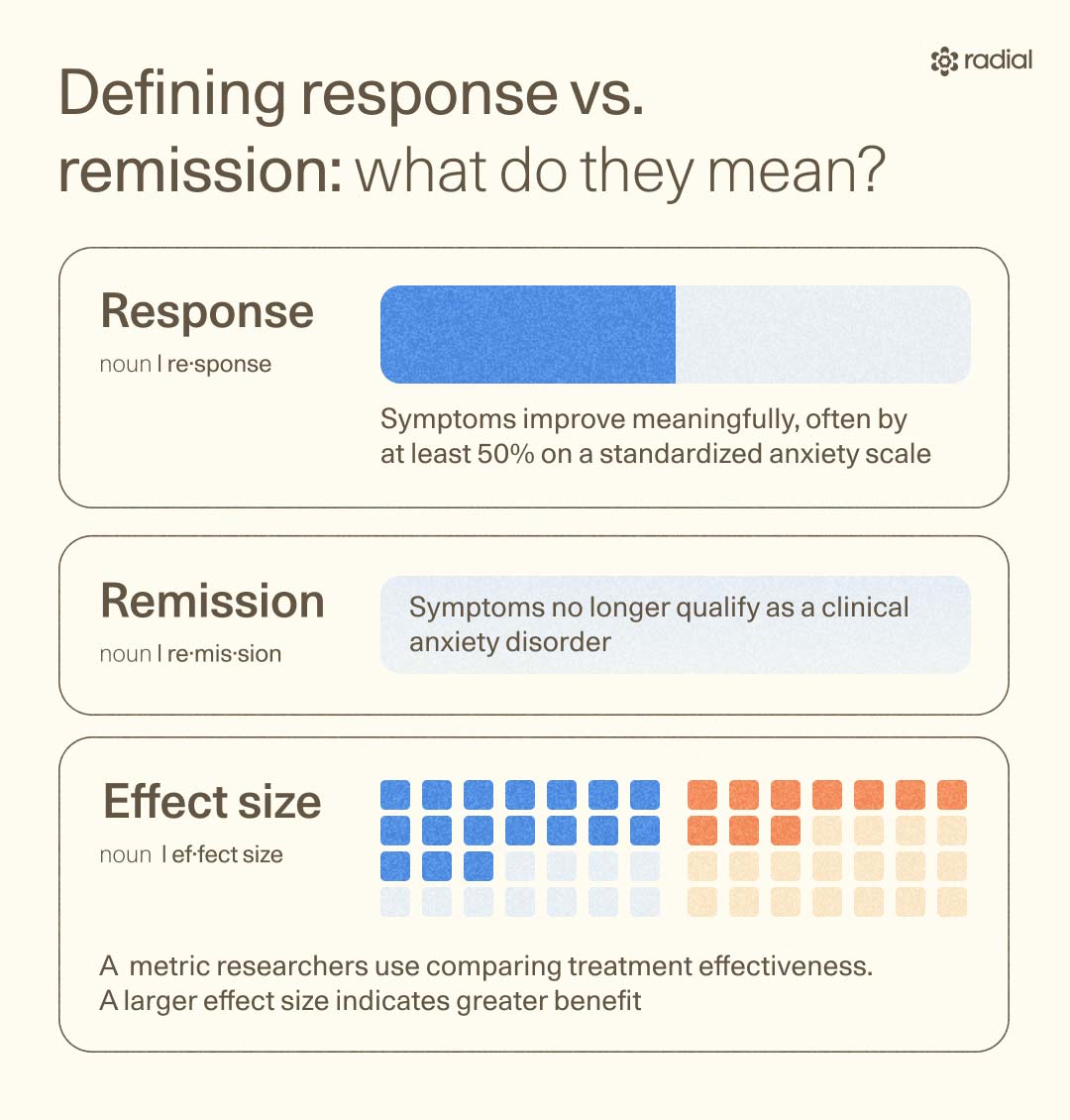
When a person has a response to treatment, it means that their depression symptoms improve by at least 50%. Remission, on the other hand, means that a person improves enough that their symptoms no longer meet the diagnostic criteria for depression.
Like any treatment, TMS doesn’t work for everyone. Some people see big improvements, while others may experience less noticeable changes. Response rates can vary for a number of reasons, including factors like a person’s symptoms and the specific protocol that is used.
Of course, different treatments work for different people, and sometimes trial and error is a part of the path to depression relief. If TMS doesn’t work for you, there are other options that you can talk to your provider about, including protocol adjustments, Spravato, or ECT. Dr. Eller says that TMS can also be used alongside other treatments like medication and psychotherapy.
Why are people skeptical of TMS?
People who ask “Is TMS a scam?” are often reacting to TMS side effects, no meaningful improvement in their symptoms, or outcomes that didn’t match their expectations. While these experiences are real, they aren’t a full reflection of how TMS performs as a treatment overall.
Several factors can contribute to skepticism:
- Results may vary: TMS doesn’t work the same for everyone, which can fuel doubts. Some people have significant improvements, while others see modest results or don’t respond at all. That variability can leave people wondering, “Is TMS a hoax?”
- Some people feel worse: A small number of patients also experience what is sometimes known as a “TMS dip,” where symptoms of depression and anxiety temporarily worsen, leading to feeling worse before feeling better.
- The technology is misunderstood: Some skepticism may also come from confusing TMS with other so-called magnetic therapies. The National Center for Complementary and Integrative Health (NCCIH) says that such products are often marketed for various health purposes without strong supporting evidence. TMS, however, is a distinct medical treatment with FDA-cleared indications.
- Unrealistic expectations: A literature review published in BMC Medical Ethics found that media coverage tends to focus on benefits while offering relatively little information about how the treatment works. Some clinics also market TMS as a treatment for a wide range of conditions, even though FDA clearance only applies to specific devices and indications. This gap between expectations and evidence contributes to some of this TMS controversy you might see online.
Personal stories, both positive and negative, are important because they can give you an idea about how others have responded. But it’s also important to remember that these anecdotes don’t tell the whole story. Sometimes increased personal or financial stressors, grief, medication changes during treatment, or treatment adherence could cause anxiety and depressive symptoms to worsen while undergoing TMS, making it hard to distinguish if TMS had any benefit. The best way to evaluate TMS is to consider these individual experiences along with the evidence-based research that shows how TMS can be an effective treatment for certain conditions.
How does TMS compare to ECT?
TMS is also sometimes conflated with electroconvulsive therapy (ECT), further adding to some of the misconceptions about how it works. “TMS and ECT (electroconvulsive therapy) are distinctly different treatment modalities,” Dr. Eller says. While both treatments affect brain activity and are used to treat psychiatric conditions, they do so in very different ways.
TMS is non-invasive and uses magnetic pulses directed at targeted areas of the brain while a person is awake, while ECT uses an electrical current to trigger a brief seizure while under anesthesia.
These differences mean that ECT is typically reserved for severe depression or situations where a rapid response is needed. TMS, on the other hand, is more commonly used when depression hasn’t improved enough with medication.
What does a TMS treatment course actually look like?
A typical course of traditional TMS therapy involves one to two treatment sessions per day for a total of 36 sessions over four to six weeks. Each session lasts up to 45 minutes for traditional TMS, but may be as little as 10 minutes per session for accelerated TMS protocols.
During treatment, you’ll sit in a chair while a helmet with a magnetic coil is placed against your scalp. The device will deliver a series of magnetic pulses to a targeted area of the brain.
Despite the high-tech name, the actual treatment experience is fairly straightforward. Dr. Eller describes the sensation as a series of “taps” on the scalp with short periods of rest in between. She also says that most people can immediately resume normal activities with no downtime or side effects.
Some clinics also offer accelerated TMS, which involves delivering multiple treatment sessions in a single day and over a shorter period. While this is helpful for some people, it isn’t right for everyone and not all providers offer it. Research in European Psychiatry found that standard rTMS and accelerated TMS offered comparable efficacy and tolerability.
Who is — and isn't — a good candidate for TMS?
TMS is often recommended in situations where people with major depressive disorder have tried one or more antidepressants but haven’t gotten enough relief from their symptoms. It may also be helpful for some people who have OCD or other FDA-cleared indications.
But TMS isn’t an appropriate option for everyone. Some people who have metal implants or implanted medical devices in or near the head may not be eligible. Further evaluation may also be needed for people who have a history of seizures or other neurological conditions. These don’t automatically rule out TMS as an option, but they do mean that additional screening is needed and may warrant additional clearances from your medical team.
Whether you’re a candidate for TMS isn’t something you’ll decide on your own. “To be a candidate for TMS, you need to be assessed by a mental health provider specifically trained in TMS,” Dr. Eller says. A psychiatrist or other qualified mental health professional will look at your medical history, diagnosis, and current medications to help decide if TMS is an appropriate option for you.
Our article on who is a good candidate for TMS offers a closer look at the factors that providers will consider.
What does TMS not treat?
TMS is not a treatment for every condition. For example, it is not currently FDA-cleared for generalized anxiety disorder, bipolar disorder, schizophrenia, attention deficit hyperactivity disorder (ADHD), or post-traumatic stress disorder (PTSD), although researchers are continuing to actively study how it might be helpful for other uses.
It’s important to understand what conditions TMS is approved to treat and which are emerging so you can approach your own treatment with realistic expectations. For instance, a paper published in Brain Stimulation reports that TMS is sometimes used off-label for conditions like anxiety and bipolar disorder, which have a strong evidence base. However, it’s also sometimes promoted for less-researched uses like autism and cognitive enhancement.
That doesn’t mean that TMS won’t ever have a role in treating these or other conditions, it's just that these are not currently considered standard indications. That may influence your treatment options, or whether insurance will cover treatment at all.
A note on cost and insurance coverage
Cost is a real consideration for most people when deciding whether TMS is a viable treatment option. A full course of TMS can be expensive if you are paying out of pocket. Fortunately, almost all insurance companies now cover TMS for patients, so long as they meet certain criteria.
Your specific coverage and out-of-pocket costs will vary depending on your insurer, diagnosis, and treatment history. For these reasons, it’s worth talking to your insurer to learn more about your benefits and coverage before you start treatment.
Relief within reach
Care covered by your insurance
Radial provides advanced mental health treatment, covered by the insurance you already use.








The bottom line
When you’re considering any treatment, it’s only natural to want to understand how well it works and what its limitations are. Just like psychotherapy and medication, TMS benefits some people more than others. That’s why it’s important to look beyond individual anecdotes and consider the overall research showing who it helps and the conditions it’s been shown to treat.
Understanding both the strengths and limitations of TMS treatment can help you make an informed decision about your next steps. If you’re interested in learning more, reach out to Radial to discuss whether TMS might be a good fit for your needs.
Key takeaways
- TMS is legit, backed by both clinical studies and FDA clearance showing specific devices can be effective for specific conditions, but that doesn’t mean it’s the right choice for everyone.
- A treatment can be evidence-based and still not work for everyone who tries it, which is why response and remission rates can vary.
- Negative experiences and online skepticism shouldn’t be dismissed, but they should also be weighed against the scientific evidence showing TMS’s effectiveness.
- The best way to determine if TMS is the right choice for you is to talk to a provider about your diagnosis and treatment history.
Frequently asked questions
Why is TMS not more popular?
Several practical barriers have limited the widespread use of TMS, including the time commitment, cost, and access to treatment. Standard TMS involves daily sessions for multiple weeks, which can be hard to schedule. This is especially prohibitive for people who must travel because they don't live near a clinic that offers TMS. It can also be expensive, and insurance may only cover treatment after a person has tried one or more antidepressants without success. Awareness plays a role as well. Many people simply aren't familiar with TMS or have misconceptions about how it works.
Proceedings of the National Academy of Sciences of the United States of America notes that while cost and access have slowed widespread use, advances in treatment protocols, broader insurance coverage, and growing evidence of TMS's efficacy are expected to make TMS more widely available.
How long has TMS been used as a treatment?
TMS has been used as a treatment for depression for more than 15 years. The first TMS device was cleared for treatment-resistant depression in 2008, and additional devices and indications have received clearance since then, explains Brain Stimulation. Today, specific TMS devices can be used to treat certain mental health conditions, including depression and OCD, as well as for migraine and smoking cessation.
Is TMS considered experimental?
No, TMS stopped being 'experimental' in 2008 when it was FDA cleared. It is supported by a wide body of research showing its efficacy, and specific devices have been FDA-cleared to treat certain conditions. While researchers continue to study other TMS devices, protocols, and uses, the treatment itself is well-established for helping major depressive disorder and several other conditions.
Deep dive recommendations
- The Frontier Psychiatrist Podcast. Accelerated Transcranial Magnetic Stimulation (aTMS), Explained. https://podcasts.apple.com/us/podcast/the-frontier-psychiatrists/id1577248149?i=1000655423684
- The Carlat Report Podcast. How to Explain TMS. https://podcasts.apple.com/us/podcast/how-to-explain-tms/id1463414537?i=1000734998143
Editorial Standards
At Radial, we believe better health starts with trusted information. Our mission is to empower readers with accurate, accessible, and compassionate content rooted in evidence-based research and reviewed by qualified medical professionals. We’re committed to ensuring the quality and trustworthiness of our content and editorial process–and providing information that is up-to-date, accurate, and relies on evidence-based research and peer-reviewed journals. Learn more about our editorial process.
Let's connect
Get started with finding the right treatment for you or someone you care about
Get startedExplore more posts