Can You “Get Rid” of Depression? Here’s What Actually Helps

Trying to figure out how to get rid of depression can feel overwhelming—especially when advice ranges from “just take a walk” to clinical neuromodulation treatments. This guide breaks down what actually helps, when to seek help if self-care isn’t enough, and how to build a realistic path toward feeling better.
If you’re asking Chat GPT how to get rid of depression, chances are you’re not having a great day—or month, or year. Maybe things feel heavy, foggy, or flat. Maybe you’re wondering if this is just a rough patch or thinking, my depression is getting worse and I don’t know what to do next.
First, you need to hear this: you’re not broken, weak, or failing. Depression is a real, complex brain disease shaped by a messy mix of biology, psychology, and life circumstances—and none of that is your fault.
I know this personally. I’ve struggled with dysthymic disorder in the past, and after years of therapy and a toolbox full of self-help strategies, I genuinely thought I’d “beaten” it. But the last few years brought a perfect storm—traumatic birth, identity whiplash as a new mom, chronic health issues—and suddenly, the old coping skills that once worked… didn’t. I found myself back in that familiar black hole, needing new ways to climb out.
If this sounds like you, you’re far from alone. Depression affects an estimated 332 million people worldwide. What is rare? Honest, practical guidance about what actually helps when you’re coping with depression and when lifestyle changes aren’t enough. The hopeful part? Depression is treatable, and there’s no single “right” path to feeling better. There are many.
In this article, we’ll break it all down—ways to cope with depression that you can try now, clear signs it’s time to seek more support, and an overview of evidence-based treatments. Whether you’re just starting to feel off, have been struggling for years, or are researching on behalf of someone you love, this is a judgment-free guide to what actually helps and how to take the next step when you’re ready.
What does ‘getting rid of depression’ actually mean?
“Getting rid of depression” doesn’t mean forcing happiness, snapping out of it, or living in a permanently blissed-out state—feeling happy all the time isn’t realistic for anyone, with or without depression. Healthy brains can (and should) experience the full spectrum of emotions: from joy, sadness, anger, boredom, disgust, and more. Healing from depression means easing symptoms, getting your life back, managing episodes when they happen, and finding relief that actually lasts.
Depression also isn’t “cured” the way an infection is. Major depressive disorder is often recurrent, and that has nothing to do with weakness, failure, or not trying hard enough.
Depression is a medical condition, and a complicated one. Research shows it’s driven by a mix of factors, including brain chemistry (like serotonin and dopamine), shifts in the hypothalamic–pituitary–adrenal (HPA) axis, changes in brain structure and plasticity, inflammation, genetics, and more. Because there’s no single cause, treatment isn’t one-size-fits-all.
Here’s the hopeful part: recurrent doesn’t mean constant. Depression is typically “episodic,” says Seth Resnick, MD, DFAPA, FASAM, a board-certified psychiatrist at Radial. “Symptoms can often ‘go away’ for long spans of time. In fact, most people who have major depression…are ‘depression-free’ for most of their lives.”
However, many—if not most—people do experience a recurrence, meaning symptoms return after a period of feeling well, adds Dr. Resnick.
So what does “getting rid of depression” mean clinically? It means remission—no symptoms that interfere with daily functioning, explains Dr. Resnick. Mental health professionals define full recovery as remission that lasts at least six months, he says. If symptoms return before that, it’s considered a relapse of the same episode. There’s also partial remission, where symptoms improve but don’t fully disappear or functioning returns, but some symptoms linger.
One more important nuance: recovery depends on the type and severity of depression. As Dr. Resnick explains, different forms can look—and respond to treatment—very differently. Types of depressive disorders include:
- Major depressive disorder
- Persistent depressive disorder (formerly dysthymia)
- Disruptive mood dysregulation disorder
- Premenstrual dysphoric disorder (PMDD)
- Perinatal depression
- Substance- or medication-induced depressive disorder
- Depression due to another medical condition
- Unspecified depressive disorder
Understanding the type of depression you’re dealing with helps guide smarter, more effective treatment decisions and gets you closer to real, sustainable relief.
At the end of the day, managing depression isn’t about perfection—it’s about progress.
Connect with our Clinicians
.webp)
.png)

When it’s important to get help right away
Depression isn’t just “feeling sad.” It can show up as exhaustion, brain fog, sleep problems, appetite changes, or even random aches and pains. For many people, coping strategies plus evidence-based treatment can ease symptoms over time. But sometimes, depression crosses a line where pushing through it isn’t helpful–or safe.
If feeling depressed is disrupting your daily life or causing real distress, it’s time to loop in a professional. A trusted healthcare provider can help you sort out what’s going on and get you the right support. Dr. Resnick says to watch closely for these warning signs:
- Pulling away from friends, family, or activities you usually enjoy
- Thoughts that feel paranoid, distorted, or not like “you”
- Movements that feel noticeably slowed, heavy, or off
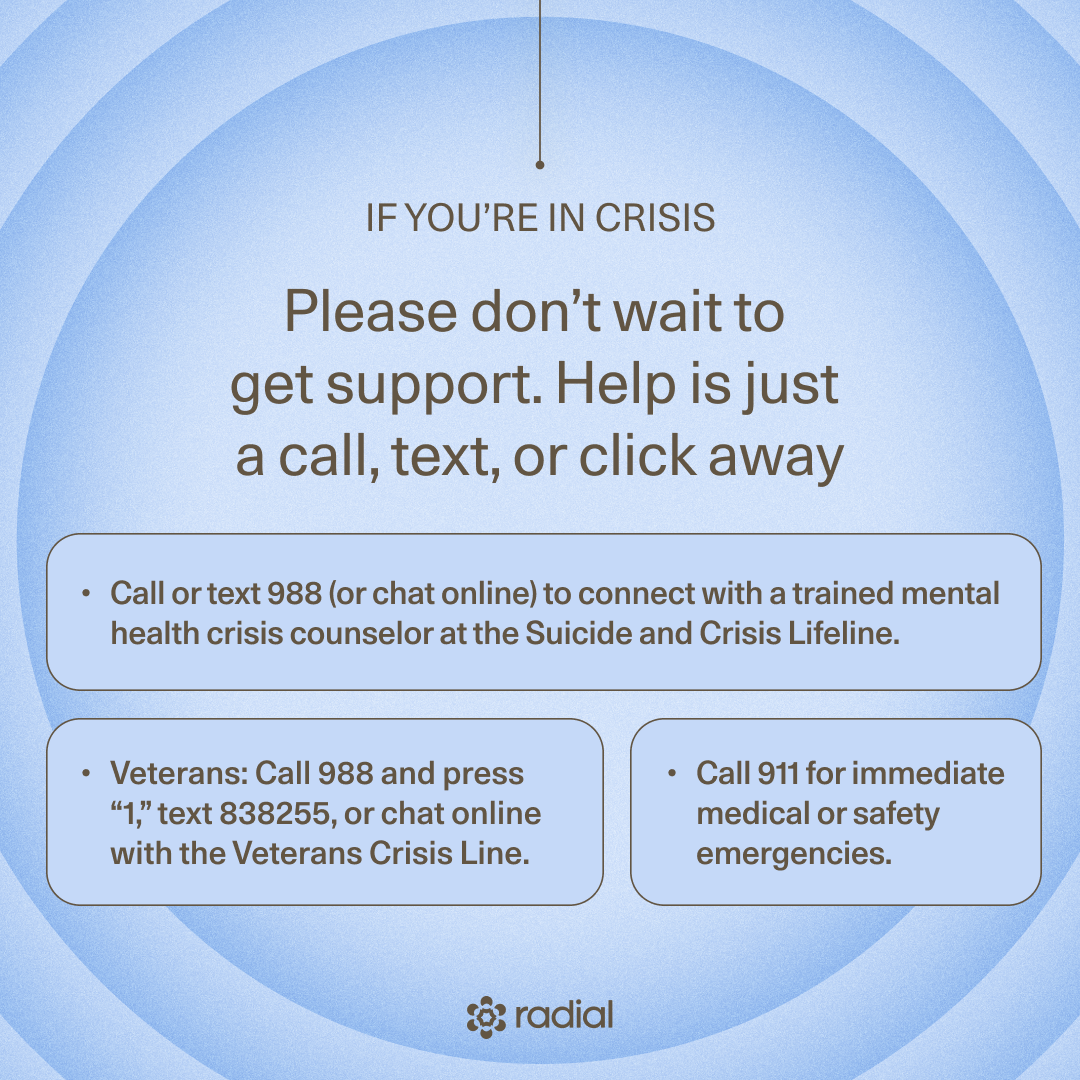
Some signs, though, are non-negotiable emergencies. If you or someone you love is experiencing any of the following, seek immediate medical help:
- Repeated thoughts about death or suicide
- Wishing you weren’t alive
- Any suicide attempt
If this is happening, you deserve help now. You don’t have to handle this alone, and support can be lifesaving.
Start with the basics
It’s nearly impossible to improve depression—or feel like yourself again—when the basics of mental health are shaky. Sleep, food, movement, and connection aren’t “extra credit.” They’re the groundwork that makes everything else work better.
Sleep
Depression and insomnia are tightly linked in a two-way loop: poor sleep worsens depression, and depression disrupts sleep. In fact, insomnia shows up in about 80–90% of people with depression, and people with depression often have measurable changes in sleep patterns, like entering REM sleep too quickly or getting less deep, restorative sleep.
The relationship works in reverse, too. Chronic sleep deprivation stresses the body and brain, increasing the risk of developing depression by about twofold.
Fortunately, you don’t need a perfect sleep routine to see benefits. Pick one small, doable change and build from there. Small tweaks can lead to noticeably better sleep and better mood.
Sleep-supporting strategies to try:
- Go easy on caffeine and alcohol: Caffeine can linger for hours, and alcohol may knock you out initially but disrupt sleep quality. Try cutting both back, especially after mid-afternoon for caffeine.
- Move your body (earlier in the day): Regular exercise helps reduce stress and improve sleep quality. Aim for about 30 minutes most days, but skip intense workouts close to bedtime.
- Get morning light: Sunlight when you first wake up helps regulate your circadian rhythm. If getting outside isn’t an option, open blinds early and keep your space bright during the day. If you live in an overcast area or the northern hemisphere, a medical-grade light-box can be a helpful treatment option.
- Actively manage stress: Racing thoughts are sleep killers. Journaling, meditation, yoga, breathing exercises, or talking things through with someone you trust can help clear mental clutter.
- Keep a consistent schedule: Going to bed and waking up at the same time—even on weekends—helps reset your internal clock.
- Power down screens: Blue light suppresses melatonin. Aim to log off at least 30 minutes before bed. And keep in mind that the closer the screen and the brighter the light, the more profound the impact (in other words, TV on the opposite side of the room is not as impactful as doom scrolling a phone held inches from your face).
- Create a wind-down ritual: A warm bath, gentle stretching, or calming music tells your brain it’s time to switch gears.
- Optimize your sleep space: Cool, dark, and quiet is the goal. The optimal ambient temperature varies based on humidity and the bedding microclimate, ranging between 17 and 28 °C (or 62℉ - 80℉) at 40–60% relative humidity. Blackout curtains, earplugs, or white noise can help.
- Use the right mattress: Comfort and support matter more than trends. A mattress that reduces pain and regulates temperature can meaningfully improve sleep.
If sleep problems persist despite lifestyle changes, talk to your primary care provider. Conditions like chronic insomnia or sleep apnea may require targeted treatment such as cognitive-behavioral therapy for insomnia (CBT-I) or, in some cases, medication.
Nutrition
Food doesn’t just fuel your body; it feeds your brain. Diets high in refined carbs, fried foods, soda, and processed meats are linked to higher inflammation and higher depression risk. One study found that an inflammatory diet increased depression risk by 49% in women and 27% in men.
On the flip side, anti-inflammatory eating patterns help. In one study, people with clinical depression who followed a Mediterranean-style diet saw significant symptom improvement within 12 weeks.
A mix of factors related to healthy eating, like reduced inflammation, improved gut health, better neurotransmitter balance, and even the psychological benefits of cooking and sharing meals with others, can all contribute to a healthier mental state.
Anti-inflammatory foods to reach for more often:
- Tomatoes
- Olive oil
- Leafy greens (spinach, kale, collards)
- Nuts (especially almonds and walnuts)
- Fatty fish (salmon, sardines, tuna, mackerel)
- Fruits like berries, cherries, and oranges
Hydration
When it comes to the basics that support depression care, drinking enough water belongs right up there with good sleep. It sounds simple—almost too simple—but hydration is one of the most impactful, overlooked habits for keeping your brain functioning well.
Your brain depends on water to do its job. Hydration supports key processes like neurotransmitter production, communication between brain cells, and healthy blood flow to the brain. When you’re well hydrated, memory, focus, learning, and overall mental clarity tend to work better, helping build cognitive resilience day to day.
On the flip side, even mild dehydration can take a toll. It’s linked to fatigue, slower reaction times, trouble concentrating, headaches, and mood changes. In more severe cases, dehydration can seriously disrupt cognition and overall health. Kids, older adults, and people managing physical or mental health challenges are especially sensitive to these effects—meaning hydration matters even more.
So, how much water do you actually need? Daily water needs vary based on factors like activity level, climate, and overall health. On average, research suggests that about 3.7 liters (15.5 cups) per day for adult men and 2.7 liters (11.5 cups) per day for adult women meets the needs of most people.
That said, hydration is personal. If you’re unsure what’s right for you—especially if you have medical conditions or take certain medications—it’s smart to check in with your doctor. Your brain (and mood) will thank you.
Movement
Long periods of sitting aren’t just bad for your body; they’re linked to higher rates of depression. Prolonged inactivity affects sleep, cardiovascular health, inflammation, motivation, and social engagement—creating a cycle that can deepen depressive symptoms.
Movement is medicine, even in tiny doses. Exercise leads to chemical changes that trigger brain cell growth, boosts serotonin and norepinephrine (neurotransmitters that help regulate mood) and reduces inflammation, all helping to improve brain function.
You don’t need an intense routine (nope, no HIIT or hardcore circuit training necessary). Gentle movements like walking and yoga, along with jogging and strength training, all have benefits. And if “exercise” feels overwhelming, go smaller than you think you should.
A five-minute leisurely stroll, a stretch, or a quick dance break still counts. Every bit of movement is a win for your brain.
Connect with others
Depression thrives in isolation; connection is the antidote. Humans are wired for social connection, and when it’s missing, mental health takes a hit. About 1 in 3 U.S. adults report feeling lonely, and 1 in 4 say they lack emotional support. Social isolation and loneliness are strongly linked to depressive symptoms.
Depression can make reaching out feel impossible, but resisting the urge to isolate is key to recovery. You don’t need to do everything. Choose one low-effort option and act before overthinking kicks in.
- Spend time with trusted friends or family (FaceTime counts)
- Exercise with someone
- Ask a friend to coffee
- Spend time outdoors with others
- Express gratitude (write someone a thank you note or text)
- Volunteer (helping others boosts mood)
- Get involved in your community
- Meet your neighbors
- Join a club, class, or support group
- Care for a pet—or borrow one! Many local pet shelters are actively looking for volunteers.

Coping strategies for depression
Living with depression can feel like a vicious cycle with no exit, Dr. Resnick says. But as he puts it, the way out often isn’t one perfect strategy—it’s finding any entry point and stepping in. Try something. See if it helps. Adjust. Repeat.
Different tools work for different people. Layering a few together can help slow the spiral and, over time, reverse it, says Dr. Resnick. Yes—it does take effort. But you don’t have to do everything at once. Start anywhere. Even reading this is a step.
This is hard. And by exploring multiple strategies, you’re not failing—you’re trying.
Try mindfulness
Mindfulness practices like meditation, breathwork, or mindful eating can calm the amygdala (your brain’s alarm system) and strengthen the prefrontal cortex (your decision-maker). That brain shift can help reduce depressive symptoms and emotional reactivity.
At its core, mindfulness means paying attention to the present moment without judgment. You don’t have to clear your mind—just notice it. Research suggests it helps by:
- Calming emotional reactivity and stress
- Increasing self-awareness and flexibility of thought
- Reducing over-identification with negative emotions
- Cultivating self-compassion instead of self-criticism
One of mindfulness’s biggest perks? It’s simple, free, and safe—and you can do it anywhere.
It may not feel natural at first. That’s normal. Mindfulness is a practice, not a personality trait. Start small. One minute counts. Consistency matters more than duration.
Easy ways to practice mindfulness:
- Take 10 slow breaths and count them
- When a thought pops up, imagine it as a helium balloon and let it float by
- Walk and notice what your body feels—not where you’re going
- Remove your earbuds and listen to the world around you
- Touch something natural—grass, leaves, a flower—and really feel it
- Eat one bite of food with full attention (sweet? salty? crunchy?)
Practice self-compassion
When depression hits, self-criticism often shows up fast and loud. But piling shame on top of an already hard moment only makes things heavier. You wouldn’t tear down a friend who’s struggling, so why do it to yourself?
Oddly, self-compassion is often missing from popular self-help advice, especially online, points out Dr. Resnick. And yet, it’s one of the most important tools for managing depression. Self-compassion isn’t about letting yourself off the hook or pretending everything’s fine. It’s about treating yourself with care, understanding, and curiosity instead of judgment.
Research suggests that building self-compassion can help reduce symptoms of depression, anxiety, and stress by:
- Increasing flexibility and resilience in stressful situations
- Improving mindful awareness and emotional regulation
- Reducing rumination, avoidance, and harsh self-judgment
In other words: when you stop attacking yourself, your nervous system finally gets a break.
Yes, it may feel awkward at first, and that’s normal. If kindness toward yourself feels unfamiliar, start small. Self-compassion doesn’t have to be gushy, cringey, or overly positive. It just has to be gentler than your inner critic.
Here are a few ways to practice it daily (without feeling fake or forced):
- Borrow a kinder perspective
Ask yourself: What would I say to a friend in this situation? Then try offering those same words to yourself even if you don’t fully believe them yet. - Tame the inner critic
Notice how you talk to yourself when you’re struggling. Would you ever use that tone with someone you love? Awareness alone can soften its grip. - Use supportive touch
Physical cues matter. Try slow, deep breathing and place a hand over your heart or chest. It may feel simple, but it sends a powerful signal of safety to your nervous system. - Try realistic affirmations
Skip the forced positivity. Aim for grounded truths like:
“I’m doing the best I can right now.”
“I’m human and being human means messing up sometimes.”
Self-compassion won’t fix everything overnight. But practiced consistently, it can change the tone of your inner world and that shift alone can make depression feel more manageable.
Don’t think; just do it
When you’re battling depression, it can feel like both a raging storm and a dead calm—a stuck, unmoving “boat in the water with no wind” in the sails, says Dr. Resnick. Waiting to “feel ready” often keeps you stuck longer, he explains.
Simply put: sitting around hoping for motivation is a trap. Action comes first. In cognitive behavioral therapy (CBT), this is called behavioral activation: act first, feelings follow.
Core principles, according to Dr. Resnick:
- Action before emotion: Do the thing even if you don’t feel like it
- Reverse the cycle: Withdrawal feeds depression; engagement interrupts it
How to practice behavioral activation:
- Identify values (think about what brings you pleasure, accomplishment, connection)
- Schedule tiny actions (5 minutes of tidying, one phone call, etc.).
- Track how you feel before and after
- Problem-solve barriers (like "I don't have time") to stay on course
In short, says Dr. Resnick, “get active in your own life, and your feelings will follow.” You don’t have to do everything. You just have to do something. And then something again tomorrow.
Start a gratitude journal
Gratitude journaling may sound simple (or even a little cheesy), but research suggests people who practice gratitude tend to feel less depressed. In one case study, the participant experienced a noticeable decrease in depressive symptoms during periods when they practiced gratitude journaling, supporting its role as a helpful add-on to other depression treatments.
So why does it work? Gratitude journaling gently retrains your brain. By intentionally noticing what’s going right—even in small ways—it boosts positive emotions, strengthens emotional resilience, and improves life satisfaction and social connection. Over time, this shift away from constant negative scanning supports a healthier, more adaptive way of thinking.
No idea where to start? Keep it simple. This isn’t about writing pages or forcing positivity.
Low-pressure gratitude journaling ideas:
- Write one thing that didn’t suck today (seriously—that counts)
- Finish this sentence: Today, I’m grateful for…
- List three tiny wins (coffee tasted good, sun was out, texted a friend)
- Name one person, one place, or one moment you appreciated
- Jot down something you’re looking forward to tomorrow
- Use your phone’s notes app if a journal feels like too much
- Voice-record a 30-second gratitude note instead of writing
- Send a quick text to someone saying why you appreciate them
Even one sentence a day is a win. You’re not trying to fix everything—just giving your brain a small reminder that good things still exist, even on hard days.
Manage stress
Stress and depression often go hand in hand. Chronic stress activates inflammatory pathways in the body and brain, disrupting systems involved in mood regulation (including serotonin, dopamine, and norepinephrine). Over time, that inflammation can trigger and deepen depressive symptoms.
You can’t always eliminate stressors, but you can protect your brain with small, daily stress buffers.
Dr. Resnick’s go-to stress resets:
- Take a walk (movement + change of scenery = brain relief)
- Change rooms or locations—the coffee shop counts
- Use temperature shifts (hot shower or cold splash)
- Call a friend (connection matters)
- Play with a pet (people who do tend to be less depressed)
- Volunteer or help someone (altruism boosts life satisfaction and meaning, promoting mental health)
- Rest (sleep is non-negotiable for mood)
- Give yourself grace (self-compassion is a strategy, not fluff)
Spend more time in nature
Consider this your permission slip to go outside. A growing body of research suggests that spending time in nature can meaningfully ease depressive symptoms. In one study, people who engaged in any kind of nature-based activity at least once a month reported lower rates across all nine core symptoms of major depressive disorder—including low mood, loss of pleasure, sleep problems, trouble concentrating, and even suicidal thoughts—compared with those who rarely spent time outdoors. The strongest link? Less suicidal ideation.
Notably, it didn’t matter much how people connected with nature. Hiking, gardening, walking, or other outdoor activities all showed similar benefits, suggesting it’s the exposure itself—not the intensity—that counts.
Nature may be especially powerful if you live in a city. Research shows that time spent in natural environments lowers negative emotions compared with urban-only exposure and reduces activity in the left prefrontal cortex, a brain region involved in stress appraisal. In plain terms: nature helps your nervous system downshift and recover from stress.
Sunlight likely plays a role, too. Regular exposure to natural light is linked to better mental health, possibly through vitamin D production, which has been associated with depression risk. This may be especially relevant in parts of the United States like the northeast, where vitamin D deficiency is common due to limited year-round sun exposure.Sunlight also helps regulate your sleep–wake cycle, and better sleep often means fewer depressive symptoms.
Easy ways to get more nature into your day:
- Go for a hike, walk, or swim
- Start a garden—or volunteer at a community garden
- Take regular walks around your neighborhood
- Swap the treadmill for outdoor movement when possible
- Seek out nearby parks or green spaces if you live in a city
- Have your coffee or lunch outside
It doesn’t have to be adventurous or time-consuming. Even small, consistent doses of nature can help your brain—and your mood—breathe a little easier.
Structure and simplicity
Routine isn’t boring—it’s stabilizing. “Structure is key,” says Dr. Resnick. That’s why work, routines, and habits matter, not just for productivity, but for meaning.
Structure isn’t only about schedules. It’s about “finding or creating meaning to attain a sense of fulfillment and satisfaction,” says Dr. Resnick. Not constant happiness—but purpose, something to anchor your day.
The catch? Depression makes routines hard. That’s why simplicity matters. As Dr. Resnick says: “keep it simple.” Fewer steps. Realistic expectations. More consistency.
Some low-pressure ways to add structure (without overwhelming yourself):
- Wake up around the same time each day, give or take about an hour.
- Open the blinds or curtains as soon as you’re out of bed, or drink your coffee in the sun for 15 minutes of sun exposure right away..
- Anchor your morning around one predictable thing (coffee, a walk, a TV show).
- Eat one meal at roughly the same time daily.
- Get dressed in “real” clothes, even if they’re soft and stretchy.
- Step outside once a day, even if it’s just to stand on the sidewalk for 60 seconds.
- Do one repeatable task daily (make the bed, unload the dishwasher, water a plant).
- Keep a short “done list” instead of a to-do list (one item is enough).
- Start a gratitude journal, writing down “one thing that didn’t suck today” or something you’re grateful for.
Challenge negative thinking
Your thoughts aren’t facts, but they do set the mood. How we think, feel, and behave are constantly influencing each other. When one goes off the rails, the others tend to follow. That’s how unhelpful thought patterns–like cognitive distortions, which can reinforce negative thoughts–can quietly spiral into a depressed mood.
But you’re not powerless here. Learning to notice and gently challenge negative thoughts is one of the most effective ways to break that cycle. With practice, it can help you respond to stress more flexibly and feel more emotionally steady over time.
How to reframe unhelpful thoughts:
Step 1: Spot them
Negative thoughts often run on autopilot. Knowing what they look like makes them easier to catch. Common patterns include:
- Assuming the worst-case scenario
- Focusing only on what went wrong and ignoring what went right
- All-or-nothing thinking (everything is terrible or perfect)
- Blaming yourself entirely for bad outcomes
Step 2: Catch the thought in real time
When your mood dips or stress spikes, pause and ask: What am I telling myself right now?
At first, this can feel awkward or forced, but awareness alone is progress. Over time, catching these thoughts becomes more automatic.
Step 3: Reality-check it
Once you’ve spotted the thought, take a step back. Ask yourself:
- How likely is the outcome I’m worried about—really?
- What evidence supports this? What evidence doesn’t?
- Are there other explanations or outcomes I’m ignoring?
- What would I say to a friend thinking this way?
Step 4: Reframe—gently
You don’t need to flip a negative thought into a glowing affirmation. The goal is a more accurate, balanced thought. For example: Instead of “I always mess this up,” try “I didn’t handle this as well as I wanted, but I’ve handled similar situations better before.”
One important reminder: You don’t have to “fix” every thought. Sometimes a thought won’t budge, and that’s okay. Reframing isn’t about forced positivity or pretending problems don’t exist. It’s about learning to see situations with more flexibility and less self-blame.
Even when the situation stays the same, changing how you relate to your thoughts can break the spiral. And often, things aren’t quite as catastrophic as your inner critic makes them out to be.
Do the opposite
When depression says “hide,” try doing the exact reverse, says Dr. Resnick. This dialectical behavior therapy (DBT) skill—called opposite action—is exactly what it sounds like. When depression urges you to isolate, stay in bed, or cancel plans, you gently do the opposite.
Is it easy? Absolutely not. Depression is somewhat wired into the brain, much like chronic pain, says Dr. Resnick. Left unchecked, it can sometimes keep you stuck or spiraling, he says.
That’s why support matters. Doing the opposite is often impossible alone, says Dr. Resnick. Therapists, doctors, friends, family–lean on them. You’re not meant to white-knuckle this.
Smile a little (yes, really)
You don’t have to feel better to act better—sometimes it works in reverse. The DBT skill called the half-smile may sound cheesy, but it’s grounded in neuroscience, says Dr. Resnick. Behavior can influence emotion, not just the other way around, he says.
Smiling slightly, even when you don’t feel happy, can activate a sense of calm in the brain, says Dr. Resnick. It feels awkward at first, he acknowledges. That’s okay. Try it anyway. Don’t think—just do. You might be pleasantly surprised to find a little “smile goes a long way,” he adds.
Get creative
From visual arts, to dance, and DIY crafts, creative expression can have a powerful, mood-boosting effect on mental health. Case in point: Creative arts interventions are often used to help reduce depressive symptoms, especially in older adults. But research shows it supports emotional, cognitive, physical, and social well-being no matter how old you are.
Why does it work? Because creativity doesn’t just entertain your brain—it engages it on multiple levels at once. Studies suggest creative pursuits can improve mood through several overlapping pathways:
- Physical: gentle movement, muscle engagement, and feel-good neurochemicals like endorphins
- Intrapersonal: stronger self-concept, a sense of agency and mastery, and a safe outlet for processing emotions
- Cognitive: memory stimulation, attention, and mental engagement
- Cultural: meaning-making, aesthetic pleasure, and identity expression
- Social: connection, collaboration, and shared experiences
Zooming in, creativity also supports key mental health skills:
- It helps regulate emotions by giving feelings somewhere to go
- It builds cognitive flexibility by encouraging new perspectives and problem-solving
- It can boost social connection when creative acts are shared, even casually
You don’t need to be Picasso or Beyoncé to get the benefits. In fact, there’s zero pressure to be “good” at anything. If it feels expressive, curious, or a little fun, it counts. The goal isn’t performance—it’s simply experience.
Easy ways to tap into your creative side:
- Doodle while on a phone call or during a meeting
- Put on one song and move your body however it wants (yes, even for two minutes)
- Write a short poem—no grammar, no rules (no rhyming necessary)
- Take photos of ordinary things you like (light, textures, your coffee mug)
- Try a paint-by-numbers, coloring book, or simple sketch app
- Cook a new recipe or remix something you already make
- Build something small: a collage, vision board, or DIY kit
- Sing along loudly in the car or shower
Start tiny. Follow curiosity. And remember: creativity isn’t about talent—it’s about giving your brain a safe place to wander, explore, and feel free (even if only for a few minutes a day).

Signs self-help isn’t enough
Self-care for depression is powerful, but sometimes it’s not the whole answer. Coping tools are a key part of recovering from depression, but there are moments when muscling through with self-help just isn’t enough. That doesn’t mean you’ve failed or done anything wrong. It usually means your nervous system is overloaded or stuck, and it needs backup.
So how do you know it’s time to bring in more support? Dr. Resnick suggests paying attention to these red flags:
- Pulling away from people or isolating yourself
- Thoughts that feel paranoid, distorted, or out of character
- Movements that feel unusually slowed or “off”
- Suicidal thoughts, plans, or gestures
If any of these sound familiar, reach out—now. Tell a trusted loved one or a healthcare provider. Help for depression is available. You don’t have to push through this alone, and you’re not supposed to.
Relief within reach
Care covered by your insurance
Radial provides advanced mental health treatment, covered by the insurance you already use.








Evidence-based treatments for depression
Here’s the hopeful part: real help works. With the right tools, recovery is absolutely possible. From therapy and medication to advanced brain-based treatments, there are more effective options than ever. The key is finding the right mix for you, and when that happens, it can change everything.
Therapy
Talk therapy isn’t just venting—it’s skill-building, insight-building, and often life-changing. Several evidence-based therapies have been shown to help with depression, including:
- Cognitive behavioral therapy (CBT): Helps you spot and reshape unhelpful thought patterns and build healthier coping skills.
- Interpersonal psychotherapy (IPT): Focuses on relationships and conflict, recognizing how deeply social support affects mood.
- Psychodynamic therapy: Explores how unconscious thoughts, memories, and past experiences influence present behavior.
- Acceptance and commitment therapy (ACT): Teaches you to make room for hard thoughts and feelings while still living by your values.
- Mentalization-based therapy (MBT): Builds awareness of how your thoughts and feelings shape your actions and relationships.
- Internal family systems (IFS): Views the mind as a system of “parts” and helps them communicate more effectively. (Note: not recommended for people with psychosis, severe dissociation, or impaired reality testing.)
- Dialectical behavior therapy (DBT): Helps you build real-life skills to manage big emotions, handle stress, improve relationships, and avoid behaviors that make things worse. It was originally created for borderline personality disorder, but research shows it can also significantly reduce depressive symptoms.
That said, therapy alone doesn’t work for everyone. Only about one-third of people with major depressive disorder (MDD) reach full remission with talk therapy alone and more than half don’t respond to it as a standalone treatment. Still, many people find therapy invaluable during recovery and for staying well long-term.
TMS
If depression feels like your brain is stuck in a loop, transcranial magnetic stimulation (TMS) is designed to help interrupt that pattern and restore healthier brain activity.
TMS is an FDA-cleared, non-invasive treatment that uses magnetic pulses to stimulate specific brain regions involved in mood. By changing neuronal activity, it can help lift depressive symptoms, especially in treatment-resistant depression.
Types include:
- Deep TMS: Uses a special H-coil for deeper brain stimulation. In one study, over 81% improved after 30 sessions, with 65% reaching remission.
- Accelerated TMS: Delivers multiple sessions per day to shorten treatment time.
- SAINT® TMS: A highly personalized, accelerated protocol guided by brain imaging. In a small study, 79% reached remission during follow-up after just five days.
As the science shows, TMS is a highly effective option for treating depression without medication. Side effects are also generally mild—most commonly temporary scalp discomfort or headaches—and often fade quickly.
Neurofeedback
Think of neurofeedback as physical therapy for your brain—except you’re training mood and motivation circuits.
PRISM neurofeedback uses real-time brainwave feedback—via an EEG cap with electrodes—to help retrain the brain’s reward and motivation systems. Your brain activity is translated into audio and visual cues, turning treatment into a video-game-like experience.
In a small study, 78% of participants saw improvements, especially in anhedonia (difficulty feeling pleasure). It’s FDA-cleared, non-invasive, and has fewer side effects than medications.
Electroconvulsive therapy (ECT)
Electroconvulsive therapy (ECT) gets a bad rap, but it’s one of the most effective treatments we have for severe or treatment-resistant depression.
ECT uses controlled electrical stimulation to trigger a brief seizure while you’re under general anesthesia. Researchers believe it works by increasing neurotransmitter availability, altering gene expression, and improving brain connectivity.
Despite the myths, ECT is painless during the treatment itself. You’re asleep the entire time, wake up minutes later, and usually go home after a short recovery. Treatments are typically given 2–3 times per week for 6–12 sessions, though some people improve sooner.
For people who are suicidal, can’t tolerate antidepressants, or haven’t responded to other treatments, ECT remains the most effective treatment option for hard-to-treat depression.
Vagus nerve stimulation (VNS)
The vagus nerve is your body’s main calming highway, and vagus nerve stimulation (VNS) puts it to work.
VNS involves surgically implanting a small device that sends gentle electrical pulses to the vagus nerve. Originally developed for epilepsy, it’s FDA-approved for treatment-resistant depression.
Its antidepressant effects likely come from:
- Modulating serotonin, norepinephrine, and dopamine
- Influencing mood-related brain regions like the prefrontal cortex and limbic system
- Increasing brain plasticity
Results tend to build gradually, but for responders, benefits are often long-lasting.
Medication
SSRIs and SNRIs
These are often the first treatments prescribed for depression. SSRIs increase serotonin signaling, which can help to regulate mood. SNRIs affect both serotonin and norepinephrine, but overall show similar effectiveness to SSRIs.
That said, 30–50% of people don’t see meaningful improvement from anti-depressant medication. If antidepressant meds haven’t worked for you, that’s not a personal failure—it’s a sign your depression may need a different biological approach.
Esketamine (Spravato)
Spravato is an FDA-approved nasal spray for treatment-resistant depression and acute suicidality. It works on a brain chemical called glutamate, not serotonin, allowing relief within hours or days rather than weeks.
Because of side effects like dissociation or dizziness, Spravato is only given in certified clinics under close supervision through a Risk Evaluation and Mitigation Strategy (REMS) program.
Zuranolone and Brexanolone
These novel neurosteroid medications target postpartum depression specifically:
- Zuranolone: A two-week oral treatment that can work within days
- Brexanolone: A 60-hour IV infusion given in a hospital. This medication was approved for postpartum depression, but the manufacturer has withdrawn it from the U.S. market.
Both act on GABA-A receptors (supporting hormone regulation) rather than serotonin and have shown meaningful symptom improvement. Downsides include sedation, dizziness, cost (for brexanolone), and unanswered questions about long-term safety.
An important note: Other possible medications for depression include atypical antidepressants, tricyclic antidepressants (TCAs), monoamine oxidase inhibitors (MAOIs) and atypical antipsychotics (SGAs). Regardless of what medication (or combination of medications) you may try, medication is expected to support remission only 30-50% of the time. Furthermore, the side effects from medication can interfere with day-to-day quality of life (i.e. sexual dysfunction, cognitive slowing, weight gain, etc).
How to choose the right treatment path for you
When you’re already dealing with depression, deciding how to treat it can feel like a lot. The good news: you don’t have to figure this out alone. A trusted provider can walk you through your choices, explain the pros and cons, and help you land on a plan that actually fits your life.
According to Dr. Resnick, these are the key factors worth weighing:
Cost and insurance coverage
Some treatments (like therapy and antidepressants) are more likely to be covered by insurance. Others—such as TMS—may require prior authorization, proof of medical necessity, or may not be covered at all, depending on your insurance plan. Some clinics offer ways to ease the financial burden. For example, Radial provides financial hardship programs, accepts HSA/FSA cards, offers buy-now-pay-later options through partners like CareCredit and Wisetack, and can arrange flexible payment plans when needed.
Telehealth vs. in-person care
Certain treatments (such as TMS and Spravato) must be done in-office. But if in-person care isn’t doable—because of location, schedule, mobility, or energy—telehealth can be a more accessible and sustainable option for therapy and medication management.
Treatment options
There’s no one-size-fits-all solution. Options include therapy, medication, brain-based treatments, or a combination approach. Understanding what’s on the table helps you make an informed, empowered choice.
Side effects
Every treatment comes with potential risks or contraindications. Knowing these upfront allows you and your provider to tailor care to your body, history, and comfort level.
Time to improvement
Some treatments work gradually; others act faster. If symptoms are severe or suicidality is present, fast-acting options may be especially important. Clarity here helps prevent frustration and discouragement.
Ongoing care requirements
Some treatments require regular sessions or long-term follow-up, while others are more time-limited. Choosing something that fits your schedule and energy makes it more likely you’ll stick with it.
Cultural fit and personal values
Your background, beliefs, and lived experiences matter. Feeling understood and respected in care isn’t a “nice-to-have”—it’s essential.
The “right” treatment is the one that works for you—medically, emotionally, logistically, and financially. With the right guidance, finding that path gets a whole lot easier.
The bottom line
If you’re struggling with depression, here’s the most important thing to know: you’re not alone, and depression is treatable. There’s no single cure and no one “right” path, but there are many effective ones.
“Many roads lead to Rome, and, especially when dealing with a chronic or lifelong condition, gaining and using as many tools in the toolbelt as possible is really the way to go,” says Dr. Resnick.
Having a variety of coping skills for depression is key. Each strategy may not always work, and you might have to rotate or mix-and-match to get the right combo.
As Dr. Resnick puts it: “If one works at one point, it may dwindle in appreciable benefit over time. If another does not work at first, there may be a better tweak of its use or context in which it will be effective, so it could be worth trying again.”
In other words: progress isn’t linear, and needing adjustments doesn’t mean you’re failing—it means you’re learning what your brain needs right now.
If you’re ready to take the next step, Radial is here to help. Radial connects you with licensed clinicians—virtually or in person—who specialize in fast-acting, evidence-based treatments for depression. Together, you’ll create a personalized plan designed around your symptoms, your life, and your goals. You don’t have to grin and bear this by yourself, and you don’t have to wait to feel better.
Key takeaways
- Getting rid of depression doesn’t mean forcing happiness—it means reducing symptoms, improving daily functioning, and reaching remission (sometimes with ongoing maintenance).
- Depression is complex and typically recurrent—but it’s also highly treatable with the right mix of tools.
- Self-care strategies (sleep, movement, connection, mindfulness) matter a lot, but sometimes they’re not enough on their own, and that’s okay.
- Evidence-based treatments range from therapy and medication to fast-acting brain-based options like TMS, ketamine/esketamine, and ECT.
- What works for you now may change—a personalized, flexible plan that can evolve over time is essential.
Frequently asked questions (FAQs)
What triggers depression?
Depression usually isn’t about one single cause—it’s often a mix of biology, life stress, and past experiences. Common contributors include:
- Trauma: Early or ongoing trauma can change how the brain handles stress and fear, raising the risk of depression later on.
- Genetics: Depression and other mood disorders often run in families.
- Life stressors: Big changes like relationship issues, money stress, moving, or losing someone you love can trigger symptoms.
- Brain chemistry and function: Research shows certain brain areas are less active during depression, along with changes in how stress and hormone systems respond.
- Other health conditions: Sleep problems, chronic illness or pain, anxiety, ADHD, and conditions like hypothyroidism can increase risk or even mimic depression. Some medications can also play a role.
- Alcohol or drug use: Substance use raises the risk of major depression.
What are the best coping skills for depression?
The most effective coping skills tend to work on both the brain and the body. Think “toolbox,” not magic bullet. Here are some of Dr. Resnick’s top strategies:
- Sleep basics: consistent schedule, light exposure in the morning, screens off at night
- Movement: even short walks or gentle yoga can boost mood chemistry
- Connection: texting a friend, FaceTiming, support groups
- Mindfulness: breathing, grounding, or noticing the moment without judging it
- Behavioral activation: doing small meaningful actions before motivation shows up
- Self-compassion: talking to yourself like you would to someone you love
- Creative expression: writing, music, art, movement—no talent required
- Structure + simplicity: establish routines that create meaning without overwhelm
Coping skills help slow the spiral, but if symptoms keep interfering with daily life, it may be time to add treatment.
Can depression be cured?
Short answer: depression isn’t usually “cured,” but it is very treatable.
Depression is often episodic, meaning symptoms can fully go away for long stretches of time, says Dr. Resnick.
Clinically, the goal is:
- Remission: symptoms no longer impact daily functioning
- Recovery: remission that lasts at least six months
Because depression is influenced by biology, stress, life events, and brain changes, treatment often needs to evolve over time. What works once might need tweaking later, and that’s normal.
Deep dive recommendations
- Psychiatry and Psychotherapy Podcast. 230: Exercise Compared to Medications or Therapy for Depression. https://psychiatrypodcast.libsyn.com/exercise-compared-to-medications-or-therapy-for-depression
- Psychiatry and Psychotherapy Podcast. 221: Sauna & Heat Exposure's Impact on Mental & Physical Health. https://psychiatrypodcast.libsyn.com/sauna-heat-exposures-impact-on-mental-physical-health
- Psychiatry and Psychotherapy Podcast. 187: Best Diet for Mood Update 2023. https://psychiatrypodcast.libsyn.com/best-diet-for-mood-update-2023
- Psychiatry and Psychotherapy Podcast. 155: Is Depression a Chemical Imbalance? https://psychiatrypodcast.libsyn.com/is-depression-a-chemical-imbalance
- The Huberman Lab Podcast. https://www.hubermanlab.com/topics/mental-health#mental-health---protocols-for-mental-health
- Depression, Risk Factors, Emergency Psychiatric Treatments with Dr Nolan Willans. https://youtu.be/X4QE6t-MkYE
- Control Your Inner Voice with Dr Ethan Kross. https://youtu.be/Og56hmAspV8
- Morning Notes, Gratitude Journaling and Diary Journaling. https://youtu.be/wAZn9dF3XTo
- The Frontier Psychiatrists. The Sense Of Pleasure. An explanation of anhedonia in depression. https://thefrontierpsychiatrists.substack.com/p/the-sense-of-pleasure?utm_source=publication-search
- The Frontier Psychiatrists. Are Brain Circuits Driving Depression? https://thefrontierpsychiatrists.substack.com/p/are-brain-circuits-driving-depression?utm_source=publication-search
- Free Support and Guidance regarding Healthy Food Choices: https://www.fullplateliving.org/
Editorial Standards
At Radial, we believe better health starts with trusted information. Our mission is to empower readers with accurate, accessible, and compassionate content rooted in evidence-based research and reviewed by qualified medical professionals. We’re committed to ensuring the quality and trustworthiness of our content and editorial process–and providing information that is up-to-date, accurate, and relies on evidence-based research and peer-reviewed journals. Learn more about our editorial process.
Let's connect
Get started with finding the right treatment for you or someone you care about
Get startedExplore more posts