Burnout vs. Depression: How to Tell the Difference and Why It Matters

When you're exhausted, unmotivated, and not quite feeling like yourself, it can be hard to know what's really going on. Is it burnout? Depression? Both? The answer isn't always obvious because these conditions share many symptoms and can exacerbate each other. But understanding the difference can be an important first step toward feeling better (and getting the support you deserve).
You've been running on empty for weeks. Work that used to feel manageable is now overwhelming. You're drained, irritable, disconnected from people you care about, and struggling to find motivation. At some point, a question starts to creep in: Is this burnout, or is it depression? And how do you tell the difference between burnout vs. depression?
If you've found yourself asking that question, you're in good company. Burnout and depression can look remarkably similar. Both can leave you feeling mentally exhausted, make it harder to concentrate, and zap the enjoyment from things you once cared about.
But while they share many symptoms, they aren't the same thing. And the distinction matters because the path to feeling better isn't always the same.
The good news: Whether you're dealing with burnout, depression, or a combination of both, support is available. Below, we'll break down how they differ, where they overlap, and what treatment and recovery can look like.
Connect with our Clinicians



What's the difference between burnout and depression?
Burnout occurs when chronic stress becomes overwhelming and unmanageable, according to Liberty Case, MA, LPC, NCC, CCTP, staff therapist at Radial. It tends to be tied to a particular role or situation (like work or caregiving).
Depression is different. “It’s a clinical condition that touches every area of life,” says Case. “It doesn’t clock out when you go on vacation. It affects how you sleep, eat, think, and feel about yourself and the future. And it can show up with no obvious external trigger.”
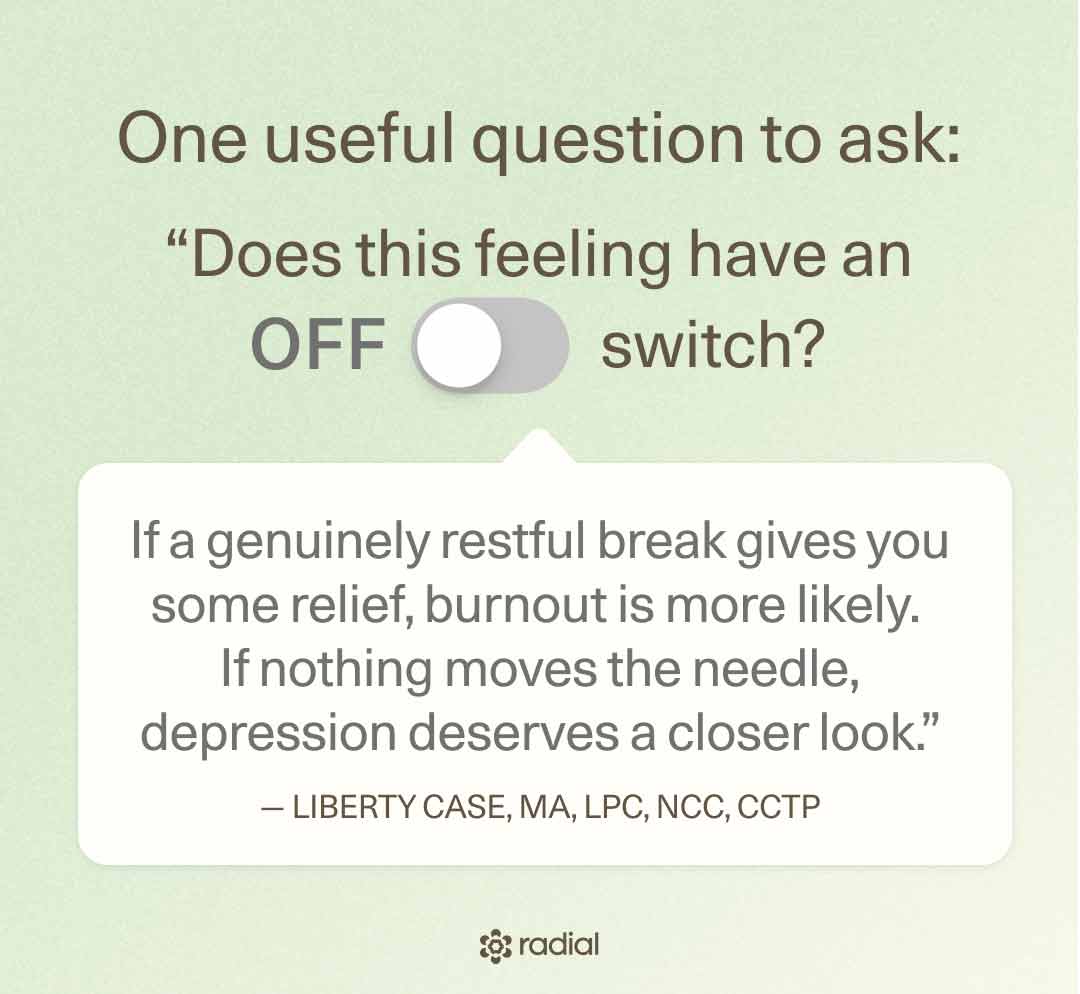
One useful question to ask: Does this feeling have an off switch? “If a genuinely restful break gives you some relief, burnout is more likely,” says Case. “If nothing moves the needle, depression deserves a closer look.”
That said, burnout and depression aren't mutually exclusive. In fact, prolonged burnout can increase the risk of developing depression, according to research published in Frontiers in Psychology. This is why it's important not to dismiss ongoing symptoms as "just stress."
Symptoms of burnout and depression: Where they overlap and where they diverge
The overlap between depression vs. burnout is one of the biggest reasons people struggle to tell them apart. But while the symptoms may look similar on the surface, there are often clues in the details. Here’s the breakdown.
Symptoms shared between burnout and depression
According to Case, both burnout and depression can cause:
- Persistent fatigue or low energy
- Difficulty concentrating or making decisions
- Reduced motivation
- Emotional withdrawal or social isolation
- Feeling detached from people or activities you once enjoyed
- Changes in productivity or daily functioning
- A sense of "going through the motions"
Part of the reason these symptoms overlap is that both burnout and depression can affect your energy, focus, motivation, and ability to cope with everyday demands.
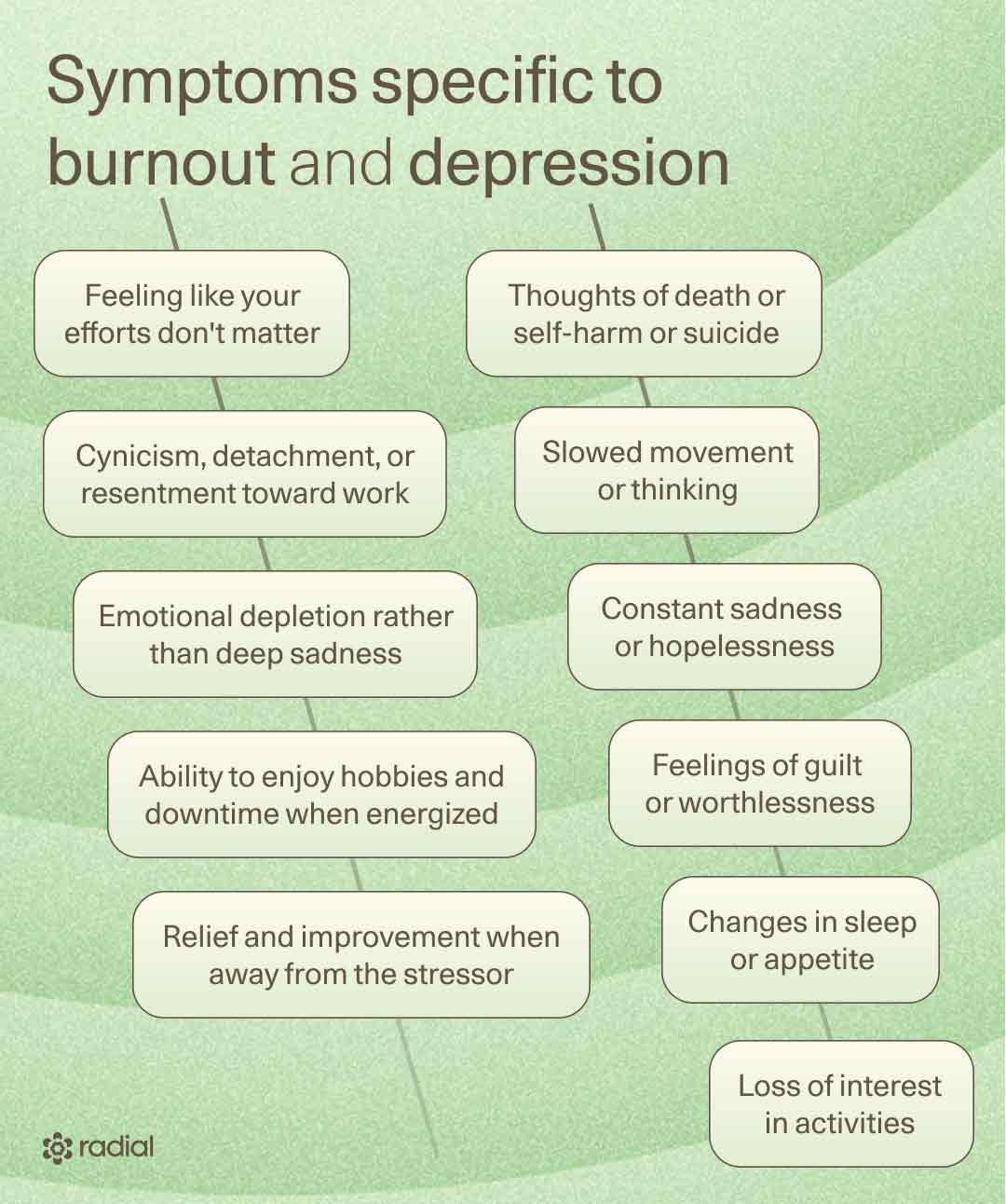
Symptoms more specific to burnout
Burnout tends to be closely tied to a source of ongoing stress, says Case. She says the signs of burnout include:
- Feeling cynical, detached, or resentful toward a specific job or responsibility
- A growing sense that your efforts don't matter or aren't making a difference
- Feeling empty or emotionally depleted rather than persistently sad or worthless
- Symptoms improve when you're away from the stressor
- Still being able to enjoy hobbies, relationships, or downtime when you have the energy for them
Symptoms more specific to depression
Depression tends to be more pervasive. Instead of being tied to one area of life, it often follows you into spaces that would normally feel enjoyable, restorative, or meaningful, explains Case.
She says symptoms that may point more toward depression include:
- Persistent sadness, emptiness, or hopelessness
- Feelings of worthlessness, excessive guilt, or self-criticism
- Loss of interest or pleasure in activities you once enjoyed
- Significant changes in sleep or appetite
- Slowed thinking, movement, or speech
- Thoughts of death, self-harm, or suicide
To meet the diagnostic criteria for major depressive disorder, a person must experience at least five symptoms during the same two-week period. Those symptoms must include either a persistently low mood or a loss of interest or pleasure in daily activities.
Can you have burnout and depression at the same time?
Yes, you can have burnout and depression at the same time. Chronic burnout can even increase the risk of developing depression.
That’s because burnout doesn't always stay contained to the stressor that caused it. For some people, what starts as work- or caregiving-related stress gradually spreads into other areas of life.
So if you're noticing signs of both, you're not imagining it. And understanding whether depression has become part of the picture can help you get the support that's most likely to help.
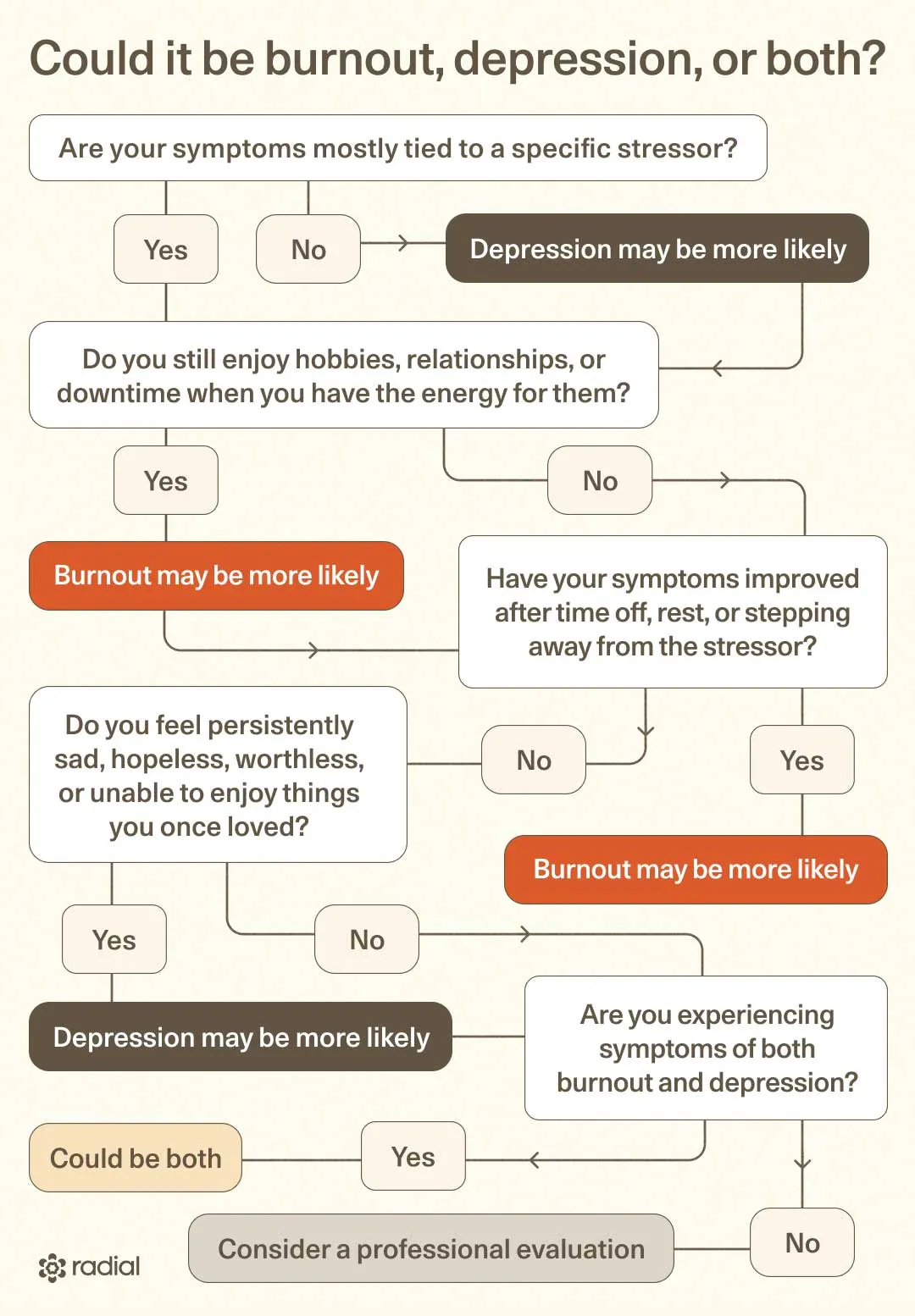
What to watch for if rest isn't helping
Many people assume that if they're burned out, taking time off should solve the problem. So when they finally get a vacation, catch up on sleep, or step back from a major stressor and still feel exhausted, it can be discouraging.
The reality is that recovery from burnout isn't always immediate. After all, it can take time for your mind and body to bounce back from intense stress. It's also possible you might have temporary relief while on vacation, but find that symptoms come back quickly upon returning to the stressor.
It's worth paying attention if you don't experience meaningful, lasting relief. If you've made a genuine effort to rest and recover but still don't feel like yourself, that's information worth taking seriously — not a sign that you're not trying hard enough. Instead, depression or another mental health condition may be part of the picture, says Case.
Ultimately, persistent symptoms deserve attention, regardless of whether it’s burnout or depression. If nothing seems to move the needle, it may be time to stop pushing through and explore additional support.
If rest, time off, or stepping back from your usual demands hasn't helped as much as you expected, it's worth paying attention. Burnout and depression can look similar, and neither is a sign of weakness. If symptoms persist despite recovery efforts, it may be time to seek additional support rather than pushing yourself harder.
How burnout and depression are treated differently
It might seem like a matter of semantics, but understanding whether you're dealing with burnout, depression, or both can make a real difference in finding the right support.
Treating burnout
Burnout recovery is largely about rebuilding capacity and taking an honest look at what needs to change, whether that's your workload, environment, or boundaries, according to Case.
She says common approaches include:
- Taking meaningful time to rest and recover
- Setting clearer boundaries around work or caregiving responsibilities
- Reducing unnecessary demands where possible
- Making time for activities that feel restorative or enjoyable
- Working with a therapist to address patterns that contribute to burnout
It's also important to remember that burnout isn't a personal failure to manage stress. “Burnout is an organizational problem as much as a personal one. Rest and self-care help, but they don’t fix a broken work environment,” says Case. “Structural change does a lot of the heavy lifting.”
Treating depression
Unlike burnout, depression can often be debilitating and pervasive. Generally rest is not enough to address the symptoms of depression. While research published in Cureus explains that sleep, exercise, social support, and stress reduction can all play an important role in recovery, many people benefit from professional support.
Depending on the severity of your symptoms, treatment may include therapy (such as cognitive behavioral therapy, interpersonal therapy, or other evidence-based approaches), medication, or a combination of both. Working with a healthcare provider can help you find an approach that fits your needs.
In some cases, though, depression doesn't improve enough with those first-line treatments. This is sometimes called treatment-resistant depression.
But don’t worry—this doesn’t mean you’ve failed treatment, and there are more options available to help you get rid of depression. One example is transcranial magnetic stimulation (TMS), a noninvasive treatment that uses magnetic pulses to stimulate areas of the brain involved in mood regulation.
When both are present
When burnout and depression occur together, treatment often needs to address both the external stressors contributing to burnout and the presenting depressive symptoms.
That might mean working with a therapist while also making changes to your workload, responsibilities, or daily routines.Therapy can help individuals establish boundaries in interpersonal relationships and workplace settings, develop relaxation techniques for moments of heightened stress, and implement healthy lifestyle changes. Medication may also provide someone with relief of symptoms, making it possible for them to participate meaningfully in therapy. In many cases, recovery comes from a combination of approaches rather than from a single intervention.
Just know that you don't have to figure it all out by yourself, and that burnout and depression recovery is possible. Whether you're dealing with one or both conditions, a healthcare provider can help you understand your symptoms and create a treatment plan that addresses the full picture.
Burnout and neurodivergence: A note on different presentations
Burnout can look different in neurodivergent individuals, including people with ADHD and autism. Research in PLOS One suggests these groups may be at higher risk of burnout, in part because of factors like masking, sensory overload, and the ongoing effort of navigating environments that aren't designed for their needs.
It's also worth noting that depression and ADHD frequently occur together, which can sometimes make it even harder to untangle what's driving symptoms like exhaustion, low motivation, and difficulty concentrating. When both diagnoses are present, it may be helpful to meet with a psychiatric clinician to collaboratively work on a treatment plan that addresses both conditions.
As a result, recovery may look different. So if typical recommendations haven't felt particularly helpful, it may be worth seeking support that takes your individual needs and experiences into account.
When to seek professional help
“If you’re not sure which one you’re dealing with, that’s a good reason to talk to someone,” says Case. “A therapist or primary care provider can help sort it out, and knowing what you’re working with makes a real difference in figuring out next steps.”
Here’s where to start.
Start with your primary care provider or a therapist
Consider talking with a healthcare provider or therapist if your symptoms have lasted more than a few weeks, are interfering with daily life, or aren't improving despite efforts to rest and recover.
A healthcare provider can help rule out physical causes of your symptoms, while a therapist can help you understand whether burnout, depression, or another mental health concern may be contributing.
Seek a psychiatric evaluation
If your symptoms are becoming harder to manage, aren't getting better, or you're starting to wonder whether depression may be part of the picture, a psychiatric evaluation can be a helpful next step.
A mental health specialist can help connect the dots, clarify what's driving your symptoms, and talk through treatment options.
The bottom line
Burnout and depression can look remarkably similar, but they're not the same thing. Burnout is usually tied to a specific source of chronic stress, while depression tends to affect multiple areas of life and may persist even when that stressor is removed.
If you're feeling exhausted, disconnected, or unlike yourself, you don't have to figure it out alone. Effective support is available, and understanding what's driving your symptoms is often the first step toward feeling better.
Relief within reach
Care covered by your insurance
Radial provides advanced mental health treatment, covered by the insurance you already use.








Key takeaways
- Burnout is usually tied to a specific source of chronic stress, while depression tends to affect multiple areas of life.
- Burnout and depression share many symptoms, including exhaustion, difficulty concentrating, and loss of motivation.
- It's possible to experience burnout and depression at the same time, and prolonged burnout can increase the risk of developing depression.
- If rest and recovery aren't providing meaningful relief, it may be worth exploring whether depression (or another mental health condition) is at play.
- Both burnout and depression are treatable, and the right support depends on what's driving your symptoms.
Frequently asked questions (FAQs)
Can burnout cause depression?
Burnout and depression are distinct experiences, but they're closely related. Research published in Frontiers in Psychology suggests that chronic burnout can increase the risk of developing depression over time, particularly when ongoing stress isn't addressed.
Is burnout a mental illness?
No, burnout is not classified as a mental illness. Instead, it’s an occupational phenomenon resulting from chronic stress that hasn't been successfully managed. Depression, on the other hand, is a diagnosable mental health condition.
How do I know if my depression is treatment-resistant?
Treatment-resistant depression is a type of depression that hasn't improved enough after trying at least two antidepressant medications. If you've tried treatment and still aren't experiencing meaningful relief, it's worth exploring other effective options with your mental health professional.
Editorial Standards
At Radial, we believe better health starts with trusted information. Our mission is to empower readers with accurate, accessible, and compassionate content rooted in evidence-based research and reviewed by qualified medical professionals. We’re committed to ensuring the quality and trustworthiness of our content and editorial process–and providing information that is up-to-date, accurate, and relies on evidence-based research and peer-reviewed journals. Learn more about our editorial process.
Let's connect
Get started with finding the right treatment for you or someone you care about
Get startedExplore more posts