Types of OCD: What the Different Subtypes Actually Look Like

Contamination fears, harm thoughts, relationship doubts, endless checking—the many types of OCD can look wildly different on the surface. But they all share the same underlying cycle of intrusive thoughts, anxiety, and compulsions—and understanding that cycle and your subtype is the first step toward getting help.
There are many types of OCD that don't always look like the stereotypes you see on TV. While some people struggle with handwashing or checking locks, others wrestle with intrusive thoughts about harm, relationship doubts, religious fears, a nagging feeling that something just isn't "right," and more.
All forms of OCD share the same foundational pattern: a distressing thought shows up, anxiety builds, you do something to feel better, the relief is temporary, and before long the doubt is back. The theme may change person to person or day to day, but the pattern stays the same.
OCD subtypes aren't separate diagnoses. They're symptom themes that help people recognize patterns, communicate what they're experiencing, and find the right treatment. What's more, many people experience more than one subtype as their OCD manifests in different ways.
In this guide, we'll break down the different types of OCD, explain how themes can overlap or shift over time, explore evidence-based therapies, and discuss why working with an OCD-informed clinician matters.
Healing happens through strong relationships
Compassionate, experienced mental health professionals focused on evidence-based care



.webp)
What is OCD?
Obsessive-compulsive disorder (OCD) is a condition that traps people in a cycle of distressing thoughts and repetitive behaviors aimed at reducing anxiety, according to Cognitive Therapy and Research. This looks like:
- Obsessions: unwanted thoughts, images, or urges that cause significant distress
- Compulsions: repetitive behaviors or mental rituals performed to relieve that distress or prevent something bad from happening. Repeatedly reviewing thoughts, mentally checking, or seeking reassurance are also compulsions.
“OCD is sometimes called the disease of reassurance seeking,” says MaryEllen Eller, MD, a board-certified adult psychiatrist. While everyone experiences intrusive thoughts, most brains have an "off switch" that allows them to move on. In OCD, a brain circuit called the CSTC circuit gets stuck, Dr. Eller says, explaining, “the unwanted thought just keeps coming back, even when you want nothing more than to stop thinking about it.”
“Doing rituals like checking, cleaning, praying, or counting brings brief relief, but teaches the brain the wrong lesson: the ritual was necessary and the danger was real,” adds Dr. Eller. “Over time, the thoughts get stronger and the relief gets shorter.”

What are OCD subtypes?
OCD doesn't look the same for everyone. While the underlying cycle of obsessions and compulsions is the same, the content of those fears can vary widely. That's why experts often group OCD into common themes or subtypes, according to research published in the Journal of Obsessive-Compulsive and Related Disorders. These include:
- Contamination
- Symmetry and order
- Checking, control, and doubt
- Superstitious or magical thinking
- Unacceptable or taboo thoughts
A person may have one dominant theme, several overlapping themes, or themes that shift over time. “The thoughts that show up are not random either,” says Dr. Eller. “OCD goes after what matters most to you.”
Common types of OCD
OCD can take many forms. Here are some of the most common subtypes—and what they can actually look like day to day.
An important note: OCD subtypes are not separate diagnoses, and many people experience more than one type. This table is not a diagnostic tool.
Contamination OCD
Contamination OCD centers on an intense fear of germs, illness, toxins, or becoming contaminated, according to a review published in the International Journal of Molecular Sciences.
Obsessions may involve:
- Fear of exposure to germs, bacteria, bodily fluids, chemicals, or other contaminants
Compulsions may look like:
- Excessive handwashing, cleaning, disinfecting, or sterilizing
- Avoiding people, places, or objects perceived as "contaminated"
Checking OCD
Checking OCD is driven by the fear that a mistake, oversight, or moment of carelessness could lead to harm.
Obsessions may involve:
- Fears that something bad will happen because you forgot, missed, or did something incorrectly
Compulsions may look like:
- Repeatedly checking locks, doors, appliances, or water taps
- Seeking reassurance that everything is safe
- Mentally reviewing conversations, memories, or events to make sure nothing went wrong
Symmetry, ordering, and "just right" OCD
This subtype isn't about being neat or organized. It's driven by intense discomfort when things feel uneven, incomplete, out of order, or simply not "right."
Obsessions may involve:
- A strong urge for symmetry, exactness, or a specific arrangement of objects
Compulsions may look like:
- Rearranging, organizing, or lining things up repeatedly
- Counting, tapping, or repeating actions until they feel "correct"
Even a minor disruption can trigger significant anxiety, creating a cycle of compulsions aimed at restoring that elusive sense of "just right," according to a review published in the International Journal of Molecular Sciences.
Harm OCD
In harm OCD, a person experiences unwanted, intrusive thoughts or images about hurting themselves or someone else. These thoughts are typically ego-dystonic — meaning they feel completely at odds with who the person is and what they value, according to a case report published in Psychiatry Research Case Reports.
Because the thoughts are often violent or disturbing, they can trigger intense fear, shame, and self-doubt. “Having a thought is not the same as wanting it,” says Dr. Eller. “The distress you feel is actually the proof.”
Obsessions may involve:
- Unwanted, distressing thoughts or mental images about harming yourself or others
Compulsions may look like:
- Avoiding sharp objects
- Seeking reassurance from loved ones
- Mentally reviewing your actions for evidence you might be dangerous
- Checking for signs of danger
- Avoiding being alone with certain people
Unfortunately, harm OCD is frequently misunderstood. Patients, family members, and even clinicians may mistake these intrusive thoughts for genuine risk, which can lead to missed diagnoses and delays in getting the right treatment..
Relationship OCD (ROCD)
Everyone questions a relationship from time to time. Relationship OCD (ROCD) is different. It's marked by persistent, intrusive doubts that won't let go — about your partner, your feelings, their feelings, or whether the relationship is truly "right," according to research published in the Journal of Obsessive-Compulsive and Related Disorders.
Obsessions may involve:
- Constantly questioning your feelings for your partner
- Worrying about your partner's feelings toward you
- Doubts about compatibility or whether the relationship is meant to be
- Fixating on perceived flaws in a partner's appearance, personality, intelligence, morality, or emotional stability
Compulsions may look like:
- Repeatedly checking your feelings during interactions with your partner
- Comparing your partner to exes, friends' partners, or hypothetical alternatives
- Mentally replaying happy memories to reassure yourself
- Frequently seeking reassurance from your partner, friends, family, or the internet
While it's most commonly discussed in the context of romantic partners, ROCD can also affect other close relationships, including those with children, parents, mentors, or even one's relationship with God.
Religious or moral OCD (scrupulosity)
This subtype isn't about genuine faith or ethical reflection. Scrupulosity OCD is driven by intrusive fears about sin, morality, blasphemy, or being a "bad" person, per research published in the Journal of Obsessive-Compulsive and Related Disorders.
Obsessions may involve:
- Intrusive blasphemous or sexual thoughts
- Fears of violating religious or moral beliefs
Compulsions may look like:
- Repetitive praying, confession, or reading religious texts
- Excessive apologizing or reassurance-seeking
- Avoiding religious services, literature, or other triggers

Sexual orientation OCD and pedophilia OCD (POCD)
This subtype involves unwanted, intrusive doubts about sexual orientation, gender identity or fears of being attracted to inappropriate people, including children, according to research in the Journal of Clinical Medicine. Importantly, these thoughts are ego-dystonic — they are unwanted, deeply upsetting, and often trigger intense shame.
Obsessions may involve:
- Fears of being sexually attracted to children
- Intrusive sexual thoughts or images
- Persistent doubts about sexual orientation or gender identity
- Fears of losing control and acting inappropriately
Compulsions may look like:
- Mentally reviewing thoughts, feelings, or past experiences
- Checking for signs of physical arousal
- Repeating words, images, or counting rituals
- Seeking reassurance from others or internet searches
- Avoiding people, places, or situations that trigger anxiety
“Pure O” OCD
“Pure OCD is an informal term for a subtype of OCD marked by intrusive, distressing thoughts without visual compulsive behaviors,” says Dr. Eller. “Because the compulsive behavior isn't externally observed, it can be easy to miss.”
Obsessions may involve:
- Fears of harming yourself or loved ones
- Pedophilia-related fears
- Existential thought spirals
- Worries about being a bad person
Compulsions may look like:
- Mental checking or reviewing
- Reassurance-seeking
- Mentally "canceling out" thoughts
- Thought suppression
- Avoidance
Existential OCD
“Existential OCD is marked by unwanted, obsessive thoughts centered about philosophical or metaphysical questions,” says Dr. Eller. This isn't ordinary curiosity. People with existential OCD get stuck in endless loops of doubt that create significant anxiety and distress, she explains.
Obsessions may involve:
- Persistent doubts about reality, identity, free will, or death
- Questions like:
- How do I know anything is real?
- What if I'm living in a simulation?
- What does it feel like not to exist?
- If all my cells are replaced, what makes me, me?
Compulsions may look like:
- Spending hours ruminating on these questions
- Excessive Googling or researching for certainty
- Seeking reassurance from others
Postpartum OCD
Postpartum OCD can develop after childbirth and often involves unwanted, intrusive thoughts about harm coming to the baby, according to a study in the International Journal of Environmental Research and Public Health. Again, these thoughts are ego-dystonic, meaning they feel completely at odds with the person's beliefs, values, or moral compass..
Obsessions may involve:
- Fears that the baby will stop breathing or die during sleep
- Disturbing thoughts about dropping, choking, or harming the baby
- Excessive fears about germs, illness, or contamination
- A need for things to be done in a very specific way
Compulsions may look like:
- Excessive cleaning or sterilizing
- Repeatedly checking on a sleeping baby
- Constant Googling or reassurance-seeking
- Avoiding bathing the baby, knives, windows, or certain rooms
- Mental rituals like praying, counting, or thought suppression
Postpartum OCD is often confused with postpartum psychosis, but they're very different. People with postpartum OCD are horrified by their thoughts and often go to great lengths to protect their baby. In postpartum psychosis, a person may lose touch with reality through delusions, hallucinations, or severely disorganized thinking, per a review published in Biological Psychiatry.
Can you have more than one type of OCD?
Yes, many people experience symptoms from multiple OCD subtypes over their lifetime. “OCD often changes over time,” says Dr. Eller, adding that “obsessions often reflect stressors in our life.”
For example, someone who once obsessed about getting into a car accident may later, after becoming a parent, become consumed by fears about their child's safety, health, or cleanliness.
While the theme may change, the underlying OCD cycle stays the same. That's why it's “important to be aware of the many different faces of OCD,” says Dr. Eller. “Understanding how OCD can show up helps us identify new symptoms early,” she explains.
OCD, anxiety, or intrusive thoughts: how can you tell the difference?
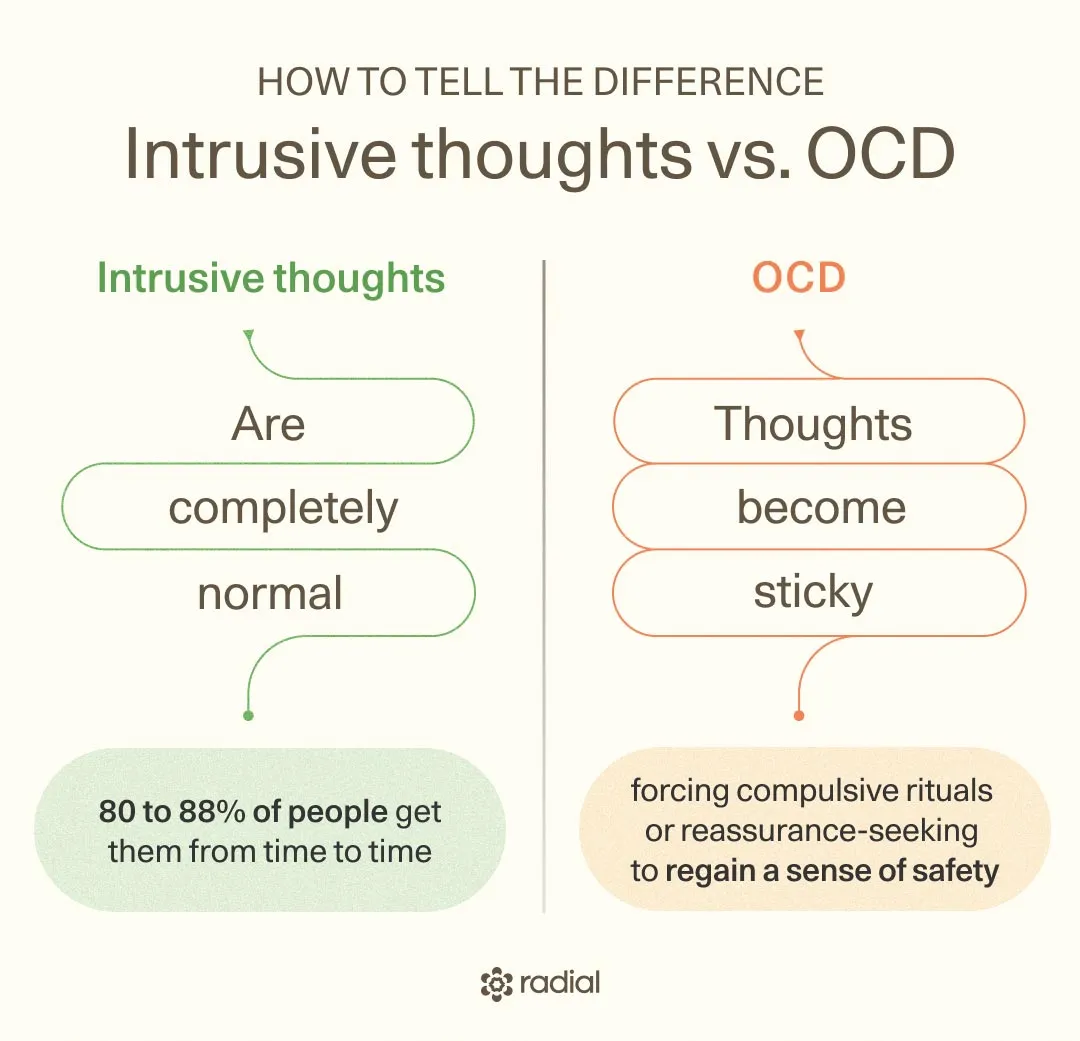
“Unwanted, intrusive thoughts are actually completely normal and everyone has them,” says Dr. Eller. In fact, between 80 to 88 percent of people get them from time to time, according to a paper published in the Journal of Psychiatry & Clinical Psychology
The difference is what happens next. In OCD, the thoughts become sticky, persistent, and difficult to dismiss. They create so much distress that a person feels compelled to perform rituals or seek reassurance to feel safe or certain.
Anxiety can also cause repetitive worries, but those worries are typically focused on real-life concerns, says Dr. Eller. On the other hand, OCD fears tend to be more irrational and are fueled by the obsession-compulsion cycle.
Only a qualified clinician can diagnose OCD, but recognizing that cycle is an important first step.
How are different types of OCD treated?
“Exposure and response prevention therapy (ERP) is the gold-standard treatment for OCD,” says Dr. Eller. ERP therapy for OCD is a specialized form of CBT that helps break the obsession-compulsion cycle. It's practiced gradually, with the support of a trained therapist.
It works in two steps:
- Exposure: Gradually facing the thoughts, images, or situations that trigger fear.
- Response prevention: Resisting the rituals, avoidance behaviors, or reassurance-seeking that normally follow.
Over time, the brain learns that intrusive thoughts aren't dangerous and that anxiety can fade without compulsions.
While ERP is the foundation of treatment, SSRIs can be a helpful addition for some people, according to research published in Psychiatry Research: Neuroimaging. Medications “often require higher doses than we would use to treat depression,” says Dr. Eller.
For treatment-resistant OCD, other options may help. One is transcranial magnetic stimulation (TMS), a noninvasive treatment that “uses gentle magnetic pulses to calm the part of the brain involved in OCD,” says Dr. Eller.
Why the right provider matters
If you think you may have OCD, finding the right provider is crucial. Adults with OCD can wait an average of 12 years for a diagnosis, according to a study published in PLOS One. The delay is partly because the condition is frequently missed or mistaken for something else, says Dr. Eller.
OCD requires specialized treatment. A clinician who isn't OCD-informed may unintentionally reinforce reassurance-seeking behaviors that keep the cycle going.
When interviewing a provider, ask:
- Do you have experience treating OCD?
- What types of OCD have you treated before?
- Are you trained in ERP?
- What happens if ERP or medication isn't enough?
The International OCD Foundation is a great place to start, with provider directories, education, and support resources.
When to seek professional help
OCD isn't something you can simply push through. Left untreated, it can take a serious toll on your daily life.
Consider reaching out to a mental health professional if your obsessions or compulsions:
- Take up a significant amount of time
- Cause ongoing distress or anxiety
- Interfere with work, school, or relationships
- Impact your quality of life
Relief within reach
Care covered by your insurance
Radial provides advanced mental health treatment, covered by the insurance you already use.








The bottom line
OCD can wear many disguises, but underneath the different themes is the same cycle of obsessions and compulsions. As Dr. Eller says, “OCD is not a personality flaw or a sign of weakness. It is a brain disease with real causes and real treatments.”
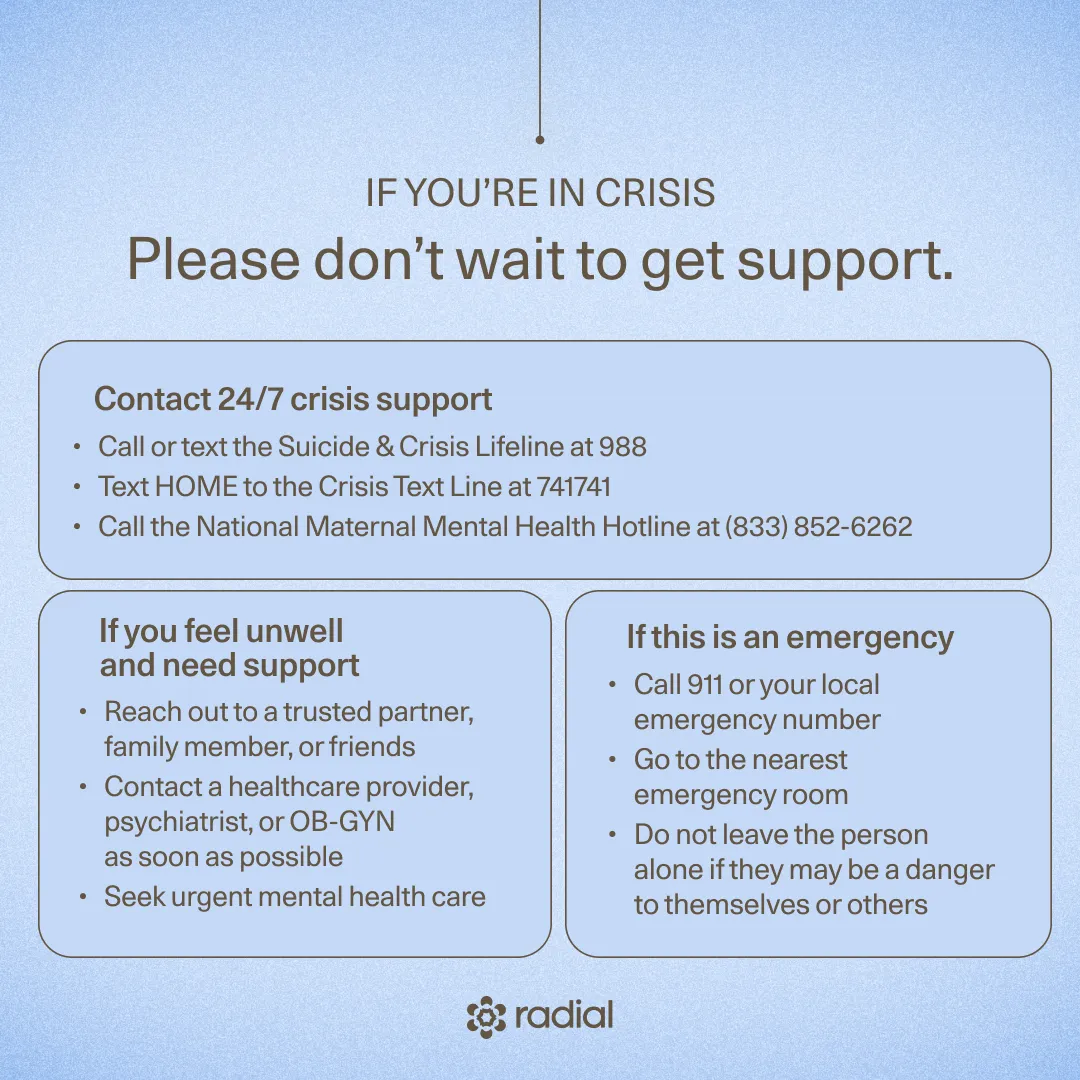
If OCD symptoms are affecting your life, don't wait to seek support. Radial can help you connect with a licensed clinician — virtually or in person — to explore evidence-based treatment options and build a plan tailored to you.
Key takeaways
- OCD isn't one-size-fits-all. Common subtypes include contamination, checking, harm, relationship, symmetry, existential, postpartum, and scrupulosity OCD.
- People can experience multiple OCD subtypes, and themes often shift over time while the underlying OCD cycle stays the same.
- ERP (Exposure and Response Prevention) is the gold-standard treatment for OCD, often alongside medication when needed.
- OCD is highly treatable, but working with an OCD-informed provider is critical for accurate diagnosis and effective care.
Frequently asked questions (FAQs)
What is the most common type of OCD?
Contamination OCD and checking OCD are among the most common subtypes. Some research suggests these two themes account for roughly 75% of OCD cases, according to a review published in the International Journal of Molecular Sciences.
How is OCD different from generalized anxiety disorder?
“Both OCD and GAD are marked by excessive worry that feels difficult to control and leads to significant distress,” says Dr. Eller.
The difference? GAD tends to focus on real-world concerns that spiral into worst-case scenarios, she explains, adding, OCD involves intrusive, unwanted thoughts that feel foreign and trigger compulsions or mental rituals to relieve anxiety.
Can children have OCD, and does it look different than in adults?
“OCD often starts in childhood,” says Dr. Eller. The condition affects roughly 1-3% of children and adolescents, per commentary in Pediatrics.
The symptoms are similar to those seen in adults, but can be harder to spot. Children may not realize their thoughts and behaviors are unusual, and OCD is sometimes mistaken for ADHD or behavioral issues, according to the International OCD Foundation. Kids are also more likely to involve family members in their rituals and compulsions.
Editorial Standards
At Radial, we believe better health starts with trusted information. Our mission is to empower readers with accurate, accessible, and compassionate content rooted in evidence-based research and reviewed by qualified medical professionals. We’re committed to ensuring the quality and trustworthiness of our content and editorial process–and providing information that is up-to-date, accurate, and relies on evidence-based research and peer-reviewed journals. Learn more about our editorial process.
Let's connect
Get started with finding the right treatment for you or someone you care about
Get startedExplore more posts