What Is Postpartum Psychosis? Signs, Risks, and Treatment

Postpartum psychosis is one of the most serious (but most misunderstood) perinatal mental health conditions. It’s a psychiatric emergency that requires urgent care, yet many people don’t recognize what it can look like. Unfortunately, lack of knowledge, stigma, and fear often delay diagnosis and treatment. What matters most is that it is treatable, and getting help quickly can save lives. No one who experiences it is to blame, and they deserve care, compassion, and support.
The postpartum period can be a time of both intense joy and upheaval. After I had twins, I thought I was ready to deal with the sleepless nights, endless feedings, and sheer stress of caring for the needs of two newborns. What I wasn’t prepared for was the roller coaster of emotions that seemed to careen between elation and paralyzing depression. I was fortunate–those feelings gradually leveled out as time passed. For some new parents, however, the early days, weeks, and months after childbirth can lead to a set of symptoms known as postpartum psychosis.
Postpartum psychosis involves a disconnect from reality, often accompanied by delusions and hallucinations that make it hard to tell what's real and what isn't.
"It came on suddenly and without warning, and left me feeling emptier than my barren womb after just having miscarried," says Alyssa Hesselroth, a mom who shared her experience with postpartum psychosis. "I was already left bereft, but found my thoughts spiraling deeper into a black hole with a gravity so intense that I couldn’t escape. It was as if I had fallen into the Upside Down, a mirror world that looked like my own but was a warped fun house version filled with dark and dangerous omens at every corner," she says.
While often misunderstood, it’s a serious psychiatric crisis that requires immediate medical attention. Unfortunately, symptoms are sometimes misinterpreted by partners and family members, and the person experiencing them typically lacks the insight into their perceptions and behaviors needed to seek help on their own. That's why it's so important for partners and loved ones to know what to watch for and when to seek help.
In this article, we’ll cover what postpartum psychosis is and what it looks and feels like. We’ll also explore who’s at higher risk, what treatment often looks like, and how loved ones can support people experiencing it.
What is postpartum psychosis (PPP)?
Postpartum psychosis, or PPP, is a severe, rapid-onset mental health emergency that can develop after giving birth. It’s also sometimes referred to by other terms like perinatal psychosis and puerperal psychosis.
Unlike the more common “baby blues” or postpartum depression, PPP is a psychiatric crisis that leads to a break with reality. Someone with postpartum psychosis may experience hallucinations (seeing or hearing things that aren’t there), delusions (strongly held false beliefs), and extreme confusion and paranoia. It can happen quickly, starting within days of delivery, though it can begin weeks or months later.
For Hesselroth, postpartum psychosis was marked by a sudden, overwhelming loss of her sense of reality. "A baby monitor became a recording device being used for surveillance, with its color changing to red to warn me of potential harm to my children. A moving truck passing by signaled to me that I needed to take my children away so that they could be safe. Time to order moving boxes. My brain was working at warp speed, paying attention to every tiny detail, searching for clues in the escape room that was now my own home," she describes.
The episode progressed rapidly and ultimately required psychiatric hospitalization, although it would take longer to finally have a name for the condition that upended her world.
It’s a relatively rare condition, affecting about 1 in 1,000 births. Most people develop symptoms within the first two weeks after giving birth, often around days eight to ten. Symptoms can emerge later, but episodes usually begin sometime within the first three months postpartum.
"Women may appear ‘off’ or unwell at one part of the day and then ‘better’ or like their usual self later on. This waxing & waning mental status is often misunderstood as a sign of improvement, when it's actually a very concerning and hallmark red flag for postpartum psychosis,” says Dr. Katrina Furey, MD, a reproductive psychiatrist who specializes in perinatal mental health.
This can be confusing for loved ones and may delay seeking needed medical attention. Such delays are serious because postpartum psychosis is considered a psychiatric emergency that requires immediate medical attention to ensure that both the parent and baby are safe.
- Because it fundamentally changes a person's perception of reality, it can affect their judgment and ability to make safe decisions.
- They lack insight into their own perceptions, so they usually can't recognize they are ill.
- Thoughts of self-harm are common, and delusions often center on the infant. For example, they might believe the baby is in danger or think it needs to be protected in unusual ways. This can lead to high-risk situations that require professional help.
- Symptoms can also progress rapidly. A person might quickly shift from what seems like mild disorientation to full-blown psychosis.
No matter how it presents, it’s important to remember that this is a brain-based illness, not a reflection of a parent's love for their child. It’s driven by biological and hormonal factors and needs immediate care just like any other medical emergency.
Healing happens through strong relationships
Compassionate, experienced mental health professionals focused on evidence-based care




Postpartum psychosis vs. postpartum depression, anxiety, and "baby blues"
The days and weeks after giving birth are understandably exhausting. That can sometimes make it harder to recognize if a person is experiencing typical postpartum challenges or something more serious. Many people are familiar with terms like the "baby blues" or postpartum depression (PPD), so they may try to make sense of these alarming symptoms through the lens of those experiences. They might dismiss them as the stress, anxiety, or exhaustion that comes from being a new parent.
"Lack of sleep after birth can also mask or worsen symptoms and make it harder to see what is happening," explains Pamela Walters, MD. "Because postpartum psychosis is rare, it is not always the first thing people think of, especially if symptoms are changing quickly or seem confusing."
However, misidentifying postpartum psychosis can delay critical care and pose serious risks. So how can new mothers, partners, and loved ones distinguish between signs of psychosis and other postpartum conditions?
The biggest difference is the impact on how a person experiences reality. While postpartum depression and anxiety are primarily mood-related and involve emotional distress, postpartum psychosis alters a person's perceptions of the world. A person with PP may have hallucinations, delusions, or a disconnection from reality, making it more severe and urgent. Speed of onset is also a major indicator.
- Baby blues: Occurs in the first few days after giving birth, with symptoms like irritability, mood swings, and tearfulness. It typically resolves within two weeks and doesn't interfere with reality.
- Postpartum depression: Can occur anytime in the first year after childbirth. It is characterized by persistent sadness, fatigue, and feelings of hopelessness, but doesn't cause postpartum hallucinations or delusions.
- Postpartum anxiety: Often involves excessive nervousness, worry, and restlessness. It can be severe, but it doesn't affect a person's ability to recognize what is real.
- Postpartum psychosis. The most severe of these conditions usually occurs in the first two weeks of childbirth, but can also occur anytime in the first six months. In addition to mood symptoms, it involves hallucinations, delusions, and confusion that can lead to dangerous behaviors.
Confusing the symptoms of these conditions can delay the necessary intervention that a person needs, including immediate psychiatric care and medication. Since postpartum psychosis can lead to risky behaviors, including harm to oneself or the baby, it requires urgent attention. Misdiagnosis can put both the parent and child at risk.
What are the signs and symptoms of postpartum psychosis?
Symptoms of postpartum psychosis can fluctuate in intensity and escalate quickly. Being alert for early signs is key.
“Postpartum psychosis often looks less like a ‘primary psychotic disorder’ and more like a severe bipolar-spectrum episode triggered by childbirth, with mania, mixed states, or depression plus psychotic symptoms,” says Greg Malzberg, MD, a psychiatrist at Radial.
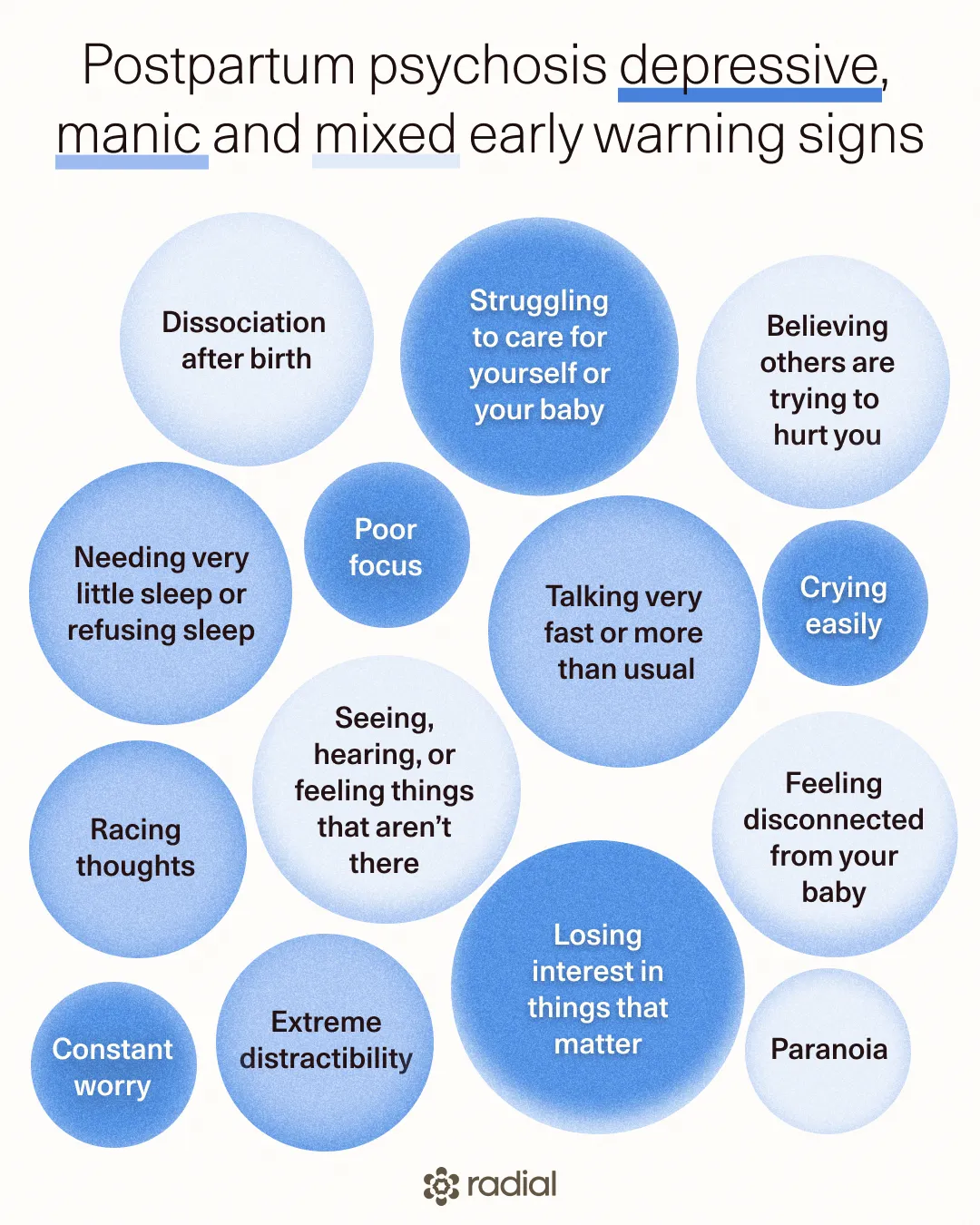
These symptoms cause profound disturbances in a person's thinking, mood, and behavior and include:
Depressive symptoms
- Feeling low, hopeless, or emotionally numb
- Feeling very emotional and crying easily
- Constant worry, tension, and anxiety
- Feeling withdrawn and not wanting to be around others
- Feeling heavy, tired, and overwhelmed
- Losing interest in things that matter to you
- Having problems concentrating or making decisions
- Struggling to take care of yourself or your baby
Manic symptoms
- Feeling unusually energetic, confident, or elevated
- Racing thoughts
- Talking very rapidly or more than usual
- Needing very little sleep or not wanting to sleep
- Being very distracted and jumping from one idea to the next
- Feeling restless or agitated
- Acting impulsively
- Feelings of postpartum rage
Mixed symptoms
- Severe confusion or disorientation
- Seeing, hearing, or feeling things that aren't there
- Strong beliefs that aren't based in reality
- Feelings of postpartum paranoia and suspicion
- Believing that others are trying to hurt you
- Acting in ways that seem unusual for you
- Feeling a sense of unreality or detachment
- Dissociation after birth
- Feeling disconnected from the baby
"I felt energized, there was an urgency, and a component of creative and spiritual connection to the divine," shares Shawna Mox, a mother who experienced postpartum psychosis six weeks after giving birth. "I felt like I was running circles around everyone, my senses were heightened, and it felt like the world around me was moving really slowly."
What are the risk factors for postpartum psychosis?
Postpartum psychosis can affect anyone. While rare, certain factors can increase the risk. Having one or more of these risk factors does not mean that someone will definitely develop PPP, and some people experience it despite having none of the known risk factors.
Postpartum psychosis risk factors include:
- A personal history of bipolar disorder: People with bipolar disorder, particularly bipolar I disorder, have a higher risk of developing PPP. Some estimates suggest that people with bipolar disorder have a 1 in 5 chance of experiencing an episode of postpartum psychosis. "In the general population, postpartum psychosis is rare (roughly 1–2 per 1,000 births), but in people with bipolar disorder the risk rises dramatically into the single to double digits, which is why clinicians treat bipolar history as one of the strongest risk signals," says Dr. Greg Malzberg.
- A previous episode of postpartum psychosis: People who have had postpartum psychosis in the past have a higher risk of experiencing it again after future pregnancies.
- A family history of bipolar disorder or postpartum psychosis: Having a close family member with these conditions may increase a person's vulnerability to experiencing psychosis following a pregnancy.
- First pregnancy: Postpartum psychosis is more likely to occur after a person has given birth to their first child.
- A history of other mental health conditions: A family history of schizophrenia may also increase the risk.
- Severe sleep deprivation: Not getting enough sleep in the days and weeks after giving birth can increase a person's susceptibility to postpartum psychosis.
- Stopping psychiatric medication during pregnancy: People who have been on mood-stabilizing or antipsychotic medications often have to stop taking them during pregnancy. This can increase the risk for people with underlying conditions.
Can postpartum psychosis happen again?
Once a person has experienced postpartum psychosis after giving birth, they are more likely to experience it again in future pregnancies. One study found that 40% of women experienced postpartum psychosis only once and did not have lasting psychiatric issues.
While this risk is higher, that doesn't mean it's inevitable; Dr. Malzberg says prevention is possible. "The best approach is a prevention plan built before delivery rather than trying to 'react' once symptoms appear," he explains. He also advises that this usually involves:
- A coordinated plan for medication (often starting preventive treatment immediately postpartum for very high-risk patients, with lithium having the strongest evidence for reducing recurrence)
- A tight monitoring schedule in the first days to weeks after birth
- A clear emergency pathway that family members can activate quickly
Protecting a mother's sleep is a huge part of this prevention plan, he says. "For some families, protecting the mother’s sleep in the early postpartum period is a medical intervention, not a luxury, because insomnia and sleep deprivation can be an early warning sign and a trigger."
While recurrence is common, Dr. Malzberg emphasizes that it's not guaranteed. "Outcomes are much better when early symptoms are recognized and treated promptly.” With the right care and support, people who have experienced postpartum psychosis can recover fully and go on to have healthy future pregnancies.
What causes postpartum psychosis?
The exact causes of postpartum psychosis aren't fully understood, but evidence suggests it's likely affected by a complex mix of biological, psychological, and social influences. No single cause has been identified.
While there are risk factors that may make it more likely, it's important to remember that it can happen to anyone, even people with no prior mental health history. In fact, 38.3% of participants in one study on postpartum psychosis had no prior psychiatric diagnosis. It isn't a weakness or personal failure. It isn't a sign that the person is a bad parent or doesn't love their child.
- Childbirth-related biological changes: The physiological changes that take place following childbirth play a key role in triggering postpartum psychosis. This may be related to shifts in hormones, changes in sleep-wake rhythms, and other biological triggers. For example, rapid shifts in hormones like estrogen and prolactin that occur after childbirth are thought to be involved.
- Bipolar disorder: Having bipolar disorder significantly increases the risk of developing postpartum psychosis. Some people may have a previous diagnosis of the condition, but for others, postpartum psychosis is the first episode of bipolar illness.
- Other underlying vulnerabilities: Some people seem to be more predisposed to experiencing postpartum psychosis after birth, particularly those who have a personal or family history of postpartum psychosis and other mental health conditions.
- Sleep deprivation: Disrupted sleep also appears to play a role in triggering symptoms of postpartum psychosis. These factors may not cause the condition on their own, but they can influence its development or worsen its severity.
What's important to remember is that there is not yet a clear explanation for why some people experience postpartum psychosis, and others don't. Other factors, including systemic failures in the healthcare system, can delay recognition and treatment. Most OB-GYNs have minimal training in severe psychiatric conditions. There is a general lack of specialized mental health care for parents following birth, and mother-baby psychiatric units are nearly nonexistent in the U.S. Because of this, women may be hesitant to report their symptoms out of fear of being separated from their baby. If a specialized perinatal unit is not available in your area, your hospital may still coordinate care to support both mother and infant whenever possible.
To find a mother-baby psychiatric unit:
- Ask your OB-GYN: They may be able to refer you to a perinatal psychiatry unit in your region.
- Contact Postpartum Support International (PSI): Call or text PSI at 1-800-944-4773 to get help finding local perinatal mental health resources.
- Check university medical centers: University-affiliated hospitals may be more likely to offer specialized perinatal psychiatry services.
Postpartum psychosis also exists within broader failures in maternal health in the United States. The U.S. has one of the highest maternal mortality rates among high-income countries. Black mothers in particular face disproportionately high maternal mortality rates, reflecting the influence of systemic racism, healthcare inequities, and barriers to mental health care services.
Hesselroth notes that the lack of recognition for postpartum psychosis and poor access to appropriate care affected her own diagnosis and treatment. "What I needed was well-rounded care in a specialized unit, but this isn’t commonly accessible for many women in the U.S. and, as a Latina, even less so for women like myself," she says.
How is postpartum psychosis treated?
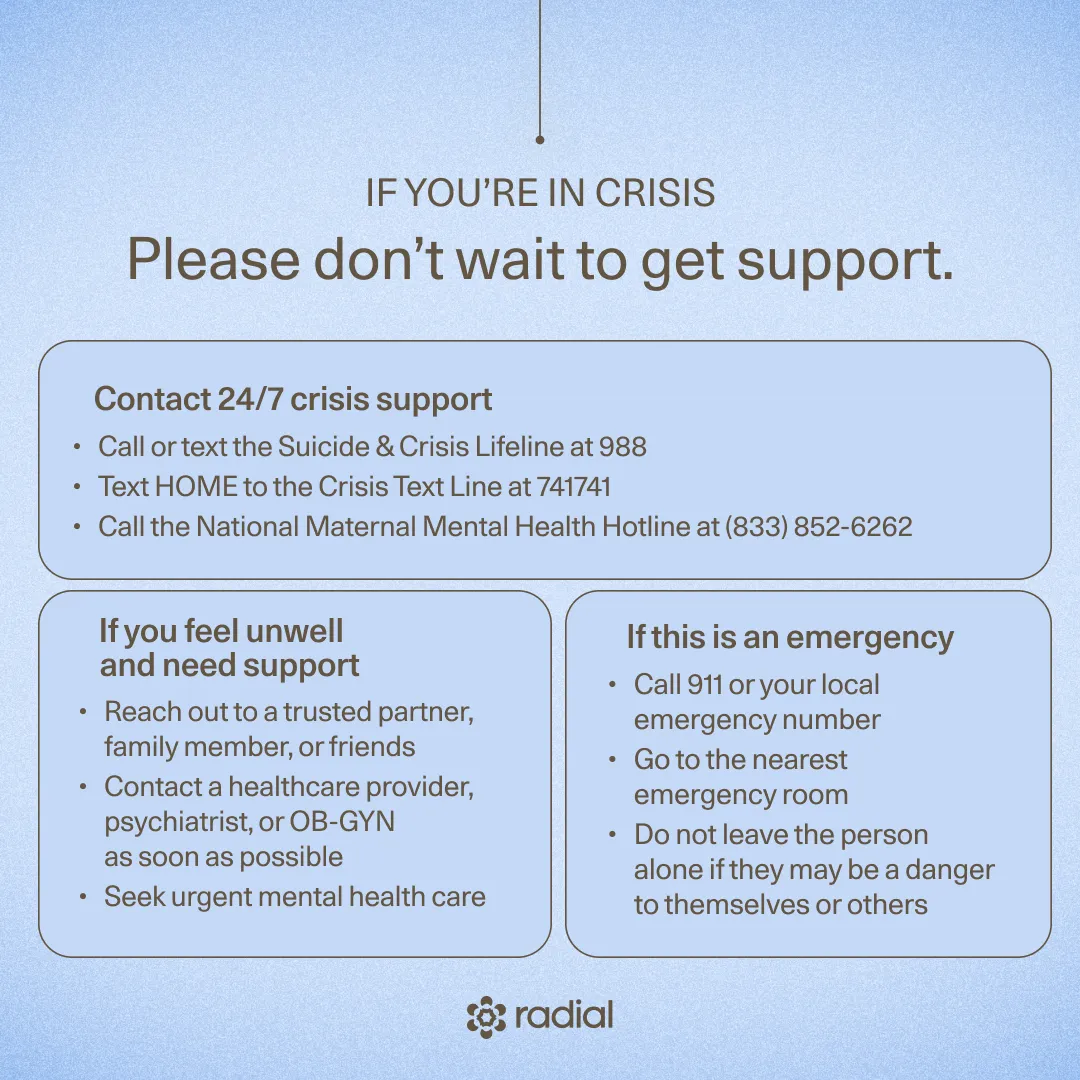
Postpartum psychosis is a psychiatric emergency. Immediate care is crucial. Symptoms can escalate rapidly, leaving the person and sometimes their baby at risk.
If you suspect someone is experiencing postpartum psychosis:
- Seek emergency care right away by going to the closest ER or calling emergency services
- If you are in the U.S., call the 988 Suicide and Crisis Lifeline, which is available 24/7 for urgent mental health support
If you are concerned about another person, whether it's your partner, a loved one, or a friend, remember that it's appropriate to seek help even if they say they are fine. People with postpartum psychosis often lose insight into their own perceptions and behaviors, so if things seem off, talking to a professional is the best course of action.
Because it’s so uncommon, there are few clinical trials looking at the best postpartum psychosis treatment options. Treatment recommendations are based on the evidence currently available to experts.
Inpatient treatment
Most people with postpartum psychosis require hospitalization, at least early on. This might involve:
- Inpatient psychiatric treatment to provide rapid stabilization
- Medication adjustments in a safe, closely monitored environment
In some cases, this hospitalization may be involuntary if a person isn't able to recognize they are unwell or is at risk of harming themselves or others. This can be lifesaving, and it can be a distressing experience for partners and other loved ones.
Medications
Medications are a cornerstone of treatment for postpartum psychosis, particularly during the acute phase, where they can bring symptoms under control and provide the stability needed for further recovery. The exact approach can vary depending on the symptoms, the individual's medical history, and whether someone is breastfeeding. Medications that may be prescribed include:
- Antipsychotic medications help reduce delusions, hallucinations, and confusion.
- Mood stabilizers may help when manic symptoms are present.
- Benzodiazepines are sometimes used to address severe agitation, anxiety, or insomnia.
Pharmacological treatments can be highly effective. Research has shown that a stepped treatment approach using benzodiazepines, antipsychotics, and lithium had a 98% remission rate. Most of the women (80%) remained well at 9 months, particularly if they were treated with lithium.
Electroconvulsive Therapy (ECT)
ECT is a well-established, safe, and highly effective treatment for severe psychotic and mood disorders, including postpartum psychosis. While stigma persists, of available treatments, ECT remains the most effective intervention for postpartum and peripartum psychosis.
It works quickly, which can be important for severe or rapidly worsening symptoms or when medication hasn't helped. ECT may be considered when medications aren’t working well or when a quick improvement is needed, such as if there is a risk of harm to the person or their infant. It may be recommended in combination with or instead of medication in certain situations, such as catatonia, poor eating or drinking, or severe agitation.
- How long does it take? ECT usually takes between 6 and 12 treatments, which are delivered 2 or 3 times per week. Maintenance treatments can also be considered on a scheduled or as-needed basis to help keep symptoms under control. The goal is to treat as infrequently as possible while preventing symptoms from recurring (this may be weekly or every 3 months for some people).
- What does it involve? Treatment is performed under anesthesia and involves the psychiatrist delivering an electrical pulse that induces a brief (30 to 45 second) controlled seizure
- What happens after ECT? People wake 5 to 15 minutes after treatment and spend about 30 to 60 minutes in a recovery unit. Because the treatment involves general anesthesia, the individual needs someone to drive them to and from their appointments.
The biggest concern most people have about ECT is the potential for memory problems. Some confusion is expected after general anesthesia, so it's normal to be a bit forgetful during ECT treatment. People are closely monitored for potential short-term memory issues, and treatment may be adjusted if a person's memory issues start to affect their ability to function. Such adjustments might include reducing the frequency of treatment sessions or changing electrode placement.
While memory issues can be a concern, it's important to remember that the risks of untreated psychotic episodes are serious and potentially life-threatening. Memory effects usually resolve following treatment, and some evidence suggests that ECT can improve overall executive function.
Emerging neuromodulation options
Treatments like transcranial magnetic stimulation (TMS) and related neuromodulation techniques are being investigated as potential treatments for some postpartum mental health conditions, such as peripartum depression, but are not treatments for PPP.
"TMS has evidence for postpartum depression, but it is not an established treatment for postpartum psychosis, and there is not a solid clinical trial base supporting it for acute psychosis after childbirth," Dr. Malzberg says. "Postpartum psychosis is an emergency that typically requires rapid stabilization, often hospitalization and fast-acting treatments such as antipsychotic medication, lithium, and in severe or urgent cases, electroconvulsive therapy (ECT), which has a stronger track record.”
How can partners and families help someone with postpartum psychosis?
Watching someone you love experience postpartum psychosis can be confusing, overwhelming, and frightening. You might not be sure what to do, especially since the person experiencing the symptoms doesn't recognize that something's wrong.
Hesselroth notes that while her family noticed her symptoms, she didn't realize how out of the ordinary they were. "While they recognized that I wasn’t thinking clearly, I wasn’t able to have the same awareness. I, in fact, lacked what is known as ‘insight’ into my own condition," she says.
During the crisis
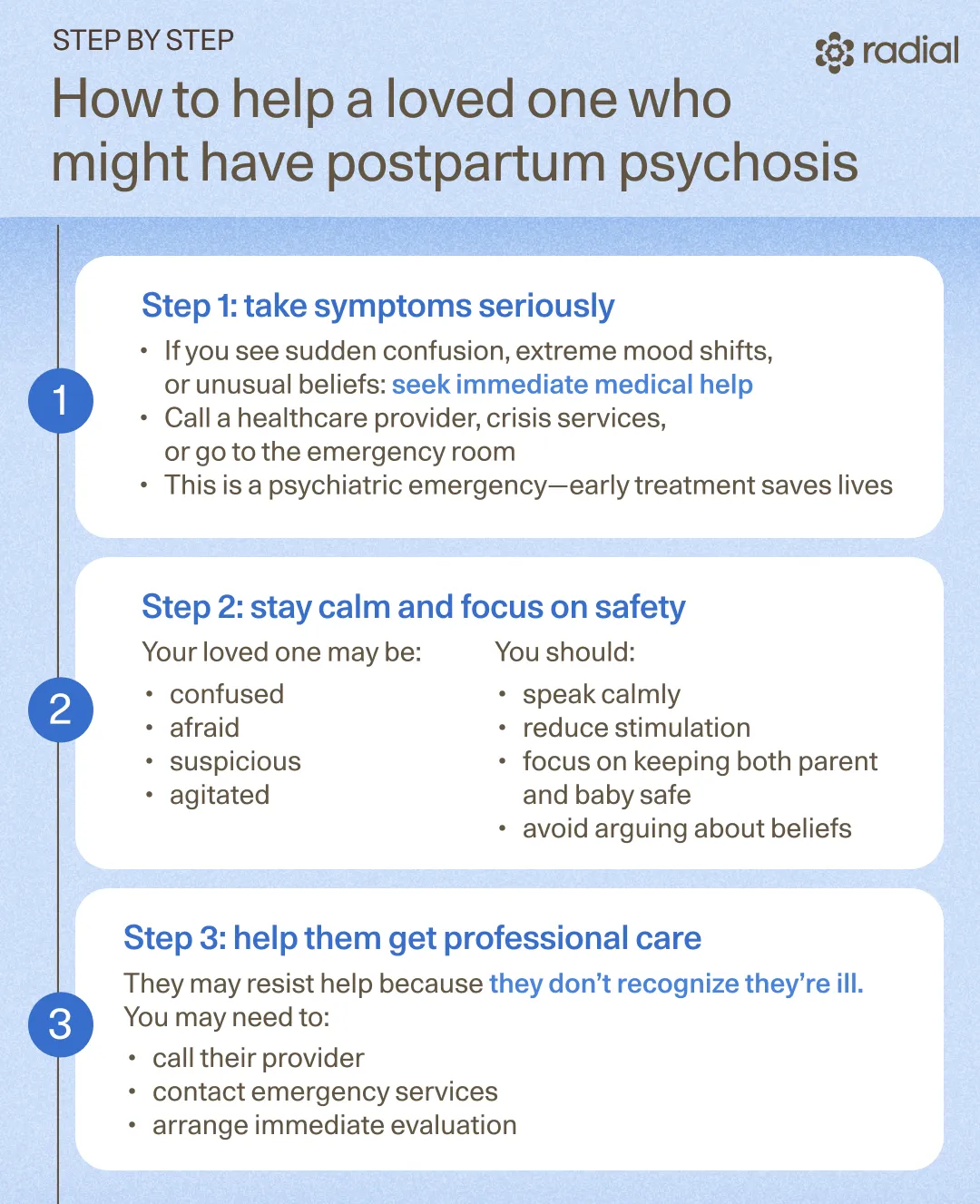
Having support from loved ones can be critical for getting care and recovering safely. Steps that partners and families can take:
- Take symptoms seriously and act quickly. If someone is experiencing symptoms like severe mood swings, confusion, and sudden, unusual beliefs, you should seek immediate medical help.
- Stay calm and focus on safety. Your loved one may be distressed, confused, or suspicious. Try to remain and focus on helping both the parent and baby stay safe.
- Help them get professional care. Contact a healthcare provider, go to the emergency room, or call crisis services if symptoms are severe. Remember that it's common for people to lack insight into what they are experiencing, so they may need help even if they resist help.
During recovery
After someone has experienced PPP, you might be worried about saying the wrong thing. There's no perfect script to follow, but some things may be more helpful than others.
Psychotherapist and parent coach Olivia Bergeron, LCSW, offers tips on what to say (and what to avoid):
What can help:
- Make it clear the door is always open: "I'm so sorry you went through that. Whenever you want to talk, I'm here."
- Address what is likely to be a shame-filled memory: "What happened was not your fault."
- She's likely harboring a belief that she has failed; instead, remind her: "You're a good mom. You got better with help."
- Offer to help before you're asked: "What can I do to help you today?"
What to avoid:
- Don't minimize the experience. Avoid comments like: "At least you don't remember most of it, and you're okay now."
- Don't say: "Maybe you shouldn't have more kids."
- Avoid comments like: "I could tell something was off," and "It's over, don't think about it."
"I think the most supportive thing would be to make sure that the woman is never alone, but to have a team of people so that it’s not just one or two people to support," Mox says.
She also reminds partners, "This is a temporary state of being. The things being said and the ways that she might be acting are not personal."
Continued support during treatment and recovery is key. You can also help by accompanying them to treatment appointments and taking notes. Bergeron suggests being helpful without waiting to be asked, including with household tasks like dishes, laundry, and buying groceries. "Find out more about postpartum psychosis so you can field questions intelligently and run interference from curious relatives," she recommends.
What postpartum psychosis recovery can look like
While serious and intense, postpartum psychosis or postpartum mania generally has better long-term outcomes than psychosis at other times. That recovery process, however, is often a gradual journey that doesn't follow a specific timeline. It can take months or even years.
- Acute symptoms may require hospitalization
- Severe symptoms usually resolve within 2 to 12 weeks
- The psychological and social aspects of recovery may take months or even years, and include processing the trauma, rebuilding confidence, and managing any residual effects
As you start to recover, it's normal to feel a wide range of emotions. You might feel shock, exhaustion, and anger. You might feel guilty about not being there to take care of your child and worry about how it might affect your bond. Many people also find it hard to remember the exact details of the experience, so you may find it helpful to talk about the experience with your partner and mental health team.
Treating yourself with compassion and kindness is crucial. After her initial episode of psychosis and mania, Mox experienced a period of deep depression. "The best thing I did for myself during that time was relate to myself as though I had just gotten in a major car wreck. I lowered the bar of expectations. I considered any day where I got out of the house for a walk a win. I let myself sleep, watch Netflix, journal, and be sad," she says.
Overcoming loneliness
While there are increasing efforts to talk more about the condition, there is still a notable lack of information about postpartum psychosis and recovery. It also doesn’t help that many people’s only knowledge of postpartum psychosis comes from high-profile news stories about tragedies that have occurred when the condition is left undiagnosed and untreated.
That not only makes it harder for women to process and come to terms with what happened to them, but also increases their sense of isolation and loneliness.
"Once I finally learned about postpartum psychosis, I was able to join support groups and read other women’s stories. In them, I have found community and acceptance and healing," Hesselroth says. "I have been able to read a few memoirs and listen to podcasts that have also helped in my recovery as well. Most importantly, I don’t feel alone or adrift anymore."
Mox also emphasizes the importance of finding a supportive community. "Get in touch with someone who has come through a transformative dark time that supports others on their journey. Know that you will recover, you will find joy again, you will find light."
Managing grief
For many parents, missing out on the newborn parenting experience is another major source of grief, Bergeron says. "Allow yourself to grieve the postpartum expectations that were not fulfilled, the time bonding with the baby that was lost, and the hijacking of your early parenting experience. These feelings are entirely valid," she says.
Focusing on what's happening in the here and now is also key. "Your relationship with your child is not in jeopardy. The bond between parent and child is built over thousands of small interactions that accrue over time," Bergeron says. "Even if the start to that relationship did not go as expected, you're creating that bond every day.”
Learning to trust yourself again
Trusting yourself with the baby can be one of the hardest experiences to face as you recover. The thoughts and beliefs that happened when you were having acute symptoms can rock a person's entire sense of self.
It takes time to rebuild that sense of confidence in your abilities as a mother during those first few weeks after you return home. Remind yourself that it's normal for new mothers to have some feelings of anxiety, and that working with your partner and treatment team can ensure that you're on the right track.
Relief within reach
Care covered by your insurance
Radial provides advanced mental health treatment, covered by the insurance you already use.








The bottom line
Postpartum psychosis is rare, serious, and often frightening, both for the person experiencing it and for the people who love them. The key thing to remember is that it is also highly treatable. Timely care is crucial to ensuring that mom and baby are safe, so being aware of early symptoms can help people get help as soon as possible.
Anyone can experience psychosis after pregnancy, but your risk is higher if you have a history of bipolar disorder. If something feels "off" after childbirth in a way that doesn't seem like it can be explained by the normal exhaustion and mood swings that happen in the postpartum period, help isn't just warranted–it can be a lifesaving first step toward recovery.
Healing takes time, so give yourself grace. “In some ways, I feel like I will always grieve the loss of the person that I was before my miscarriage and subsequent postpartum psychosis. Yet I know that I am a survivor of this disorder that made my brain betray me and threatened to take away what I hold most dear," Hesselroth says.
Postpartum psychosis is not a reflection of a mother’s love or worth–it’s a medical condition that requires care and support. Getting help and healing from the experience is a testament to your strength and resilience.
Key takeaways
- Postpartum psychosis is rare and serious, but highly treatable. Getting immediate help is key to ensuring the safety and stability of mother and child.
- Symptoms appear suddenly and escalate rapidly, including severe mood shifts, insomnia, paranoia, confusion, and beliefs that aren't grounded in reality.
- Certain factors can increase the risk, but postpartum psychosis can also happen without any warning. A personal or family history of bipolar disorder or psychosis increases your risk.
- Treatment is effective and may include hospitalization, medication, ECT, and ongoing care.
Frequently asked questions (FAQs)
What are the early warning signs of psychosis?
Research suggests that some of the earliest symptoms of the condition include irritability, mood changes, and insomnia, and that people may then later develop symptoms of mania, depression, and delusions. For those who have lived it, the subjective experience is often described as sudden, severe, and rapidly fluctuating. Some people report shifting from depression to euphoria. Racing thoughts, disorientation, feelings of unreality, and grandiose feelings were also common.
How long are you at risk for postpartum psychosis?
The highest risk period is during the first two weeks after giving birth. However, it is important to know that symptoms can begin at any time, typically within the first 3 months postpartum, but sometimes longer.
Can postpartum psychosis turn into schizophrenia?
For many women, psychosis after pregnancy is a brief, time-limited condition that only occurs in the postpartum period. For some women, however, experiencing postpartum psychosis may be linked to a greater vulnerability for developing schizophrenia or other serious psychiatric illnesses in the future. Up to 25% of people with a history of postpartum psychosis go on to develop a more serious psychiatric condition like schizophrenia. This increased risk highlights the importance of early intervention and preventative strategies that support long-term mental health.
What are the complications of postpartum psychosis?
Without proper diagnosis and treatment, postpartum psychosis can be dangerous. It increases the risk of harm for both the mother and baby, since it is strongly linked to thoughts of self-harm and delusional beliefs that are centered on the infant. In addition to those acute risks, it disrupts bonding, daily functioning, and a mother's confidence in her parenting abilities. Prompt, compassionate treatment can reduce these risks.
Deep dive recommendations
- NEI Podcast. E246 - ECT Unveiled: Modern Perspectives in Psychiatric Treatment with Dr. Descartes Li.
- Psychiatry & Psychotherapy Podcast. 152: ECT Efficacy and Controversies with Dr. Cummings.
- Psychiatry & Psychotherapy Podcast. 13: Postpartum Depression with Dr Pereau.
- Psychiatry & Psychotherapy Podcast. 33: Perinatal Mood and Anxiety Disorders with Dr Kelly Rivinius.
- Mom Breaks. Science and Stories on Postpartum Psychosis.
Editorial Standards
At Radial, we believe better health starts with trusted information. Our mission is to empower readers with accurate, accessible, and compassionate content rooted in evidence-based research and reviewed by qualified medical professionals. We’re committed to ensuring the quality and trustworthiness of our content and editorial process–and providing information that is up-to-date, accurate, and relies on evidence-based research and peer-reviewed journals. Learn more about our editorial process.
Let's connect
Get started with finding the right treatment for you or someone you care about
Get startedExplore more posts