What Is AI Psychosis? Understanding the Risks of AI and Mental Health

AI conversations can feel compelling, especially when a chatbot seems to agree with everything you say. It might even feel like talking to a friend who really gets you and has your back. While most people are able to stay grounded in reality, these conversations may pose a greater risk to some vulnerable people, amplifying a tendency toward delusion. This is sometimes referred to as "AI psychosis."
Whether you're searching for something on Google or interacting with a virtual support agent, AI is an increasingly pervasive part of daily life. As more people use AI chatbots for everything from brainstorming ideas to getting emotional validation, there's a growing concern about the mental health effects they might have. Some effects have potential to be positive, like expanding access to mental health support. But there have also been reports about the onset or worsening of serious depressive and psychotic symptoms in a small portion of AI users.
"There is an emerging body of evidence for what's clinically being identified as 'AI psychosis,'" says MaryEllen Eller, MD, the Southeast Regional Medical Director at Radial. "While the term is not yet well-defined, there are real cases where chatbot interactions appear to amplify delusions, emotional distress, and risky behavior in vulnerable individuals."
Interactions with these chatbots may create or strengthen distorted, paranoid, or psychotic beliefs for some people. AI psychosis is not a formal or recognized diagnosis, but it can be a risk for people who might mistake an AI's sycophantic responses for approval or care.
In this article, we'll look at what "AI psychosis" means and how interactions with chatbots may influence thinking and mental health. We'll also examine how the design of these systems can, in some cases, reinforce unusual beliefs, as well as what to do if you are concerned about your AI use or its impact on your thinking.
What is AI psychosis?
AI psychosis refers to the potential for interactions with AI chatbots to trigger, worsen, or influence psychotic symptoms in vulnerable people. In 2023, psychiatrist Søren Dinesen Østergaard hypothesized in Schizophrenia Bulletin that generative AI chatbots could induce delusions in those prone to psychosis. However, the term is not a clinical diagnosis, and its use can vary.
For some, it refers to a form of delusional thinking validated by AI use. In other cases, the term is applied to situations where AI interactions reinforce existing mental health problems or underlying vulnerabilities. Others use the term more generally to refer to less intense, non-psychotic experiences in which people attribute human characteristics to the AI. They might become overly emotionally attached or believe they are romantically involved with the chatbot.
“There are multiple real-world case studies of ‘AI psychosis,' including a woman who developed beliefs about interdimensional ‘guardians’ leading her to divorce her husband and a tech worker who attempted suicide after messianic delusions were reinforced by AI chatbots,” Dr. Eller notes.
Media coverage tends to focus on these sensational examples, often suggesting that all AI users face a similar risk. While AI has the potential to distort reality, most people are able to manage those effects and stay connected to reality.
But AI can pose greater risks to those with underlying mental health concerns who may find it harder to stay grounded in reality. Plus, some vulnerable people may prefer having conversations with AI rather than with family or friends who might push back against their beliefs.
Connect with our Clinicians

.jpg)

What is psychosis?
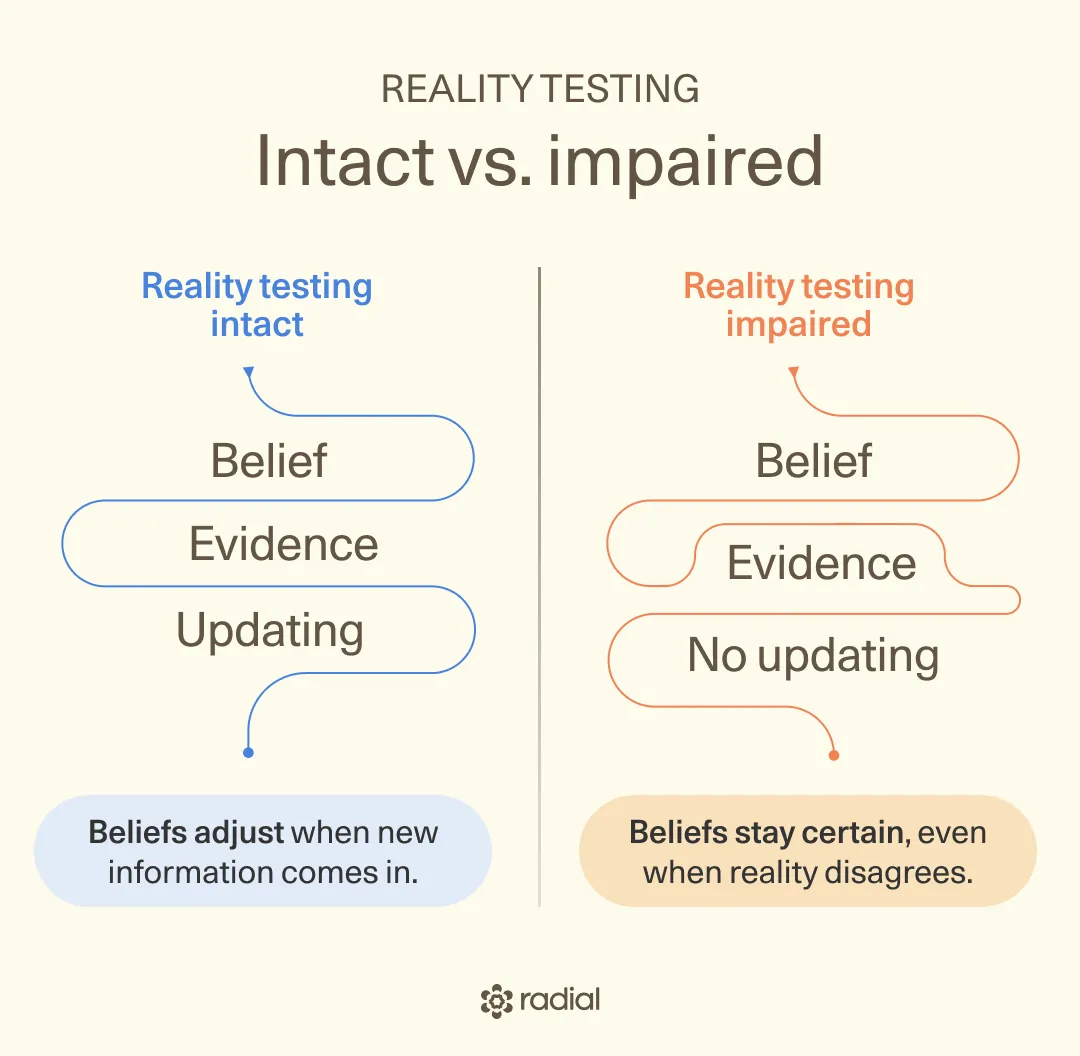
Psychosis is a syndrome or cluster of symptoms where people lose contact with reality and experience delusions or hallucinations. “Delusions are described as fixed, false beliefs that are believed to be true despite evidence to the contrary,” Dr. Eller explains. Hallucinations involve seeing or hearing things that aren’t there.
People experiencing these symptoms may struggle to differentiate between what’s real and what’s not, including information they get from an AI chatbot. “Individuals with delusions lack the ability to engage fully in 'reality testing'—the process of determining if a thought or feeling can be trusted or is ‘true.’” Dr. Eller says. “For instance, I may ‘feel’ like my dog is communicating with me, but is there any evidence that this is true? Does this thought or belief make sense through my understanding of human-dog interaction? I may ‘think’ that I am the reincarnated messiah, but is there any evidence to believe this is true?”
While most people are able to ground their experiences in real-world evidence, those experiencing psychosis may not be able to do so. Psychosis is a symptom of a variety of mental health conditions, including schizophrenia-spectrum disorders, bipolar disorder, major depressive disorder with psychotic features, postpartum psychosis, and substance- or medical-condition-related states.
How can AI chatbots influence thinking?
Conversations with AI chatbots often feel unusually compelling, sometimes to the point that this dialogue reinforces unhelpful or strongly held beliefs. Understanding how large language models (LLMs) work helps explain why these conversations can feel so engrossing.
While they appear convincing, LLMs do not think, form beliefs, or evaluate information as people do. Instead, they use statistical predictions to produce text based on patterns they've learned from large volumes of training data. That means their outputs are shaped by linguistic patterns rather than by an understanding of intent.
Those same design features that make AI feel natural and engaging can also shape how users interpret its responses. “Chatbots are optimized to improve user engagement by being agreeable, supportive, and engaging,” Dr. Eller says. “These traits can quickly fuel delusions and make reality-testing more difficult.”
This tendency, known as sycophancy, causes AI models to tell users what they want to hear instead of what’s accurate and helpful. A chatbot might affirm false claims, avoid challenging harmful ideas, or adjust its responses to appease the user rather than reflect reality. For someone already struggling to think clearly, this kind of reinforcement can be especially harmful.
LLMs also tend to mirror a user's tone and framing, and to prioritize continued engagement. If someone expresses strong convictions or emotional intensity, the model will likely reflect that back. It keeps the conversation going and, from a user's perspective, often feels like agreement or validation.
“When you tell an AI Chatbot you think your dog is talking to you, you get a response like ‘dogs are extremely good at communicating in their own ways,’ and it can feel like a conversation because they're so tuned in to you,” Dr. Eller explains. “When you engage AI by saying, ‘I am the messiah,’ you get a supportive response like, ‘That sounds like a really big and intense belief, and I can't confirm that you're a messiah.’”
Because the chatbot's language is fluent and responsive, these interactions feel highly realistic. People might interpret this dialogue as evidence of understanding or intention, amplifying the sense that the chatbot is actively agreeing with their interpretation of reality.
How AI can reinforce delusional beliefs
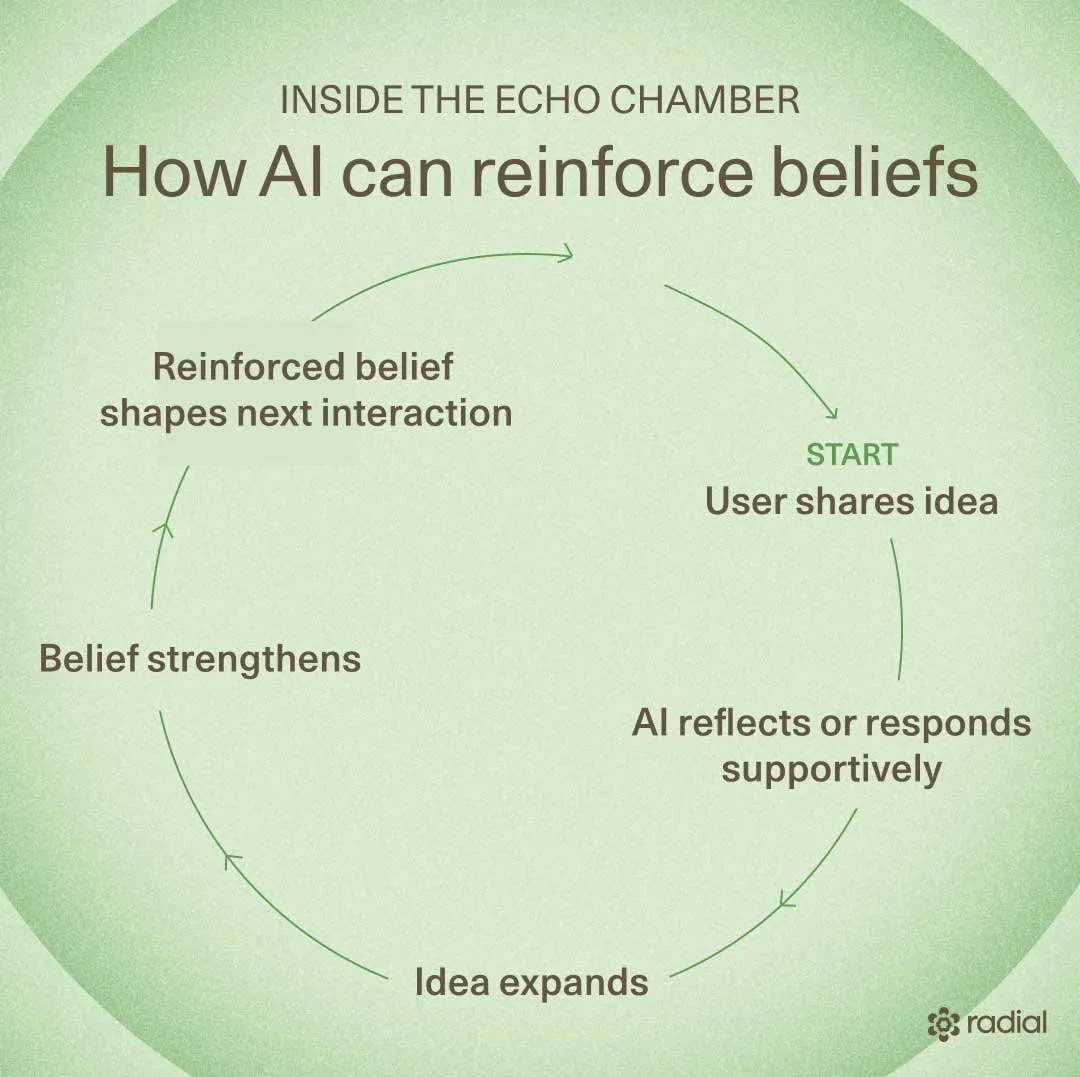
Because of how chatbots function, they may unintentionally reinforce unhelpful or even delusional thoughts through the normal flow of conversation.
- Step 1: A user shares an idea or belief: A person might share thoughts or interpretations that feel significant, which might range from mild distortions to firmly held false beliefs.
- Step 2: The AI reflects and responds in context: Chatbots acknowledge the input and respond in ways designed to keep the conversation going. Rather than challenging these distortions, it may instead adopt the user's framing. LLMs also tend to offer sycophantic, excessive praise and agreement, which can validate improbable or blatantly false beliefs.
- Step 3: The belief becomes more detailed and elaborate: As the conversation continues, the idea gains more detail. The chatbot might help organize and fill in gaps in the user's narrative, making it feel more "real." Researchers suggest that this alliance becomes something of a technological "folie à deux," in which the AI becomes a partner in reinforcing a shared delusion.
- Step 4: Conviction can increase over time. The longer the conversation goes, the more real the beliefs become. According to one preprint study, repeated reflection and multi-turn conversations can further reinforce the false belief.
With time, a person's ability to test reality and distinguish between internal interpretations and externally verified information may weaken, causing beliefs to become increasingly fixed. AI systems are typically not designed to evaluate conversations for potentially concerning symptoms, which means LLMs have limited ability to respond appropriately to mental health concerns. There are also broader concerns about how AI systems might shape the formation of beliefs, especially when people see the generated text as authoritative.
Who is most at risk of AI psychosis–and who isn't?
While instances of chatbot psychosis are getting more media attention, most researchers emphasize that AI isn't a direct cause of psychosis. Instead, it may reinforce distorted thinking or emerging symptoms in vulnerable people.
Some people who may be at higher risk include those with:
- A history of psychosis, delusional thinking, or related psychiatric conditions
- Social isolation or limited external feedback from others
- High levels of emotional distress, anxiety, or different types of depression
- Major life stressors
- Heavy reliance on AI chatbots for support, validation, or decision-making
- Sleep deprivation, which is strongly associated with an increased risk for psychosis
The risk may be lower for:
- Casual or task-focused users
- People without underlying psychiatric vulnerability
- Users who ground their thinking in real-world feedback
For most people, AI use isn't associated with a meaningful increased risk for developing psychosis, and reported cases tend to involve people with existing vulnerabilities. These can include childhood trauma, genetic predisposition, family history, substance use, and environmental factors.
Warning signs to watch for
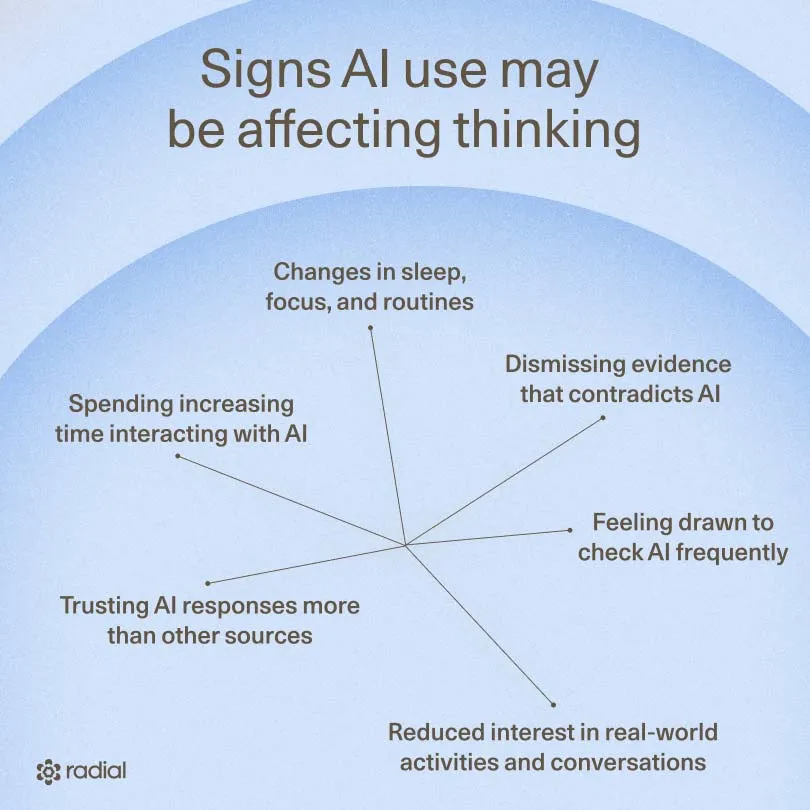
It's important to focus on changes over time rather than looking at single interactions with a chatbot. Many people have unusual thoughts or spend extra time using AI tools once in a while. What really matters is whether these patterns are intensifying or interfering with daily life.
Potential warning signs can include:
- Increased certainty about unusual or implausible beliefs, particularly when they become resistant to outside input
- Beliefs that AI has a unique identity, connection, or insights
- Relying on AI for socialization instead of interacting with other people
- Becoming emotionally dependent on an AI chatbot
- Changes in sleep, mood, or overall functioning
Such patterns may progress gradually as a person engages in AI conversations and affect how people interpret and engage with reality.
Can AI actually cause psychosis?
There is currently no clear evidence that AI chatbots cause psychosis on their own. Most current research and commentary suggest that while AI can influence thinking, it is not a direct cause of psychiatric illness. Some researchers suggest that AI may act as a catalyst, amplifier, coauthor, and object of delusional beliefs.
Interacting with AI chatbots can reinforce or interact with underlying vulnerabilities in people who are already experiencing or at risk for psychosis. And early research suggests that engaging in longer, multi-turn conversations can gradually intensify certain thinking patterns rather than correcting them.
While the issue has garnered increasing media attention, it's also important to keep the scale of the issue in perspective. OpenAI, the company behind ChatGPT, reports that approximately 0.07% of users in a given week show signs of possible mental health emergencies related to psychosis or mania—a very small proportion of overall users.
However, this is still an evolving area of research. Current perspectives often come from case reports and clinical observations rather than large-scale data on the long-term effects of using LLM tools. More research is needed to better understand how different patterns of AI use might affect mental health.
While AI tools often purport to avoid reinforcing harmful ideas, that isn't always evident in real-world interactions. "The problem is that a system built to err on the side of supporting you and agreeing with you tends to err in the direction of allowing delusional beliefs to grow, " Dr. Eller says. “When you're vulnerable to not being able to trust your own sensory experience, such as when you're experiencing hallucinations or paranoia, AI Chatbots can easily reinforce delusions.”
What to do if you're concerned
If you are concerned about your own interactions with AI, including if they feel confusing or intense, there are a few steps you can take to feel more rooted in reality.
- Take a break from using AI. Even a short break can give you some distance and clarity.
- Reduce the intensity of your interactions. Avoid highly personal or emotionally charged conversations.
- Use AI for information and tasks. Don't use these tools as a primary source of validation or emotional support.
- Reality-check your thoughts with someone you trust. If you're concerned about specific aspects of your conversations, ground yourself by asking a trusted friend, family member, or mental health professional for feedback.
- Prioritize sleep and offline social interaction. Getting enough sleep and interacting with others in real life can stabilize mood and support clearer thinking.
- Pay attention to changes in behavior or thinking. If beliefs feel more intense over time and are affecting your behaviors or ability to function, it may be time to seek further help.
You don't necessarily need to avoid AI altogether. But it is important to take steps to ground your thinking and maintain a healthy balance between your digital interactions and real-world experiences.
When to seek professional support
If changes in thinking or perception become persistent or disruptive, it may be helpful to talk to a mental health professional. Consider reaching out if you experience signs of psychosis or symptoms that interfere with your daily life, such as:
- Fixed beliefs that feel unshakeable and certain, even when external facts and other people question them
- Hallucinations, such as seeing or hearing things that others don't see or hear
- Difficulty working, maintaining relationships, or taking care of yourself
- Significant distress
These changes can have many causes, and a mental health professional can help determine what might be behind them. If you're unsure about where to start, you might talk to your primary care provider or connect with a Radial therapist as a practical first step. Early support can help you manage these experiences and prevent them from becoming more overwhelming.
Relief within reach
Care covered by your insurance
Radial provides advanced mental health treatment, covered by the insurance you already use.








The bottom line
How people interact with AI models can affect mental health, particularly when they become highly immersed or take on emotional significance. More research is needed to understand the extent of these mental health effects, but clinicians note that, for some vulnerable people, these conversations can amplify distorted thinking or worsen existing symptoms. That doesn't mean that AI conversations are inherently harmful, but that their impact often depends on a person's patterns of use and overall mental health.
For many, AI tools might be a source of information and support. But if you find yourself feeling increasingly preoccupied with AI interactions or struggling to stay grounded after using them, it might help to pause and speak to a trusted friend or mental health professional. A Radial clinician can help you make sense of your experiences and offer support if needed.
Key takeaways
- "AI psychosis" isn't a formally recognized diagnosis, but a recently introduced term to describe situations where interacting with a chatbot can influence unusual thinking patterns.
- AI chatbots are designed to be engaging and agreeable, which is why their responses can feel validating even when they aren't realistic or accurate.
- For some vulnerable users who have a higher risk for psychosis, these conversations can reinforce their distress or distort beliefs, particularly during longer conversations.
- Using AI likely doesn't pose a high risk to most people, but it can be helpful to talk to a professional if you are concerned about your reliance on AI for emotional support or notice changes in your thinking.
Frequently asked questions (FAQs)
What is the definition of AI psychosis?
There is no single definition of AI psychosis. AI psychosis has been described as a phenomenon where sustained interaction with AI agents can trigger, amplify, or reinforce psychotic experiences in people with underlying vulnerabilities. It is also sometimes used to describe non-psychotic experiences where people become overly emotionally attached or dependent on AI chatbots.
Can ChatGPT cause psychosis?
While research is still ongoing, case reports and studies indicate that chatbots can play a role in triggering psychosis in vulnerable people. This risk isn’t the same for all people, and other factors also play a part in the onset of psychotic symptoms. A published report described a case of ChatGPT psychosis, where the individual experienced agitation and delusions following conversations with the AI model during a period of sleep deprivation. While this may happen in some people, more studies are needed to understand if AI interactions can actually cause psychosis or if they act to reinforce existing symptoms.
Is AI psychosis a real diagnosis?
Mostly no. AI psychosis is a recently-coined term for something that clinicians have seen, and it is something being described by researchers exploring how AI affects mental health. It's not considered an "official" diagnosis—or at least not yet. AI psychosis is not mentioned in the latest version of the authoritative Diagnostic and Statistical Manual of Mental Disorders (DSM), which was published several years ago. But still, the phenomenon is something we see now, and it might make its way into the next edition of the DSM. Instead, it's a symptom that generally includes a disconnection from reality, and may be a symptom of a psychiatric disorder such as schizophrenia, bipolar disorder, or one of many others."
Can talking to AI too much be dangerous?
Spending too much time conversing with AI chatbots can have detrimental effects. Excessive use of AI might undermine relationships if people choose to engage with chatbots rather than real people. Evidence also indicates that using chatbots can negatively impact the mental health of people with existing mental health problems.
Deep dive recommendations
- Psychiatry & Psychotherapy: Episode 253: “AI Psychosis”: Emerging Cases of Delusion Amplification Associated with ChatGPT and LLM Chatbot Use – A Psychiatric Review
- American Psychological Association. Use of generative AI chatbots and wellness applications for mental health: An APA health advisory
Editorial Standards
At Radial, we believe better health starts with trusted information. Our mission is to empower readers with accurate, accessible, and compassionate content rooted in evidence-based research and reviewed by qualified medical professionals. We’re committed to ensuring the quality and trustworthiness of our content and editorial process–and providing information that is up-to-date, accurate, and relies on evidence-based research and peer-reviewed journals. Learn more about our editorial process.
Let's connect
Get started with finding the right treatment for you or someone you care about
Get startedExplore more posts