What Is Cognitive Processing Therapy? How CPT Works for PTSD and Trauma

If it feels like your thoughts keep pulling you back through traumatic experiences, cognitive processing therapy can help. It’s a research-backed, structured therapy that can help you examine and change the beliefs that are keeping your brain stuck.
Trauma can reshape how you see yourself, others, and the world around you. You might find yourself caught in patterns of guilt, self-blame, or the sense that the world doesn't feel safe. When these beliefs take over, they can make it harder to move forward and feel like yourself again.
Cognitive processing therapy (CPT) is a type of therapy designed to help you work through the patterns keeping you stuck. It focuses on identifying unhelpful beliefs, examining them more closely, and working toward a more helpful way of thinking. Shifting these patterns can help people adjust their perspective and respond to thoughts and memories in more helpful ways.
In this article, we'll explain what cognitive processing therapy is, how it works, and what treatment typically looks like so you can understand how it helps people recover from trauma and PTSD.
What is cognitive processing therapy (CPT)?
Cognitive processing therapy (CPT) is a trauma-focused form of cognitive behavioral therapy specifically developed to treat post-traumatic stress disorder (PTSD).
"Cognitive Processing Therapy (CPT) is an evidence-based, gold standard treatment for PTSD," explains licensed psychotherapist Jessica Fink, LCSW. "It is a structured and manualized approach that typically takes 12 sessions. The best candidates for CPT are people with a lot of shame, guilt, and self-blame related to their trauma."
CPT was developed in the late 1980s by psychologist Patricia Resick, who originally used it to treat survivors of sexual assault. Since then, it has become one of the most widely studied and recommended PTSD treatments. The name itself conveys the core idea behind the treatment: trauma disrupts how the brain organizes and processes memories. When processing trauma, the brain struggles to make sense of what’s happened, which can lead to distorted, painful beliefs that remain long after the danger has passed. CPT works by directly targeting these beliefs.
Key features of cognitive processing therapy include:
- A structured, time-limited format: Treatment typically lasts for 12 sessions, which can be helpful because it has a clear start, middle, and end.
- A focus on trauma-related thoughts and beliefs: Instead of reliving the trauma, CPT centers on how the experience influences how you see yourself and the world.
- Worksheets and writing exercises: Sessions include structured homework, such as written accounts of the experience and forms designed to challenge unhelpful thoughts. This allows you to keep working on the beliefs between appointments. People who complete more assignments tend to experience greater symptom reduction.
- Targeting “stuck” points: CPT focuses on the specific thoughts and assumptions that keep people trapped in their distress, such as “It was my fault” or “I’ll never feel safe.” Identifying and challenging these thoughts is central to the process.
Healing happens through strong relationships
Compassionate, experienced mental health professionals focused on evidence-based care


.webp)

How trauma can change beliefs
Trauma can leave deep emotional wounds, but it can also impact how a person relates to themselves and the world. After a traumatic event, the brain has to make sense of what happened. Doing so sometimes leads to beliefs that feel protective in the short term but become less helpful over time. These beliefs may emerge as coping mechanisms following trauma, but they can distort perception and interfere with executive functioning, interpersonal relationships, and daily functioning.
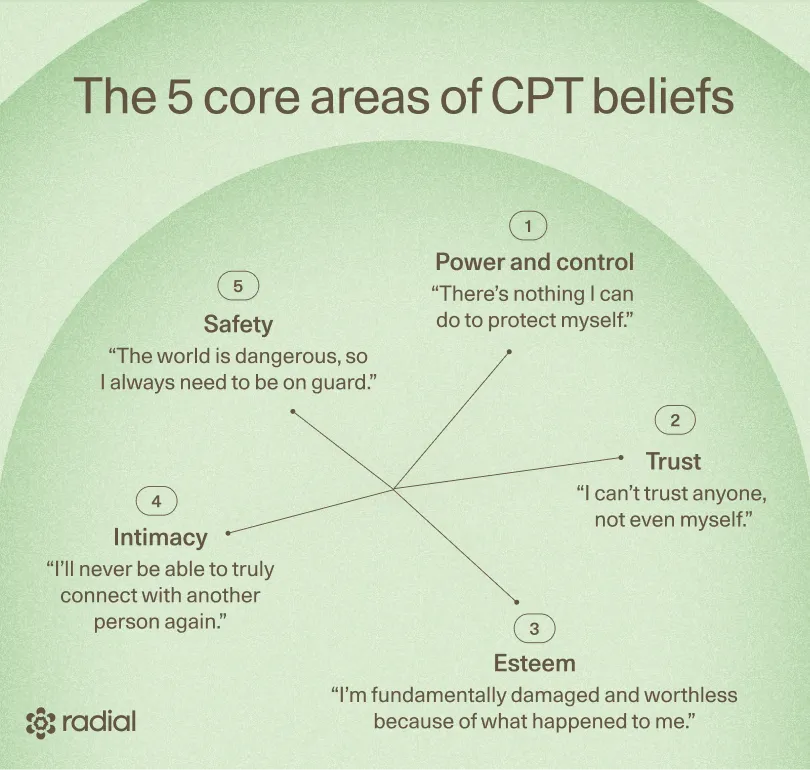
CPT focuses on five core areas where trauma-related beliefs often center:
- Safety: “The world is dangerous, so I always need to be on guard.”
- Trust: “I can’t trust anyone, not even myself.”
- Power and control: “There’s nothing I can do to protect myself.”
- Esteem: “I’m fundamentally damaged and worthless because of what happened to me.”
- Intimacy: “I’ll never be able to truly connect with another person again.”
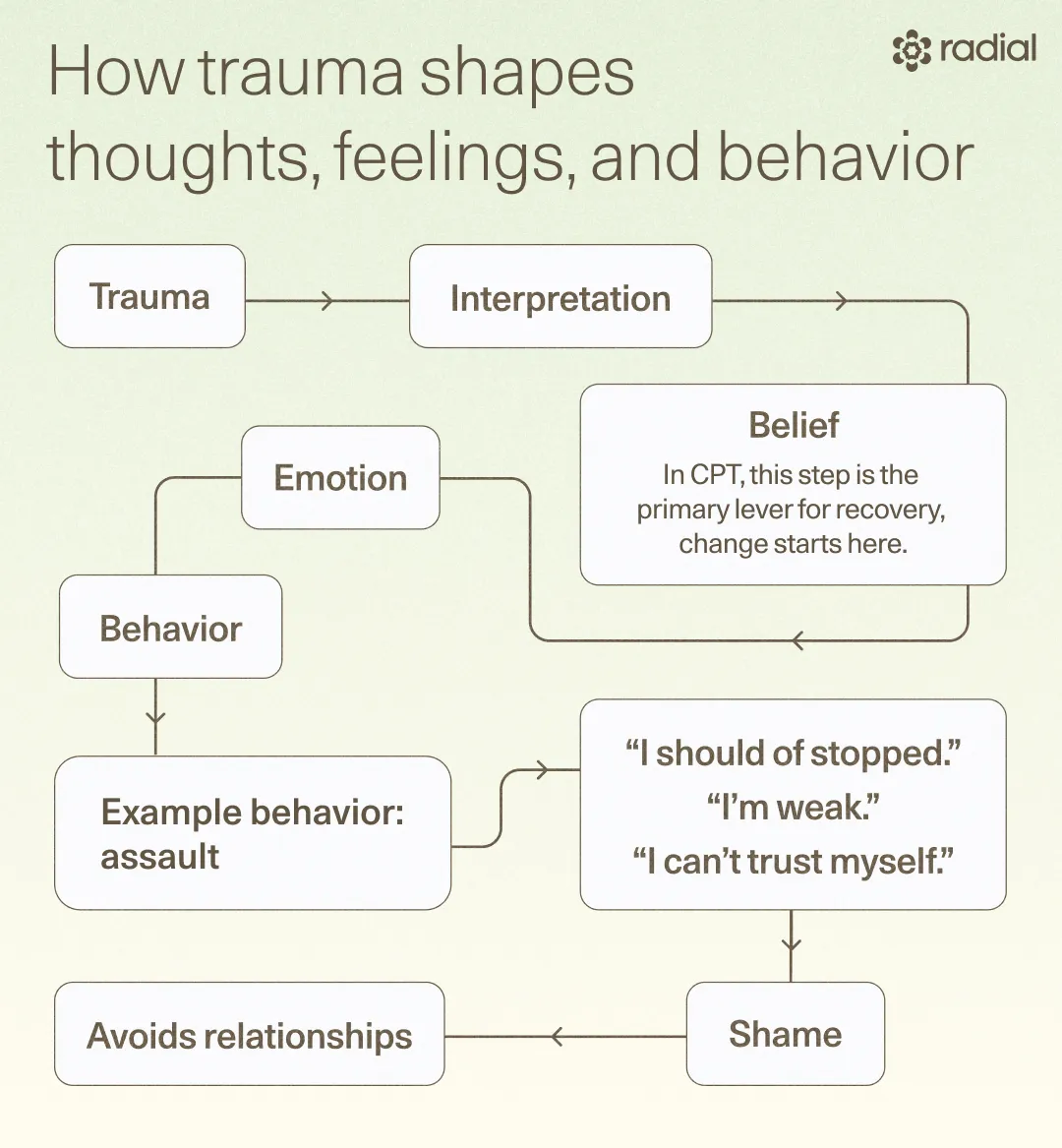
After trauma, people ask themselves why it happened and how to make sure it never happens again. They might think they should have seen the signs and blame themselves. That belief leads to feelings of shame, a fear of trusting their own judgment, and a habit of avoiding any situations where they might be vulnerable. The original trauma is over, but the belief continues to affect their life in multiple ways.
"We all have beliefs about ourselves, others, and the world around us that shape our lives," Fink says. CPT suggests that our beliefs shape how we interpret events.
For example, many people hold a "just world" belief that good things happen to good people, but trauma can challenge this. The result is that survivors often either blame themselves or radically change their worldview. CPT helps them adjust their beliefs to help improve acceptance without losing a sense of safety or control.
What are “stuck points” in CPT?
In CPT, “stuck points” refer to the rigid, trauma-driven beliefs that people develop. "Stuck points are beliefs about why the trauma happened, as well as beliefs about yourself, others, and the world that were influenced by the trauma," Fink says.
Getting “unstuck” is the core goal of this approach to therapy. The challenge is that these beliefs are deeply held conclusions about the self, the world, and others. They feel absolutely true, even when evidence suggests otherwise.
Common examples include:
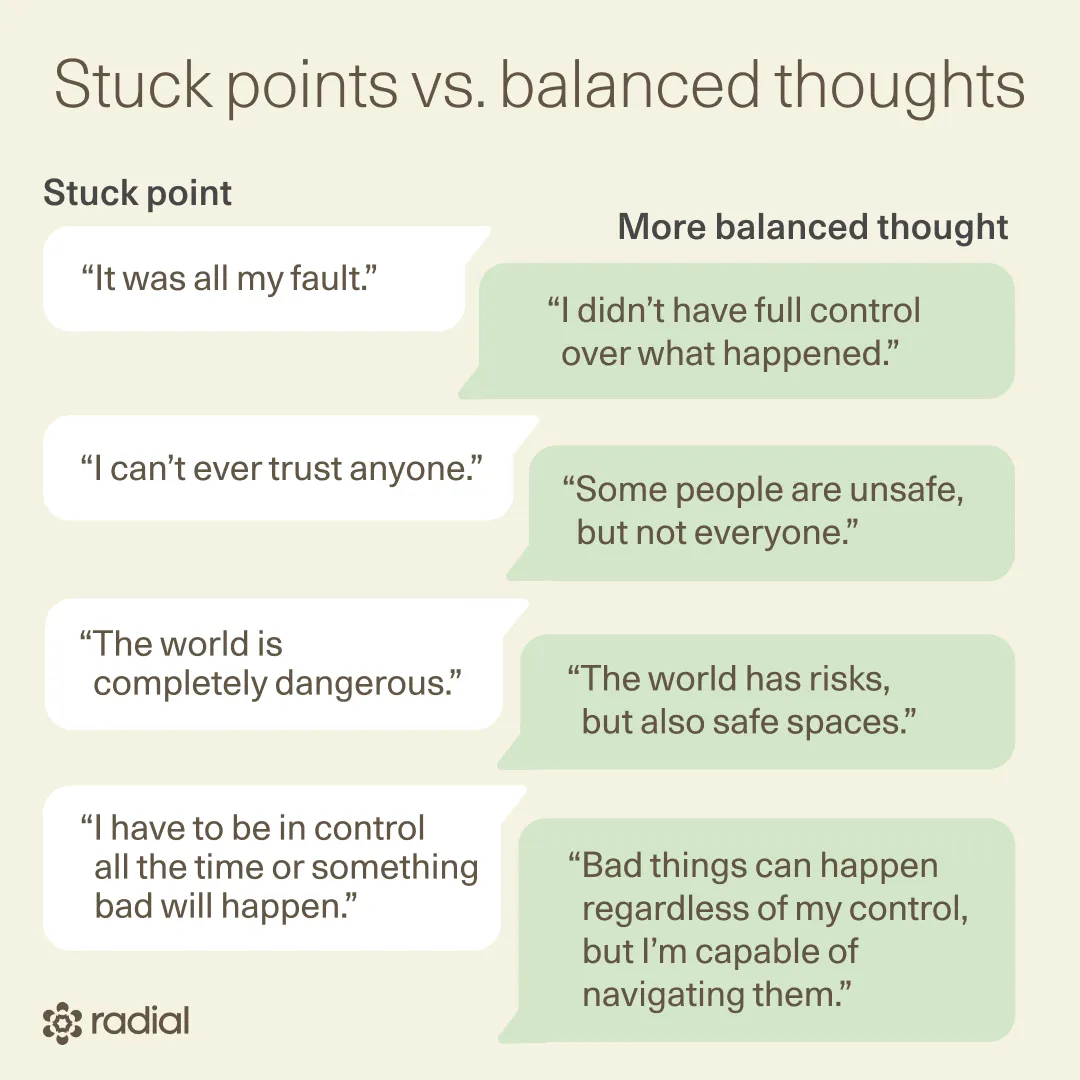
- “It was all my fault.”
- “I should have been able to stop it.”
- “If I hadn’t been there, it wouldn’t have happened.”
- “I have to be in control all the time, or something bad will happen.”
- “I can never trust anyone again.”
- “I can’t trust myself.”
"People hold on to these beliefs because they offer a sense of control. They also keep people stuck in their PTSD symptoms," Fink says.
Cognitive processing therapy helps people identify their stuck points and examine the evidence for and against them. With time and effort, people can gradually replace them with more accurate perspectives.
What conditions can CPT treat?
CPT was specifically developed to treat people with PTSD, and it can be helpful in the treatment of many types of trauma.
Post-traumatic stress disorder (PTSD)
CPT is primarily used to treat PTSD and is one of the most well-supported treatments for the condition. Research shows that CPT can reduce the core symptoms of PTSD, including intrusive memories, hyperarousal, emotional numbing, and avoidance. Many people treated with CPT no longer meet the diagnostic criteria for PTSD at the end of treatment and experience a significant reduction in depressive symptoms.
Other trauma-related concerns
CPT has also been successfully used to treat trauma stemming from a range of experiences. It focuses on how trauma shapes beliefs, which is relevant across many types of trauma, including:
Some research suggests that CPT may be effective for individuals with more complex trauma histories, including childhood trauma and multiple traumatic experiences, known as complex trauma (CPTSD). The difference between CPTSD and PTSD is that PTSD stems from a single event, while CPTSD involves chronic trauma that occurs over a period of time and affects a person's self-perception, relationships, and emotions.
How does CPT work?
CPT typically occurs over 12 weekly sessions, each lasting around 50 to 60 minutes. The therapy starts with helping people understand their trauma response and then focuses on changing the beliefs that sustain it.
Step 1: Learning about trauma and PTSD
Psychoeducation is the first step of CPT. During this phase, people learn more about how PTSD works and why avoidance can keep symptoms going. People also learn how symptoms like flashbacks, hypervigilance, or feeling empty are connected to their thoughts and feelings. This learning period lays the foundation so people understand how their symptoms began and how they can begin working toward changing them.
Step 2: Identifying stuck points
Next, people start to identify their individual stuck points. "Clients develop skills in identifying what they’ve told themselves about why the trauma happened and how it has impacted them, and recognizing the connection among events, thoughts, and feelings," explains licensed clinical psychologist Melissa Goldsmith, PhD.
This often involves writing an Impact Statement, a reflection on how the traumatic event affected their thinking about themselves and the world. By doing this, a person can work with their therapist to pinpoint the specific beliefs they will focus on changing in treatment.
Step 3: Examining and challenging trauma-related beliefs
After making a list of stuck points, Fink says people challenge them one by one through Socratic questioning. This step is the core feature of CPT. For each, you’ll ask yourself questions like:
- What’s the evidence for this belief?
- What’s the evidence against it?
- Am I drawing conclusions that aren’t supported by facts?
This process allows people to see how their thinking becomes distorted because of their trauma. "People often know intellectually that it wasn't their fault, but they still feel shame," Fink says. "CPT is less about the therapist strong-arming the client into believing something and more about using curious questions to allow the client to form their own conclusions."
Step 4: Changing trauma narratives
In the final phase of treatment, people begin applying the cognitive skills they’ve developed to the five core focus areas: safety, trust, control, esteem, and intimacy. "At this point, clients use their prior skills of identifying and examining their trauma-related thoughts. We then add the final piece of clients identifying alternative thoughts that are more helpful," Goldsmith says.
By this point, people have developed a much more nuanced understanding of what’s happened, allowing them to see themselves with greater compassion and feel less guilt, shame, and fear.
What happens in a CPT session?
A typical CPT session lasts about 50 to 60 minutes and follows a consistent format. It starts with briefly assessing mood and PTSD symptoms before reviewing the previous week’s homework. Then, the client and therapist discuss any new stuck points that have come up before working together on thought-challenging exercises.
"The therapist asks guided, open-ended questions that are designed to help the client examine the accuracy and helpfulness of their thoughts that are getting in the way of recovery," says Goldsmith. "These discussions are done with curiosity, respect, and no judgment. Socratic dialogue helps the client to explore alternative views and foster new ways of thinking that are more helpful and consistent with their values."
New practice assignments are then provided at the end of the session. This is important because it allows people to practice their skills every week until they become second nature.
While highly structured, CPT can also be delivered in other formats, such as:
- Group therapy CPT: Many people work through the process together, which can offer support and reduce isolation.
- Condensed CPT: Where sessions are compressed into a shorter, more intensive schedule, which can be useful when weekly sessions aren’t possible.
- Telehealth CPT: Online delivery can help make treatment more accessible to those living in rural areas or with limited mobility.
How effective is CPT?
CPT is one of the most well-researched treatments for PTSD. While no treatment can guarantee a cure for PTSD, research has found that CPT is effective for reducing symptoms and helping people achieve remission. It’s helpful for many people, including military veterans, refugees, and survivors of sexual assault, as well as people who've experienced childhood trauma, domestic violence, or traumatic loss.
Both the U.S. Department of Veterans Affairs and the Department of Defense recommend CPT as a first-line treatment for PTSD. It’s also endorsed by the American Psychological Association’s Clinical Practice Guideline for PTSD.
How does CPT compare to other trauma therapies?
CPT isn’t the only option for treating trauma, so it can be helpful to consider how it might compare to other options:
- PE vs. CPT: Prolonged exposure (PE) therapy involves gradually confronting trauma memories and triggers through direct exposure. CPT centers on changing trauma-related beliefs, which can help reduce symptoms such as shame, guilt, and intrusive thoughts. Both are considered first-line treatments with comparable outcomes, but some people prefer CPT’s emphasis on cognition.
- EMDR vs. CPT: Eye movement desensitization and reprocessing (EMDR) uses guided eye movements while people recall traumatic memories to improve their processing. In addition to differences in how they work, EMDR typically doesn’t involve written homework, whereas CPT requires structured practice between sessions.
- Trauma-focused CBT vs. CPT: TF-CBT is an approach adapted for children and adolescents and involves joint sessions with caregivers. CPT, on the other hand, is designed for adults.
- Supportive counseling vs. CPT: General talk therapy is less structured and may not focus on the specific cognitive patterns that maintain PTSD symptoms. For that reason, it may be less effective than CPT or PE in treating the condition.
Who is a good candidate for CPT?
CPT tends to work well for many people; it can be particularly helpful for people who have PTSD symptoms driven by guilt, shame, or negative beliefs about themselves. It’s helpful for many people, including those who have experienced rape, childhood sexual abuse, combat trauma, military sexual trauma, and physical assault.
"CPT is also a good fit when a person’s desire to face their PTSD symptoms is stronger than their desire to avoid the symptoms," Goldsmith says. "We know that avoidance works in the short-term. But in the long term, avoidance maintains the symptoms and can make them worse. The person may feel scared, and they’re still willing to face what they’ve avoided."
However, that doesn’t mean that CPT is always the best fit. CPT can be emotionally challenging, which can sometimes lead to avoidance that may show up in various ways. “Some examples are not doing the practice assignments, not coming to CPT sessions, and avoiding feelings, thoughts, or memories.”
Some symptoms of PTSD, like dissociation, sometimes need to be stabilized first before a person can start doing more focused trauma therapy work. Other factors that can make engaging in CPT more challenging include symptoms of psychosis or mania, substance use requiring medical detoxification, significant cognitive impairment, or imminent danger to the self or others. In these cases, a therapist may recommend other approaches first before starting CPT.
Motivation is also key to finding success with CPT. Homework and practice assignments are critical to making progress, so what people get out of CPT often hinges on the work they are willing and able to put in.
Relief within reach
Care covered by your insurance
Radial provides advanced mental health treatment, covered by the insurance you already use.








How to find a CPT therapist
If this sounds like a treatment that might help you, look for a CPT therapist who has experience and training in trauma-focused therapy. Consider professionals who have completed formal CPT training, such as certification through Patricia Resick’s CPT program.
Good places to start your search include:
- VA medical centers: The VA offers specialized CPT programs for veterans.
- PTSD treatment centers: Clinics, hospitals, or university-affiliated medical programs that specialize in trauma treatment are a good place to find CPT therapists.
- Telehealth platforms: Online platforms that specialize in treating trauma can be a helpful option, particularly for those with limited mobility or in rural areas.
- Trauma-focused directories: The CPT Provider Roster provides additional information on therapists who specialize in CPT.
The bottom line
Trauma has lasting effects. You might feel like it’s all your fault, that the world is a dangerous place, and you can’t trust anything–and those beliefs often feel like facts. Cognitive processing therapy was developed to challenge and change those beliefs. Trauma can also make life feel less vibrant and enjoyable. With a structured format and solid track record for treating trauma, CPT offers a practical path toward rebuilding a life that feels more meaningful and fulfilling.
If it sounds like something that might help you, or if you want to explore other treatments for trauma, talking to a Radial therapist can help you decide which option would be right for your needs.
Key takeaways
- Cognitive processing therapy is a structured, 12-session PTSD treatment that helps people recognize and change their trauma-related beliefs.
- CPT for PTSD focuses on the rigid thoughts about safety, trust, control, esteem, and intimacy that keep people stuck in the aftermath of their trauma.
- It’s an evidence-based PTSD treatment that’s been endorsed by the VA, Department of Defense, and American Psychological Association.
- It can be delivered individually, in condensed formats, and online, but it may not be the best option for those with severe dissociation or ongoing safety concerns.
Frequently asked questions
What are the techniques used in cognitive processing therapy?
Cognitive processing therapy techniques help people identify and challenge unhelpful beliefs about their trauma. This includes examining "stuck points," cognitive restructuring, written trauma accounts, structured worksheets, and practicing new ways of thinking.
What is the success rate of CPT?
Research shows that CPT can be a highly effective treatment for PTSD. According to the U.S. Department of Veterans Affairs, CPT can lead to meaningful reductions in PTSD symptoms. Many who are treated no longer have a diagnosis after treatment, and these results have long-lasting effects. Research suggests that individuals receiving CPT experience greater symptom improvement than approximately 89% of those in inactive control groups, with improvements remaining at about 82% at follow-up.
What is the typical duration of a cognitive processing therapy session?
Most CPT sessions last around 60 minutes for individual therapy and 90 minutes for group therapy. A full course of treatment usually involves 12 sessions delivered over several weeks.
Can CPT be done online?
Yes, cognitive processing therapy can be delivered online, and its efficacy is similar to that of in-person therapy. This can be a convenient option for people who struggle to access traditional therapy due to busy schedules, limited mobility, or rural locations.
Deep dive recommendations:
- Puder, D. (Host). (2024, March 29). PTSD and cognitive processing therapy with Patricia Resick (Episode 209) [Audio podcast episode]. In Psychiatry & Psychotherapy Podcast. https://www.psychiatrypodcast.com/psychiatry-psychotherapy-podcast/episode-209-ptsd-and-cognitive-processing-therapy-with-patricia-resick
- Puder, D. (Host). (2024, August 23). Writing to overcome trauma and improve your mental and physical health (Episode 220) [Audio podcast episode]. In Psychiatry & Psychotherapy Podcast. https://www.psychiatrypodcast.com/psychiatry-psychotherapy-podcast/episode-220-writing-to-overcome-trauma-and-improve-your-mental-and-physical-health
- Muir, O. S. (n.d.). Treating PTSD is a good idea: Please, take it seriously! The Frontier Psychiatrists. https://thefrontierpsychiatrists.substack.com/p/treating-ptsd-is-a-good-idea?utm_source=publication-search
Editorial Standards
At Radial, we believe better health starts with trusted information. Our mission is to empower readers with accurate, accessible, and compassionate content rooted in evidence-based research and reviewed by qualified medical professionals. We’re committed to ensuring the quality and trustworthiness of our content and editorial process–and providing information that is up-to-date, accurate, and relies on evidence-based research and peer-reviewed journals. Learn more about our editorial process.
Let's connect
Get started with finding the right treatment for you or someone you care about
Get startedExplore more posts