Spravato Side Effects: What to Expect Before, During, and After Treatment

Key takeaways
- Most Spravato side effects occur during or shortly after treatment and improve within a few hours.
- Common side effects include dissociation, dizziness, nausea, sleepiness, headache, and temporary increases in blood pressure.
- Because treatment can temporarily impair alertness and perception, Spravato must be administered in a medical setting where you’re monitored for at least two hours after each dose.
- Long-term safety data are still emerging, but studies following people for several years have not identified new major safety concerns with medically-supervised use.
If you’re considering Spravato or about to start treatment, it’s natural to wonder what it actually feels like. And if a recent session left you dizzy, sleepy, or feeling a little unlike yourself, you may be wondering whether that’s normal. Fortunately, FDA data and clinical trials give us a good idea of what Spravato side effects to expect and how long they last.
First things first, Spravato (esketamine) is a nasal spray used to relieve treatment-resistant depression and major depressive disorder with acute suicidal ideation. It works by blocking NMDA receptors, which help brain cells communicate. This is thought to help strengthen connections that depression weakens, according to MaryEllen Eller, MD, Southeast Regional Medical Director at Radial.
“The initial NMDA blockade peaks within 45 minutes and resolves within about 2 hours,” she
says. “The side effects you can experience during this window include feeling tired or nauseous, dizziness, increased blood pressure, and perception changes.”
While the thought of side effects can feel intimidating, knowing what to expect can make the experience less daunting. Below, we’ll walk through Spravato side effects and how to prepare for a safe, comfortable treatment experience.
Healing happens through strong relationships
Compassionate, experienced mental health professionals focused on evidence-based care



.webp)
Spravato’s side effects at a glance
Spravato can cause several side effects, but most happen during or soon after treatment and improve within a few hours, according to research in Neuropsychiatric Disease and Treatment.
That’s why the spray is given under the Spravato REMS safety program, which requires you to stay at the clinic for at least two hours after each dose so your care team can monitor how you’re feeling and any side effects that may occur. They'll also make sure you’re ready to leave safely.
“When esketamine is provided responsibly in a medically-supervised setting, it is safe and effective,” says Dr. Eller. “It can have long-lasting benefits that can alleviate suffering and help people get reconnected to living with meaning and purpose.”
Here’s a quick look at some of the most common Spravato side effects:
What are the most common side effects during a Spravato session?
The most common Spravato side effects during treatment include dissociation, dizziness, sedation, nausea, increased blood pressure, and changes in perception, according to FDA prescribing information. Most are mild to moderate, happen shortly after you receive your dose, and resolve the same day.
Dissociation
Dissociation is one of the most common Spravato side effects, but the name can sound more intimidating than the actual experience is. Per the prescribing information, in clinical trials, 41% of people receiving Spravato with an oral antidepressant experienced dissociation, compared with 9% who took a placebo.
Dr. Eller compares dissociation to visiting Alice in Wonderland. You might feel a little detached from your body or surroundings, notice that time feels different, or experience sights, sounds, and physical sensations in an unusual way.
There’s a reason for these shifts: NMDA receptors help your brain process sensory information, Dr. Eller explains. Temporarily blocking them can change how that information — and the world around you — feels.
These sensations are a normal part of the experience for many people, and your care team will be right there beside you. Dissociation tends to peak around 40 minutes after a dose and generally fades within about two hours.
Dizziness and sedation
Feeling dizzy or sleepy is also common. According to the prescribing information, 29% of people experienced dizziness and 23% experienced sedation, compared with 8% and 9%, respectively, in the placebo group.
“NMDA [receptors] help regulate brain systems responsible for being awake and alert,” Dr. Eller says. “Blocking them makes most people feel tired or sleepy.”
Nausea and vomiting
Some people feel queasy during treatment, though vomiting is less common. Per the prescribing information, 28% of people experienced nausea and 9% experienced vomiting. Dr. Eller compares the sensation to the mild motion sickness you may feel on a cruise ship. That said, speak with your clinician if you experience nausea often to ensure you're comfortable during treatment.
Increased blood pressure
Spravato treatment can temporarily raise your blood pressure. Clinical trials found that about 10% of adults receiving Spravato with an oral antidepressant experienced higher blood pressure, compared with 3% receiving placebo.
While the connection between Spravato and blood pressure is a concern, these increases are usually brief, asymptomatic, and aren’t linked to serious cardiovascular issues, per a study in Neuropsychiatric Disease and Treatment.
Your care team will monitor your blood pressure before and after your dose.
Anxiety, agitation, and perceptual changes
In some Spravato reviews, patients report feeling anxious, restless, or simply a little different during treatment. The prescribing information reports these side effects in 13% of adults, compared with 6% with the placebo.
This isn’t necessarily the same as dissociation: You might feel anxious or restless without feeling detached from yourself or your surroundings, for example.
But remember: You don’t have to sit with an uncomfortable feeling on your own. Let your care team know how you’re doing — they’re there to support you, answer questions, and help you feel as comfortable as possible.
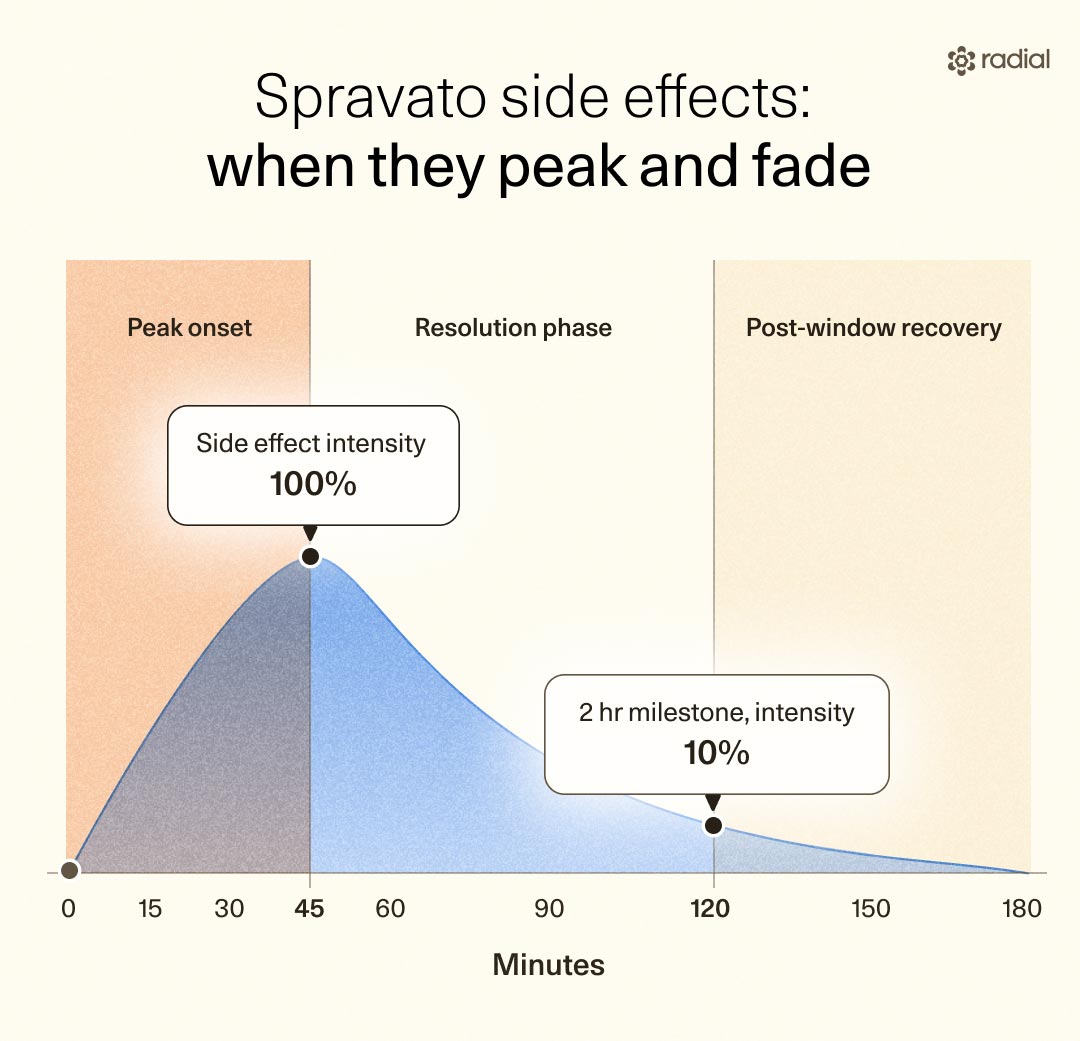
What are common Spravato side effects that might linger after a session?
Most Spravato side effects ease during the two-hour monitoring period, but it’s possible to feel tired, foggy, or a little dizzy for the rest of the day. That doesn’t necessarily mean anything is wrong — your body may just need a little more time to recover.
Here are a few effects that may stick around:
- Grogginess, fatigue, and brain fog: You may feel sleepy, sluggish, or less mentally sharp than usual, per a study in BJPsych Open. It’s a good idea to keep the rest of your day relatively open and give yourself time to rest rather than jumping back into work or other activities that require your full attention.
- Headache: Headache is another common Spravato side effect; the prescribing information reports it in 20% of adults. For most people, it’s temporary, but let your care team know if headaches are persistent or particularly bothersome.
- Lingering dizziness or balance issues: Even if you feel much more like yourself by the time you leave, some dizziness or unsteadiness can linger. That’s one reason you aren’t able to drive after Spravato until the next day, according to Dr. Eller.
What are Spravato’s serious side effects and boxed warnings?
Serious side effects from Spravato are uncommon, but there are a few risks worth knowing about. Per the prescribing information, these include:
- Sedation and dissociation: In more significant cases, sedation can make it difficult to stay awake, while dissociation can temporarily affect your perception and awareness. That’s exactly why you’re monitored at the clinic: Your care team can keep an eye on you and help if needed.
- Suicidal thoughts or worsening mood: There’s a small increased risk of suicidal thoughts or behaviors in people ages 24 and younger, per the prescribing information. This risk is highest early in treatment or after a dose change, which is why your care team will check in on how you’re feeling throughout treatment. If you’re experiencing a mental health crisis or need immediate support, call or text 988 to reach the 988 Suicide & Crisis Lifeline.
- Respiratory depression: Rarely, Spravato can slow breathing. Your care team monitors your breathing and oxygen levels after each dose so they can quickly respond if needed.
- Abuse and misuse: Esketamine has the potential for misuse, which is one reason Spravato is only given in certified healthcare settings like Radial. However, this doesn’t mean taking Spravato as prescribed will lead to addiction. Your clinician will consider your individual risk and monitor for signs of misuse during treatment.
Your care team is there to help you feel safe and supported throughout each session, so let them know if anything feels off or uncomfortable. And once you’re home, don’t hesitate to reach out if a side effect sticks around or you notice a change in your mood.
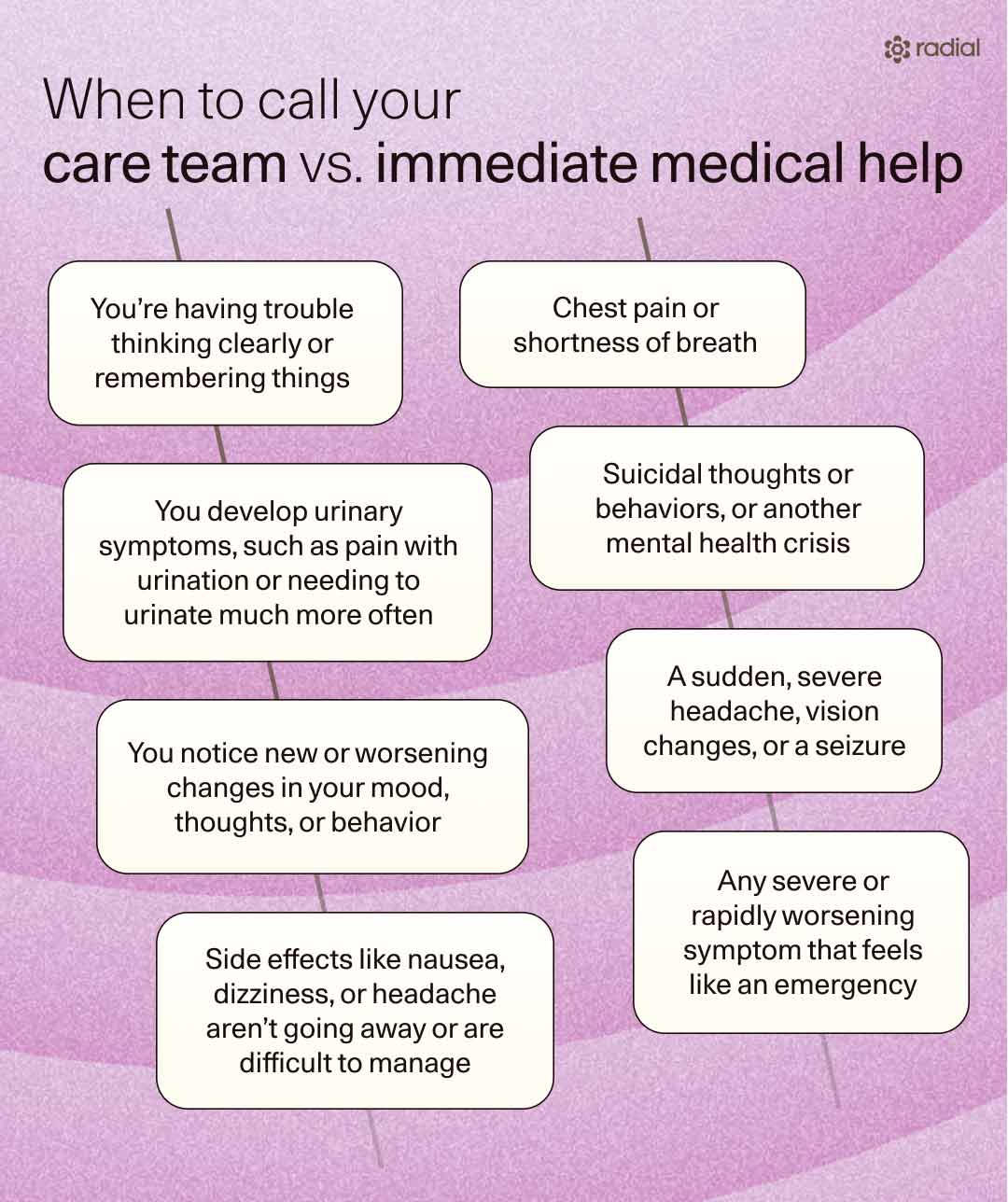
Long-term and repeated-use side effects
The duration of Spravato treatment may be longer for you if the spray works for you. In that case, it’s natural to wonder what repeated treatment means for your health. We have less research on years of Spravato use than we do on short-term effects, but what we know so far is encouraging.
For instance, the SUSTAIN-3 study published in Neuropsychopharmacology followed 1,148 adults with treatment-resistant depression — some for up to 6.5 years. “No new safety concerns emerged (compared to the shorter-term trials previously done) when Spravato was administered as recommended,” Dr. Eller says.
That said, there are still a few areas researchers continue to watch:
- Cognitive effects: Concerns about memory and thinking largely come from frequent, high-dose recreational ketamine use, which is very different from medically supervised Spravato treatment, says Dr. Eller. So far, long-term studies haven’t found worsening cognitive function with Spravato over time.
- Bladder and urinary effects: Heavy recreational ketamine use has been linked to bladder pain and inflammation, known as ketamine-induced cystitis. This hasn’t been reported in clinical studies of Spravato at prescribed doses, though urinary symptoms can occur, per the prescribing information. Let your care team know if you notice pain, urgency, or other changes.
- Tolerance and dependence: Esketamine can be misused, but there’s an important distinction between recreational use of ketamine and clinical use of Spravato. The tolerance and withdrawal linked to frequent, high-dose recreational use haven’t been seen with medically supervised Spravato dosing, Dr. Eller says.
Who is at higher risk for Spravato side effects?
Most people can safely receive Spravato, but certain health conditions or medications may raise a red flag.
Medical conditions that increase risk
Some health conditions need consideration before starting Spravato, according to the prescribing information. Be sure your clinician knows if you have:
- Blood vessel conditions: Spravato must not be used for people with certain conditions in which an increase in blood pressure could pose a serious risk, including aneurysmal vascular disease or certain abnormal connections between arteries and veins.
- High blood pressure or cardiovascular disease: Because Spravato can temporarily raise blood pressure, your clinician will make sure it’s safe to proceed and monitor your blood pressure during each session.
- A history of brain bleeding: Spravato cannot be used if you’ve previously had bleeding in the brain.
- A history of psychosis: Spravato can temporarily change perception, so your clinician will carefully weigh the potential benefits and risks if you have a history of psychosis.
- A history of substance use disorder: Esketamine has the potential for misuse, so your clinician may want to monitor you more closely.
This isn’t a complete list, and having any of the conditions on this list doesn’t necessarily mean you can’t receive Spravato. Your clinician will help you understand what it means for your treatment plan.
Medications and drug interactions
It’s also important to tell your clinician about everything you take, including prescriptions, over-the-counter medications, and supplements. That’s because some substances can affect how you respond to Spravato.
Per the prescribing information, those include:
- Sedating medications: Medications that slow the central nervous system (like benzodiazepines or opioids) may increase sedation when combined with Spravato.
- Stimulants: Medications like amphetamines and methylphenidate can raise blood pressure, so your care team may need to monitor you more closely.
- MAO inhibitors (MAOIs): These medications can also increase blood pressure when taken with Spravato.
- Alcohol: Alcohol can amplify esketamine side effects like sleepiness and dizziness, so avoid alcohol around your sessions and ask your clinician about drinking at other times.
Pregnancy and breastfeeding
If you’re pregnant, planning to become pregnant, or breastfeeding, this is another important conversation to have with your clinician before starting Spravato. The medication should not be used during pregnancy because of potential risks to a developing fetus, and the prescribing information recommends avoiding breastfeeding during treatment.
If this applies to you, that doesn’t mean you’re out of options. Your clinician can talk through what’s safest for you and help you find an approach that supports your mental health during this time.
How to manage side effects and prepare for sessions
A little preparation can help your Spravato sessions go more smoothly. Here’s what to expect from beginning to end.
Before your session
Setting yourself up ahead of time can help you arrive feeling prepared and give your care team what they need to support you. Here’s what the prescribing information says to consider:
- Plan around food and drinks: Avoid food for at least two hours and liquids for at least 30 minutes before your dose to prevent any potential nausea or vomiting.
- Arrange a ride home: You won’t be able to drive afterward, so have transportation lined up before you arrive.
- Follow instructions about medications and alcohol: Some can increase sedation or affect blood pressure, so follow your clinician’s guidance rather than making changes on your own.
And it's a good idea to check in with your care team. Mention any new symptoms, medication changes, or side effects from your last session. The more they know, the better they can support you.
During your session
Once you’re there, your main job is simply to get comfortable and let your care team know how you’re doing:
- Tell your care team how you feel: Whether you’re dizzy, nauseous, anxious, or just not quite comfortable, don’t be afraid to speak up. They’re there to help.
- Remind yourself that unusual sensations will pass: Dissociation and other perceptual changes are normal and temporary, and you’ll be monitored while they wear off.
- Give yourself time: There’s no need to rush through recovery. Rest, get comfortable, and let your care team take care of the monitoring.
After your session
Once you head home, plan to give yourself a little more time to recover and pay attention to how you feel. Here are some tips to help you do it:
- Keep the rest of your day easy: You may still feel tired, foggy, or a little dizzy after you leave, so give yourself permission to take it easy.
- Leave the driving to someone else: Wait until the next day, after a restful sleep, before driving or doing anything that requires your full alertness.
- Keep your care team in the loop: If a side effect sticks around, bothers you, or feels different than usual, reach out. You don’t have to navigate it alone.
Before your next session, it can also help to tell your clinician:
- What side effect(s) you experienced
- When it started
- How long it lasted
- Whether it got in the way of your day
And if side effects ever make you wonder whether you should stop treatment, talk with your care team first. Adjusting your dose or adding supportive care may help make future sessions more comfortable.
Relief within reach
Care covered by your insurance
Radial provides advanced mental health treatment, covered by the insurance you already use.








The bottom line
If you’re a candidate for Spravato, it’s understandable to feel nervous about side effects. But most are temporary, and you’ll have a care team nearby to monitor you, answer questions, and help you feel comfortable while they pass.
You also don’t have to decide on your own whether a side effect is “normal” or whether treatment is still right for you. Keep your care team in the loop about how you’re feeling — they can help you weigh the benefits and side effects, make adjustments when needed, and find an approach that works for you.
Frequently asked questions (FAQs)
Does Spravato cause weight gain?
Spravato and weight gain are not linked, per the prescribing information. That said, depression itself, other medications you take, and changes in appetite or activity can all affect weight, according to research in Diseases. If you notice an unexpected change, bring it up with your clinician so they can help you figure out what may be contributing.
Does Spravato have long-term side effects?
So far, long-term safety data are reassuring. In the SUSTAIN-3 Neuropsychopharmacology study, which followed people receiving Spravato for up to 4.5 years, researchers didn’t identify new safety concerns beyond those already known from shorter-term studies. Research into very long-term use is still ongoing, and your care team will continue monitoring how you’re doing for as long as you receive treatment.
How do you feel the day after Spravato?
Many people feel back to normal by the next day, though everyone responds a little differently. Because Spravato can temporarily affect alertness and coordination, you shouldn’t drive or operate machinery until the next day after a restful sleep, per the prescribing information. If you’re still feeling unusually dizzy, tired, or otherwise unwell, check in with your care team.
Editorial Standards
At Radial, we believe better health starts with trusted information. Our mission is to empower readers with accurate, accessible, and compassionate content rooted in evidence-based research and reviewed by qualified medical professionals. We’re committed to ensuring the quality and trustworthiness of our content and editorial process–and providing information that is up-to-date, accurate, and relies on evidence-based research and peer-reviewed journals. Learn more about our editorial process.
Let's connect
Get started with finding the right treatment for you or someone you care about
Get startedExplore more posts